
There really wasn't a civil war in Bulgaria, but strife following a coup d'état.
President Li Yuanhong of China fled his office but captured at the Tientsin railway station by troops. He resigned the following day and was accordingly freed.
President Li Yuanhong of China fled his office but captured at the Tientsin railway station by troops. He resigned the following day and was accordingly freed.
The remaining eight hostages taken by train bandits in what became known as the Linceng Outrage were freed. The payment of ransom by Shanghai mobster Du Yuesheng to Sun Meiyao of the Shandong Outlaws resulted in the final freedom of what originally had been 300 such hostages.
Du Yuesheng, who controlled the Shanghai opium trade, would become a significant supporter of Chiang Kai Shek, and has been honored with a memorial in Taiwan, where he died.
Sun Meiyao would be executed by the Chinese Army in December.
On the same day, Chinese general Feng Yuxiang issued an ultimatum to Chinese President Li Yuanhong to resign. He himself would go on to briefly lead the country, and then support the Nationalist as well, before becoming, in later years, a critic of it. While a Christian, he was comfortable with the Communist regime and was honored by it when he died in 1953.

With a history dating to 1891 with the weekly Natrona Tribune, published by the Republican Publishing Co., but with a name, reflecting mergers and a somewhat complicated history, dating to 1961, the Casper Star Tribune has ceased printing a Sunday edition.

Today's edition was the last print Sunday tribune.
The Trib has tried to put a happy face on it, but it's not a happy story. Clearly the paper is in economic trouble and part of that is online competitors, of which Wyoming has at least three substantial ones at the present time. It already quit issuing print papers on Mondays, and now it will only issue two print papers per week, and mail them to subscribers from Scotsbluff.
Mail?
Yeah. That's useful. Having said that, the two print copies we got per week didn't arrive super quickly. I'd usually read the electronic edition before that.
A sad end to an era nonetheless.
I prefer the print edition. Maybe that's just me, but I like to be able to thumb through the paper, and frankly I pick up more content reading it that way.
Well, no more. I'm not going to continue having a print subscription for Tuesdays and Wednesdays, which is now the option, had get them a week later when the mail gets here for them.
The Italian island of Pantelleria was unconditionally surrendered to the Allies at 11:40 am local time.
.jpeg)
It was an historic surrender in that no boots were on the ground. It was made solely in the face of an ongoing, and heavy, areal campaign, which is somewhat deceptive. At this point in time the U.S. Army Air Force was of the mind that it could win the war without an invasion of Europe, which was obviously incorrect, and something like this tended to emphasize that mistaken view.
The surrender was significant in that it provided a staging area for the invasion of Sicily.
The island is closer to North Africa than it is to Sicily, but it can be regarded as midpoint. The fact that it would call it quits is significant in and of itself, as it pretty clearly telegraphed that Italy was done.

On the same day the press reported that the Germans were planning a massive offensive in the East. They in fact were, but not in the location noted.
The RAF bombed Düsseldorf and Münster in its heaviest attack up to that time. The U.S. 8th Air Force made a daylight raid on Wilhelmshaven and Cuxhave with 225 airplanes, losing 85 of them in a record loss ration at the time.
This emphasized the British point that daylight raids, which the U.S. favored as they were in favor of "precision bombing", and justifiably concerned about the immorality of nighttime targeting, were doomed due to heavy losses, in spite of having just agreed to the same in the Pointblank Directive. On the other hand, this emphasized also the American view that the British fighter command was completely unhelpful in its refusal to do anything to extend the range of fighter escorts and make them suitable for long range penetration.
Indeed, it's worth noting that the Supermarine Spitfire and the P51 Mustang shared the same Rolls Royce Merlin engine. Had the RAF fighter command been less narrow-minded, the Spitfire, not the Mustang, would likely be remembered as the premier escort fighter of World War Two, and the P51 would have faded by late 1943 into obscurity.
U.S. coal miners went on strike again, with the support of their union President John L. Lewis.
Super patriotism at work. . . not.
Roosevelt would halt the strike, temporarily, by threatening to draft the miners.

In the popular imagination World War Two was free of labor strife, but in reality, it wasn't.
The German submarine U-417 was sunk in the North Atlantic by a B-17 of No. 206 Squadron RAF, the Japanese submarine I-24 was sunk off Shemya, Alaska by the U.S. Navy subchaser Larchmont, the Australian corvette HMAS Wallaroo sank off Fremantle after a collision with the American Liberty ship Henry Gilbert Costin.
The technicolor musical Coney Island was released. It was nominated, but did not win, an Academy Award for best musical score in 1944.

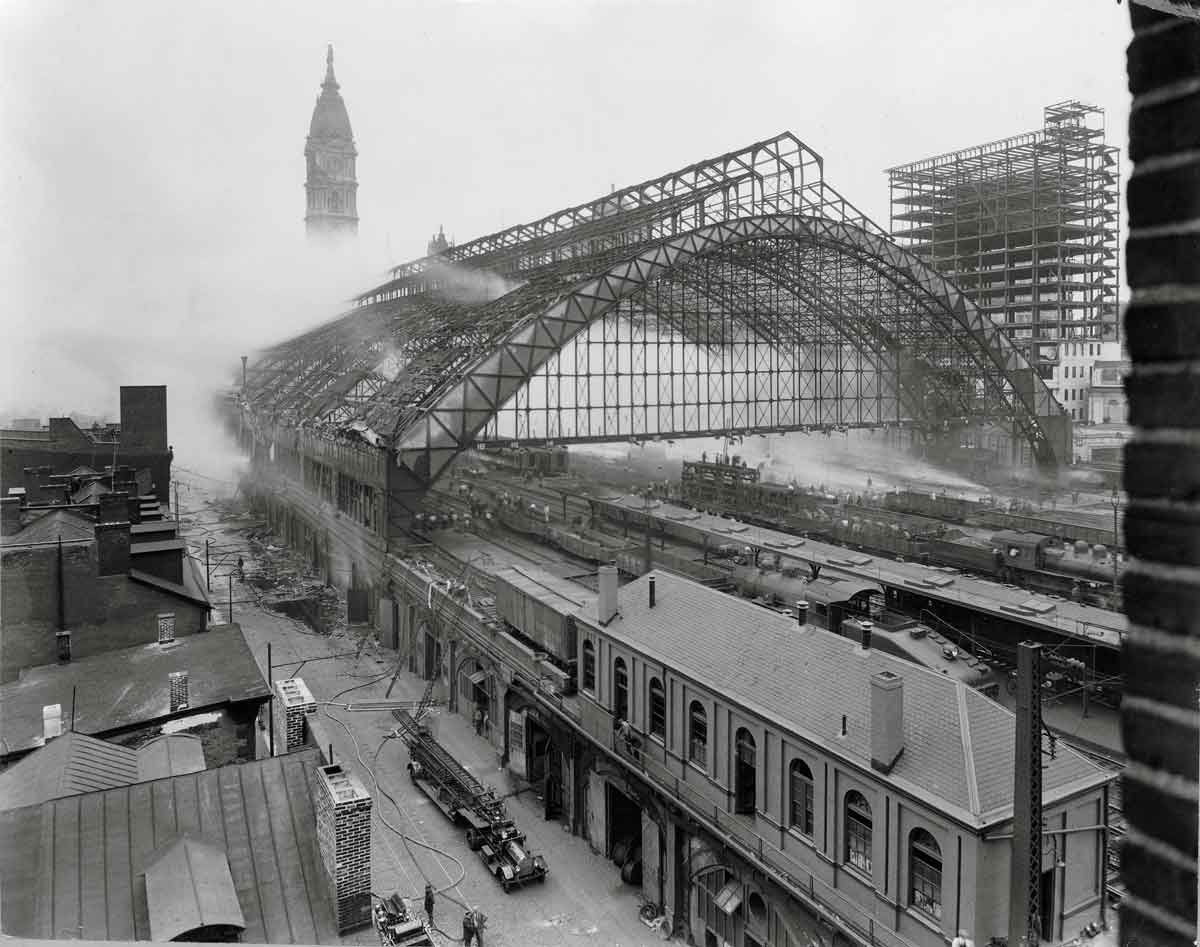
Public uses are not limited, in the modern view, to matters of mere business necessity and ordinary convenience, but may extend to matters of public health, recreation and enjoyment. Thus, the condemnation of lands for public parks is now universally recognized as a taking for public use. A road need not be for a purpose of business to create a public exigency; air, exercise and recreation are important to the general health and welfare; pleasure travel may be accommodated as well as business travel; and highways may be condemned to places of pleasing natural scenery.

I started this thread some time ago, put it aside, and then oddly a few weeks later, heard a Parish Priest make the observation during a homily.
Synchronicity at work?
I've since linked the theme in to another post, which then ends up being published, as it were, prior to what should have been the original entry, that entry being here:
So we return to finish our original thoughts.
St. Augustine of Hippo, in The City of God, describes the fact and the era of the collapse of the Roman Empire.

Rome, it is often noted, wasn't built in a day, and it didn't collapse in one either. People living through the horrible experience knew things weren't going well, but they wouldn't have necessarily thought that "well, it's 450 and Rome is over". They wouldn't have thought that in 500, or 600 for that matter.
Human beings, having fairly short lifespans, tend to see all developments in terms of their lifespans. In True Grit the protagonist Maddy Ross states, "a quarter-century is a long time", but in real terms, except for our own selves, it isn't. Things that occurred only a century ago, and I used only advisedly, didn't really happen all that long ago in terms of eras and changes, although here too we are fooled by the fact that the last century has been one of amazing technological development, which is not the human norm, with this being particularly true of the middle of the 20th Century.
I note this as the entire Western World is in turmoil right now, seemingly without any existential or metaphysical center, which explains a lot of what we're enduring in the world. How did we get here?
There's a good argument that it's due to the end of the Reformation, or rather, it's collapse.
St. Augustine lived at the beginning of Rome's death throes. That same era was the birth of the Catholic world, and I say that advisedly. Some would say the Christian world, but they'd be wrong in the way they mean it. Christianity, all of it, was Catholicism. It would be right up until the Reformation. Even the Great Schism, which was a schism, really only had its final act in 1453, quite close to Luther's famous apocryphal nailing on the Cathedral door in 1517.
The English-speaking world is a product of the Reformation, and while it now seemingly regrets it, the English-speaking world was the major, influencer of the world's history and cultures. By extension, therefore, the Reformation influenced the entire globe.
That's not praise for the Reformation. Indeed, I'd have preferred it never have had happened. That's just a fact.
The Christian Era is usually calculated to have commenced at the time of the Crucifixion of Christ, which occurred sometime in the 30s, but it might be more instructive for our purposes to look at the 200s or the 300s, but a person could go earlier. The very first council, a general gathering of Bishops of the Church, occurred in about the year 50, and is reflected in the Book of Acts. It dealt with some issues that had come up in the very early Church, but for our purposes one of the things worth noting is that it was a Council of Bishops, which means that there were Bishops. This shouldn't be a surprise, but due to the way the Reformation attacked the history of the Church, it might be to some. Peter, the first Pope (that title of course wouldn't have been in use) was there.
The Council of Jerusalem is not regarded as an ecumenical council, as Church historians would note. The first one of those was the aforementioned Council of Nicea, which occurred in 325. Some Protestants would date the founding of the Catholic Church to that date completely erroneously, a Reformation era lie, as it's been one that has been particularly attacked by Reformation Protestants at some point. The reasons are fairly obvious, really. The Council gathered to address heresy, put it down, and it did. It's noteworthy as a Council for the additional reason that it was the first to occur during the reign of a Christian Roman Emperor, Constantine the Great, who stayed out of it, as is often not appreciated either.
Indeed, going forward, that reflected much of the history of the Church. If we date the Christian era from, let's say, 100 and go forward to 1517, generally the Church was independent of the state and defined the metaphysical.
This is significant in that it was universally agreed that there was a metaphysical, or an existential, that was outside human beings, greater than it, independent of it, and which humans had to conform themselves to. In other words, it was accepted that reality defined humans, and not the other way around.
Luther didn't mean to attack that core principle, but his actions set a revolution against it in motion. Luther didn't even really mean to separate from the Church at first, but rather to criticize what he saw as abuses. Things took off, however, mostly as German princes saw this as an opportunity to say that they could define certain things locally, rather than the Church. After a time, Luther, who didn't find German bishops following him, claimed in essence that the clergy could independently interpret all matters theological, although he himself only attacked a limited number of principals.
Luther was a cleric, of course, and he didn't really start off to, and in fact did not, establish a Church that departed from the Catholic Church in all things. Indeed, Lutheran services today strongly resemble Catholic ones. But following "reformers" did. The logic was fairly inescapable. If Martin Luther, who wasn't a bishop, could tell the bishops what doctrine ought to be, anybody could, or at least any Christian could. More radical species of revolution, therefore, followed Luther.
In the English speaking world, the Reformation got started with King Henry VIII's desire to secure an annulment, not a divorce, from his wife. When the Church found the marriage to be valid, he declared that it was he, not the Church, who was the supreme religious figure in England. That was really a different position than Luther had taken, but Henry opened the door to challenging the Church, which would play out in a particularly odd form in England as various regimes teetered between radical Protestantism and Quasi Catholicism, before settling in on an uneasy truce between the two in the form of the Church of England in England. In Scotland, which England had heavy influence over, Presbyterianism set in as a form of more radical Protestantism. In the form of the United Kingdom, coming officially into existence in 1707, the Crown would spread both faiths around the globe, with the unwilling Irish taking Catholicism with them. In Europe south of the Rhine, of course, Catholicism remained, so French and Spanish colonialism took Catholicism with them as well.
English-speaking colonists were often religious dissenters early on, holding to the more radical form so Protestantism, while later English colonists tended to bring in the "established" church. In neither instance, however, was it ever the case that there was a rejection of Christianity. The Enlgisih had, through their leaders, rejected Rome, but they hadn't rejected all variants of the faith. Be that as it may, the concept of rejection based on independent belief was firmly established, first in 1517, and then in 1534. The door was open.
When the United States came into being, it did so as a Protestant country. Canada as well, in spite of a large, but marginalized Catholic population, and so too Australia and New Zealand. Indeed, anywhere the English went, and they went everywhere, Protestantism went with them.
This is so much the case that American Christians tend to think that Catholics are simply a minority all over the globe and that "Christians", which is how many define themselves, represent the Christian Faith.
Far from it.
Conservatively, 50.1% of the Christian population of the globe is Catholic. Another 11.9% of Christians are Orthodox. Given this, over 60% of Christians are Apostolic Christians who, while not united, generally recognize each other's Holy Orders as valid, and who moreover share the overwhelming majority of their tenants of their Faiths. I've seen estimates, however, that place 80% of all practicing Christians as Catholics. Indeed, while Protestant missionaries frequently work to convert Catholics in poor countries, calling into question really their status as real missionaries, the Catholic Church has large numbers of underground Christian members in its ranks all over the globe, and local Protestant conversions in some areas are in reality probably often conversions of convenience and not really all that deep in any form.
Protestants are estimated by Pew at 36.7% of the Earth's Christians, if the Pew figures are otherwise correct.
Maybe that's right, but as noted I've seen other figures that skew the Catholic figure upwards significantly, and the Protestant figure downward.
In the U.S., however, 48.9% of the population is Protestant and 23% are Catholic. That makes Catholics a large minority, but a minority. Orthodox are an even tinier minority at .4% of the population. It's most strongly represented, not surprisingly, in Alaska. It has been growing, however, due to what we're noting in this threat. As the Protestant faiths collapse in on themselves, some abandoning them go into Orthodoxy.
Indeed, one entire congregation in Gillette did just that.
Luther's biggest accomplishment, one that is acknowledged and celebrated today in some European countries that underwent the Reformation, was to bring about the modern world of individualism. Reformation Day, for example, is a public holiday in five German states and even Lego put out a Lego variant of Martin Luther in 2017 to celebrate the 500th anniversary of the Reformation. What's really being celebrated isn't so much his theology, but the concept of radical individuality.
That same individuality, however, has led to the collapse of Protestantism, or at least a massive contraction from what it once was. This is constantly in the news, but rarely understood. In the English-speaking world the urban British began to lose their attachment to the Church of England long ago, which after all had a strong connection with the English establishment, not the English underclass, something that was really the opposite of the oppressed Catholic Church. Put another way, Henry VIII did not destroy the monasteries to benefit the poor, and they didn't.

Elsewhere, British imported Protestantism was strong, with this particularly being the case in North America, with this most particularly the case with the United States which had large numbers of adherents to Protestant faiths that the British Crown had oppressed. But by the turn of the 19th/20th Century, things were very slowly changing. The collapse of the Progressive movement, which was strongly tied to Protestantism, accelerated it as more radical reformers on the hard left pitched for social change. This trend was strongly in place by the 1930s.
It took the post-war economic boom to really set it in, however, even thought that, like so many other things, was not apparent at the time. Following World War Two, in fact, main line Protestant churches grew, as newly monied middle class Americans went into them. The last gasp of Catholics converting to main line Protestant churches as they'd economically arrived occurred, something that came to an end with John F. Kennedy arrived. By that time, however, the Baby Boom children were coming into their own.
Raised in a Protestant culture but coming into massive societal wealth, much of the Boomer ethos amounted to nothing other than being allowed to do what they wanted to without hindrance. The table was already set for that by the increased wealth of the post-war era and the arrival of the Playboy era starting in 1953. They took it and ran with it, rejecting anything that got in the way with license. Protestant churches, which already had the concept of being democratic, responded by getting on board in many instances. "Liberal" theology spring up and took root in some, followed by the widespread turning of a blind eye to many other things.
For example, as late as the 1930s the Anglican Communion rejected divorce to the same extent that the Catholic Church does. As the Sexual Revolution came in, it started to turn a blind eye to this, and now it'd be extraordinarily difficult to find any Protestant Church that cares anything about divorce, something clearly prohibited by the New Testament, at all, save for some very conservative Protestant denominations or semi denominations.
This, in fact, provides a good example. Christ prohibited divorce. St. Paul condemned not only sex outside of marriage, but listed specific sex acts and behaviors. The Anglican Communion now has bishops who engage in the very activities that St. Paul condemned.
It can't really be justified, but it's occurred as these institutions are, at the end of the day, democratic. Religion is not. And those sitting in the pews, in their heart of hearts, know the difference. The leaders, like leaders of democratic institutions, attempt to do the obvious, which is to modify doctrine to satisfy the cravings of the electorate.
Because religion is existential by its nature, it's not working.
This has seen the massive drop-off of membership in some Protestant denominations. I'ts also seen ruptures in others, as "conservative", by which is really meant those adherent to basic tenants of the Christian faith, split off. At the same time it's seen the growth of "non-denominational" churches, some of which chose not to challenge the behavior of the congregants and focus instead, broadly, on the theme that everyone is going to Heaven, something that the New Testament doesn't support at all.
Naturally, as part of all of that, people have been just dropping out, with WASPs dropping out most of all. The white upper middle class, which reflects more than anything else the spirit of the 60s and the Boomers, would rather sit comfortably behind imaginary gated walls and not be bothered with having to have restrictions of any kind. Not all of them, of course, but enough to have impacted and still be impacting the culture.
It shouldn't be imagined that Catholics have been immune from this, in European cultures. The spirit of the age took hold to a very large extent, but not the same universal degree, in the 1970s, impacted it as well, with the stage being set, in the U.S. in the Kennedy election of 1960. Kennedy's election heralded the end of open public prejudice, for a time, against the Catholic Church in the U.S. and Kennedy's Catholic on Sunday declaration essentially muted differences in the Faith from Protestant faiths, which were and are very real, to private ones, rather than the open and obvious public ones they had been. The spirit of the age that took hold in the late 1960s led to blisteringly poor catechesis in the 70s, and a generation, or more, of Catholics that didn't understand that there really were massive differences between Apostolic Christianity and Protestantism. The term "Cafeteria Catholic" came in, in no small part as younger Catholics weren't told they weren't in a cafeteria. Catholics were almost informed that major tenants of the faith, including the need for Confession, and the prohibition against marrying outside the Faith, were merely options in the 70s and 80s. Clawing the way back from that has been difficult and massive damage has been done. Moreover, as Western Catholicism suffers from the same Baby Boomer control that so many other things do, the process of recovery has been slow as those who came up during that age have yet to yield control.
At any rate, this is where the spirit of our age comes from. It turns out that given time, and money, people's thoughts don't go to higher things, but only to themselves. Even people immediately around them can be a bother. Ultimately the generation that had calimed to be for "Love" turns out to be for self love in every way describable, including to its own destruction.
Of course, as noted, people know that something is wrong and that's creating massive social disruption. The problem ultimately comes to be that reconstruction is very difficult. People lead down the road so far, that then realize they're being led to where they don't want to go, will often just sit down and demand that the new world be built right there. I.e., divorce was okay. . . but we'll stop here. Or, homosexual marriage was okay, and we'll stop there. The problem is that you really can't stop anywhere you want, as it suffers from the same intellectual deficit that going further on the road that you are on, if it's a false road, does.
Hence, as noted, the inaccurate contemplation of Susan Stubson in the NYT that we wrote about the other day. Not realizing it, her departure from Apostolic Christianity didn't go deeper, as she believes it did, but took her on the path to where she is right now, and where's she's now uncomfortable. Some roads get rocky.
At the end of the day, however, what this really is, is the collapse of the Reformation. It's in its final stages. Having attacked the existential nature of the Church in favor of clerical liberty, and then that in the name of individual theological liberty, it ultimately has to be for radical individual liberty. But, as we don't actually exists as planetary mammals of our own description with our own universe, to which the laws of the existential must bend, that can't work.
And it isn't.
Collapses are horrific messes.
At the time that Augustine wrote City of God, the collapse of the Roman world wasn't close to being worked out. The long slow developments that gave rise to the Great Schism still hasn't been worked out, and it started prior to the Reformation. The Reformation was a revolution, and looking back from a distant future, it will have been seen to only now being playing itself out.
Revolutions cause causalities. There have been many, and there will be many more to come. The entire Western World was impacted, to some degree, by the Reformation, some of it more than others. Its collapse is being particularly felt in the English-speaking world, and interestingly also in the Lutheran world. This will get worse before it gets better, but as the Reformation turned out to be anti-natural in the end, or took that turn at some point, it will get better as a new Counter Reformation correct the errors now being inflicted upon us. That too is already starting.
Related Threads:
Pity not! The Army gave
Freedom to a timid slave:
In which Freedom did he find
Strength of body, will, and mind:
By which strength he came to prove
Mirth, Companionship, and Love:
For which Love to Death he went:
In which Death he lies content.
Christian nationalism and how it’s hurting Wyoming: Freedom Caucus will force its “morality” on the rest of us, Drake opines, unless we stop it.
From the Wyo File and riffing off of Stubson's NYT piece we recently wrote about.
Drake makes some correct observations, but like Stubson, he misses something. The Freedom Caucus doesn't reflect Christian Nationalism, but Southern Populist migrated West, as we address here:
The best posts of the week of June 4, 2023, a week that saw two serious contenders for the GOP announce and a third, Mike Pence, retreats to cowardice.
1. The same political party that found that breaking into an opponents' headquarters for political advantage was beyond the pale, and impeachable, now holds, to a large degree, that prosecuting a former President is an act of political terrorism.
Richard Nixon must be spinning in his grave.
History will find the GOP, and in particular those candidates who cannot bring themselves to condemn Trump for his actions, cowardly and trace this moment as the one at which the demise of the GOP became fixed.
2. Ukraine is going to lose a lot of armor in its offensive.
Everyone loses a lot of armor in armored offensives. That, in and of itself, doesn't mean they're fighting poorly or that the armor is bad.

The Pointblank Directive was issued by the Allied Combined Chiefs of Staff directing the implementation of Operation Pointblank, the round the clock Allied bomber offensive over Europe. The order prioritized targets for the combined Allied air forces, starting with the German aircraft industry.
The order met with passive resistance from RAF's fighter command, which refused to provide escorts to the U.S. Army Air Force during the daylight, citing the inability to convert fighters for long ranges. This would lead the US to study the conversion of P-51 Mustangs to that use. It would also lead to considerable tension between the US and the UK on the topic of daylight escorts.
Sarah Sundin noted Pointblank on her blog:
Today in World War II History—June 10, 1943: US & UK begin Combined Bomber Offensive against Germany; priorities for bombing targets are submarine yards, aircraft & ball bearings factories, and oil targets
She also noted that Hungarian Jewish refugee László Bíró , who was living in Argentina, filed for a US patent for the first commercial ballpoint pen, a sad event for fountain pen fans.
The Gemeinde, "Community", the last operating Jewish hospital in Berlin, was closed, with employees and patients all sent to Theresienstadt on June 16.
Germany and Italy recognized President Pedro Ramirez's government in Argentina, Argentina being the sole Latin American country which had not severed relations with them. Nonetheless, the Argentine government, on the same day, ended the privilege to transmit messages from their embassies in code.
Payroll taxes were passed by Congress for the second time in U.S. history, the first time having been in 1913. Automatic withholding was a feature of the tax.
Sarah Sundin, on her blog, notes:
Today in World War II History—June 9, 1943: Future president George H.W. Bush is commissioned as an ensign in the US Naval Reserves, age 18; he’ll become the youngest US naval aviator in history.
.jpg)
She also noted that the Navy declared Los Angeles off limits, helping to bring the Zoot Suit Riots to an end.
The Battle of Porta ended with the Italian Army burning down a series of Greek villages.
The ammunition magazine of the Mutsu exploded during very hot weather while the ship was anchored at Hashirajima. The explosion killed 1,222 people, only one of whom was not a crew member of the ship.

The ship had been built in 1918 and had largely spent the war as a training ship. The Japanese Navy investigated the explosion and concluded, while physical examination was still ongoing, that the ship had been sabotaged by a disgruntled seaman. In reality, its aft magazine may have exploded due to environmental conditions.
The Battle of Porta commenced in central Greece between the Italian Army and the Greek People's Liberation Army. It was the first time the latter fought a conventional battle.
Sarah Sundin notes on her blog:
Today in World War II History—June 8, 1943: US begins the “Victory Home” campaign to encourage conservation, scrap collection, war bond purchases, and other patriotic wartime activities.
William J. Calley, who would be convicted for his role in the My Lai Massacre during the Vietnam War was born on this day. He remains alive at age 79.

The House of Commons passed a bill authorizing women to divorce on the grounds of infidelity without having to prove desertion.
The Craven Holding Company purchased Pepsi Cola's trademark and trade secret information out of bankruptcy.
Bryce Canyon National Park, designated a U.S. national monument by President Harding.
Metis leader Ambroise-Dydime Lépine, who had been sentenced to death due to his role in the Red River Rebellion, but whose sentence had been commuted to five years in exile, died at age 83. He is buried next to his co-rebel, Metis Louis Riel, at the St. Boniface Cathedral in Winnipeg.


That's how the conservation group Center for Wester Priorities characterized a three-page letter written by Wyoming populist legislator Bob Ide which asserted that the sale of the Marton Ranch in Natrona County to the Federal Government required the state legislature's permission.
A University of Wyoming professor confirmed that state law did not support Ide's position and frankly, it's abundantly clear that the claim is not only extreme, but baseless.

Today in World War II History—June 7, 1943: Off Guadalcanal, US Thirteenth Air Force, US Navy, US Marine Corps, and Royal New Zealand Air Force fighter aircraft shoot down 24 Japanese A6M Zeros.
So notes Sarah Sundin, who also notes that Australia began butter rationing. You can learn more about that here:
The French Committee of National Liberation made a radio broadcast pledging to abolish the "arbitrary powers" imposed by the Vichy regime and restore French liberties and republican government.
Count Fleet won the Belmont, and hence the Triple Crown.
Paul Newman, having enlisted days before his 18th birthday, was called up for service in the Navy.

Newman wanted to be a pilot, but was taken out of flight school when it was discovered he was color blind. He went on to be a torpedo bomber crewman.
Sarah Sundin noted Newman's enlistment, but also noted the A36:
Today in World War II History—June 6, 1943: North American A-36 Apache flies first combat mission in a US Twelfth Air Force mission to Pantelleria. Future actor Paul Newman enlists in the US Navy, age 18.
We don't think much of the A-36, the dive bomber version of the P-51. The odd aircraft only came into existence in the first place as the 1942 appropriations for new fighter aircraft had run out and converting the assembly line to dive bombers kept the P-51 line open. Only 500 were built, with most used by the U.S. Army Air Force, but some used by the RAF.

The Germans liquidated the Rohatyn Ghetto in what is now Ukraine.
The Red Army defeated the Whites at Okhotsk in the last major battle of the Russian Civil War, although at least one more engagement would occur. The results, at this point, were a foregone conclusion.
France and Belgium released a joint statement refusing to consider the new reparations proposal of Weimar as long as passive resistance to occupation was ongoing in the Ruhr.
The Army's TC-1 hydrogen filled dirigible was destroyed in a storm when winds blew it into a steel mooring tower.
The next great heresy is going to be simply an attack on morality; and especially on sexual morality. And it is coming, not from a few Socialists surviving from the Fabian Society, but from the living exultant energy of the rich resolved to enjoy themselves at last, with neither Popery nor Puritanism nor Socialism to hold them back. The thin theory of Collectivism never had any real roots in human nature; but the roots of the new heresy, God knows, are as deep as nature itself, whose flower is the lust of the flesh and the lust of the eye and the pride of life. I say that the man who cannot see this cannot see the signs of the times; cannot see even the sky-signs in the street, that are the new sort of signs in heaven. The madness of to-morrow is not in Moscow, but much more in Manhattan — but most of what was in Broadway is already in Piccadilly.
G. W. Chesterton
I have slain none except my Mother.
She (Blessing her slayer) died of grief for me.

As this institution is in the news, and as I knew I'd taken these photographs, I looked to see if I had posted them.
Of course, I had not.

The Tumble Inn was a famous eatery and watering hole in the small town of Powder River for decades. As odd as it seems now, particularly as it would have been practically impossible to leave the establishment without having had at least a couple of beers, it was very popular for travelers and people in Casper, who'd drive the nearly 30 miles for dinner and then drive back.
Open well into the unincorporated town's decline, in its final years the restaurant, which had rattlesnake and Rocky Mountain Oysters on the menu, closed under new ownership and in its final stage was an alcohol-free strip club. Apparently it recent sold and the new owner has taken down its famous sign in an effort to preserve it.
On that sign, I don't know how old it is, but from the appearances, it dates from the 40s or 50s.
Related threads:

It is simply unimaginable to me that North Casper was not always part of Casper. I had, truly, believed it was.
Not so, apparently.
Weimar asked for a new reparations conference with the Allies, seeking to transfer 2.5 billion, in gold marks, of materials over a five-year period, and then 1.5 billion of the same for a period of time after 1928.
A huge Shriner's convention was in Washington, D.C.


President Harding opened the national convention of the Shriner's, whose parade this was, with a speech that, in veiled form, criticized the Ku Klux Klan.
Secret fraternity is one thing. Secret conspiracy is another. In the very naturalness of association, men band together for mischief, to exert misguided zeal, to vent unreasoning malice, to undermine our institutions. This isn't fraternity. This is conspiracy. This isn't associated with uplift; it is organized destruction. This is not brotherhood; it is the discord of disloyalty and a danger to the Republic.

On the same day, the White House released Harding's Voyage of Understanding tour itinerary, featuring nineteen stops by train in the U.S. and Canada. The itinerary was to have been:
June 20 Washington, D.C.
June 21 St. Louis, Missouri
June 22 Kansas City, Missouri
June 23 Hutchinson, Kansas
June 24 Denver, Colorado
June 25 Cheyenne, Wyoming
June 26 Salt Lake City, Utah
June 27 Cedar City, Utah Visiting Zion National Park
June 28 Pocatello, Idaho
Idaho Falls, Idaho
June 29 Butte, Montana
Helena, Montana
June 30 Gardiner, Montana Visiting Yellowstone National Park
July 1 Gardiner, Montana
July 2 Spokane, Washington
July 3 Meacham, Oregon
July 4 Portland, Oregon
July 5 Tacoma, Washington Boarded the USS Henderson
July 6-25 Alaska Via the USS Henderson
July 26 Vancouver, British Columbia Via the USS Henderson
July 27 Seattle, Washington Via the USS Henderson
July 28 Portland, Oregon
July 29 Merced, California Visiting Yosemite National Park
July 30 El Portal, California
July 31 San Francisco, California
August 1 Los Angeles, California
August 2-3 Santa Catalina Island
August 4 San Diego, California
Pierre Laval told Frenchmen in a radio address to German occupied Vichy that an additional 200,000 Frenchmen would be needed to be sent to occupied Germany for war production, as the moral authority of Vichy rapidly evaporated.
.svg.png)
a servant
We were together since the War began.
He was my servant—and the better man.


