Showing posts with label Wyoming (Medicine Bow). Show all posts

Saturday, April 4, 2026

Railhead: UP 4014 "Big Boy", March, 2026.

Railhead: UP 4014 "Big Boy", March, 2026.: The great UP 4014 is making the rounds of the West/ UP 4014 Rounding the Corner Outside Rock River, WY 2026.  MKTH Photo. This is my favorit...

UP 4014 "Big Boy", March, 2026.

The great UP 4014 is making the rounds of the West/

UP 4014 Rounding the Corner Outside Rock River, WY 2026.  MKTH Photo.

This is my favorite engine.  It's the third time I've seen it. Every time was accidental.

MKTH Photo.

MKTH Photo.

Big Boy UP4014 in Medicine Bow, Wyoming.  MKTH photo.

MKTH photo.

MKTH Photo.

MKTH Photo.


Tuesday, February 1, 2022

Lincoln Highway Redux?

Gen. Luke Reiner[1] head of the Wyoming Department of Transportation, has stated that WYDOT is proposing to reroute Interstate 80 along the path of Wyoming Highway 30.

Eh?

Okay, this is the stretch between Laramie and Rawlins, which is notoriously bad during bad weather.  For those not familiar with I80 in that area, or Highway 30 between Laramie and Rawlins, observe below:

WYDOT Public use map.

For those who are historically minded, you may be thinking that Highway 30, in that area, looks a bit familiar.

That's because that is where the "interstate", or protointerstate if you will, was prior to Interstate 80 being built.

Witness:


Gen. Reiner notes, in his statements to the Cowboy State Daily, that 
“If you look at a map, you’ll see that the old highway, Highway 30, goes further to the north, and then sort of comes down from the north into I-80.  Rumor has it that when they went to build I-80, that the initial route followed the route of Highway 30. And somebody made the decision, ‘No, we’re going to move closer to these very beautiful mountains,’ to which the locals said, ‘Bad idea,’ based on weather. And it has proved to be true.”
I don't know if it's a rumor, and I don't know if they had beauty in mind.  I've heard the same thing about locals warning those building the highway not to get too close to the mountains, only to be disregarded.

Highway 30 followed the route of the Union Pacific, and except in this stretch still largely does.  The Interstate, however, followed a cutoff route of the Overland Trail.  That's significant that the portion of the Overland Trail that it followed turned out to be an unpopular one, and the Army, which garrisoned a post at the base of Elk Mountain, eventually abandoned it.

We've written about that location here:

Sunday, August 2, 2020

Ft. Halleck, sort of. Near Elk Mountain Wyoming

Where Ft. Halleck was, from a great distance.

This set of photographs attempts to record something from a very great distance, and with the improper lenses.   I really should have known better, quite frankly, and forgot to bring the lense that would have been ideal.  None the less, looking straight up the center of this photograph, you'll see where Ft. Halleck once was.


The post was located at the base of Elk Mountain on the Overland Trail, that "shortcut" alternative to the Oregon Trail that shaved miles, at the expense of convenience and risk.  Ft. Halleck was built in 1862 to reduce the risk.  Whomever located the post must have done so in the summer, as placing a post on this location would seem, almost by definition, to express a degree of ignorance as to what the winters here are like.

 The area to the northeast of where Ft. Halleck once was.

The fort was only occupied until 1866, although it was a major post during that time.  Ft. Sanders, outside the present city of Laramie, made the unnecessary and to add to that, Sanders was in a more livable 


Of course, by that time the Union Pacific was also progressing through the area, and that would soon render the Overland Trail obsolete.  While not on an identical path the Overland Trail and the Union Pacific approximated each others routes and, very shortly, troops would be able to travel by rail.


As that occured, it would also be the case that guarding the railroad would become a more important function for the Army, and forts soon came to be placed on it.

Elk Mountain

And, therefore, Ft. Halleck was abandoned.


Whatever the reason for locating Interstate 80 there, and I suspect it had more to do with bypassing a bunch of country, making the road shorter, and the like, it was a poor choice indeed. The weather in that area is horrific during the winter.  Perhaps the irony of that is that this stretch of the National Defense Highway system would have had to end up being avoided, quite frequently, if we'd really needed it if the Soviets had attacked us in the winter.  

Gen. Reiner, who really doesn't expect this to occur, has noted in favor of it:
Our suggestion to the federal government is to say, ‘If you want to do something for the nation’s commerce along I-80, reroute it. Follow Highway 30 — it’s about 100 miles of new interstate, the estimated cost would be about $6 billion. So, it’s not cheap, but our estimate is that it would dramatically reduce the number of days the interstate’s closed, because that’s the section that that kills us.
It doesn't just "kill" us in a budgetary fashion. It kills a lot of people too.  Anyone who has litigated in Wyoming has dealt with I80 highway fatalities in this section.  That makes the $6,000,000,000 investment worthwhile in my mind.

And of course taking the more southerly route doesn't just kill people, as crass as that is to say, it helped kill the towns of Rock River and Medicine Bow, two of the five towns on that stretch of Highway 30 that were once pretty bustling Lincoln Highway towns.[1]   Highway 30 runs rough through them.  

And of note, FWIW, Highway 30 between Bosler and Rock River

Now, I know that a new Interstate 80 wouldn't go right through Rock River and Medicine Bow, but past them, like Highway 30 does to Hanna, but some people would in fact pull off.  It's inevitable.  

It's a good idea.

Not as good of an idea as electrifying the railroad and restoring train travel, but still a good idea.

It won't happen, however.  Not even though there's still relatively little between Laramie and Rawlins, and it won't cause any real towns to dry up and blow away.  Not even though it would save lives and ultimately thousands of lost travel dollars.  And not even though the current administration is spending infrastructure money like crazy.

Footnotes:

1.  Before he was head of WYDOT, Reiner was the commanding officer of the Wyoming Army National Guard.

When I was a National Guardsmen he was a lieutenant, and his first assignment was to my Liaison section.  I knew him at that time.  He's an accountant by training, and he was in fact an accountant at the time.  His parents were Lutheran missionaries in Namibia, where he had partially grown up.

2.  The towns are Bosler, Rock River, Medicine Bow,  and Hanna.

Wednesday, November 20, 2019

November 20, 1919. Rumors


Carlisle was being reported as sassy and successful on this day in 1919.  In fact, his attempt at robbing a Union Pacific passenger train near Medicine Bow failed due to his own scruples. . . he couldn't rob soldiers, and he'd been wounded disarming a passenger.


Rumors were circulating that he'd sent a bragging telegram.  I'm not that familiar with the details of this story, but I don't believe that he did.


He had been lost track of, that's true.


But I don't believe that he'd made it to Casper.

The press was giving him greater abilities than he had.

Sunday, August 11, 2019

August 11, 1919. Laramie to Medicine Bow on the 1919 Motor Transport Convoy. Andrew Carnegie passes away and the Weimar Republic born.

A Packard furnished by the Firestone company crosses what passed for a bridge west of Laramie on this day in 1919.

On this day in 1919, the Motor Transport Convoy resumed its travel along a road that today is a state highway.

The path on the state highway today would take you to all the same spots, in much of the same conditions.  You'd still pass through Rock River, although the tiny town today would be hard pressed to offer a Red Cross canteen service.

Motor Transport Convoy in Rock River.

Today Rock River is a very small town, although its fortunes appear to have somewhat revived recently.


The Virginian Hotel in Medicine Bow is still there and its still open, so perhaps similar festivities could be held today at that location.  The once busy train depot, however, doesn't serve passengers anymore.


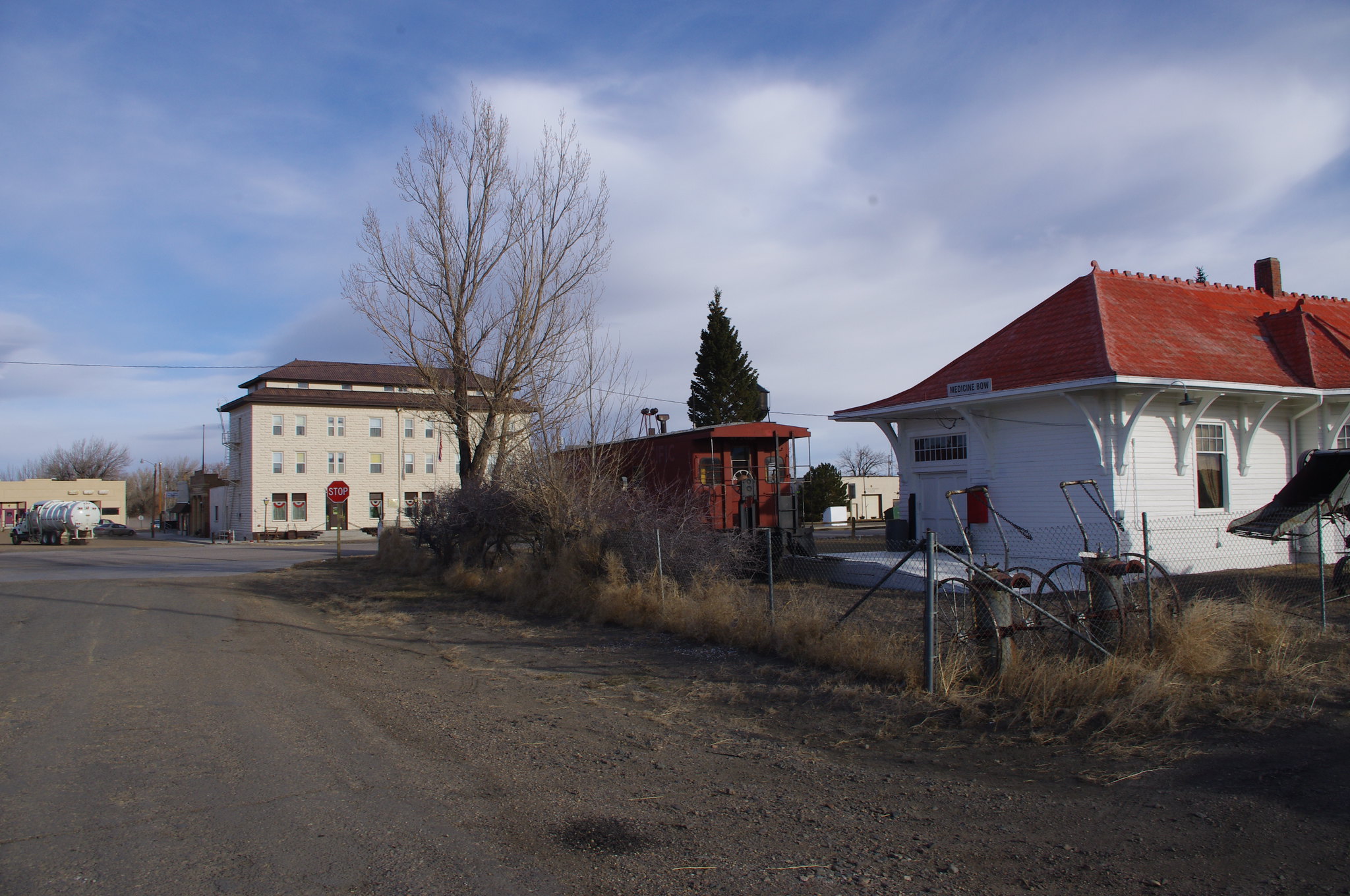
Virginian Hotel in background, old Union Pacific depot to the right.  The hotel is named after the protagonist in Owen Wister's novel, which starts off in Medicine Bow.

The big news on this day is that Andrew Carnegie, the industrialist turned philanthropist, died at age 83.  His passing as headline news.

Carnegie in 1905.

In Germany, the Weimar Constitution was formally adopted.  With that, Germany had officially passed from having a caretaker government made up exclusively of Socialist to being a liberal parliamentary democracy. The shepherding of that effort by the heads of the SDP had been a difficult one, meeting opposition from the more radical left which wanted a government of soviets, and which was willing to rebel in support of that cause, and only barely supported by the right, which was already turning to militarism.

On the same day, the Reichstag passed the Reich Settlement Act, and agricultural act that provided for limited land redistribution.  The act did not result in a large scale change in German agricultural land owning patters but it did ultimately result in 57,000 German farmers coming into land ownership.  It's passage took a middle of the road approach to land questions signaling the moderate nature of the postwar German parliament.

Friday, September 30, 2011

Saturday, September 30, 1911. The Virginian opens.

Today In Wyoming's History: September 30: 1911. The Virginian Hotel opened in Medicine Bow.

It's named after the central character in Owen Wister's classic Western novel written in 1902.

The Virginian, Medince Bow, Wyoming.


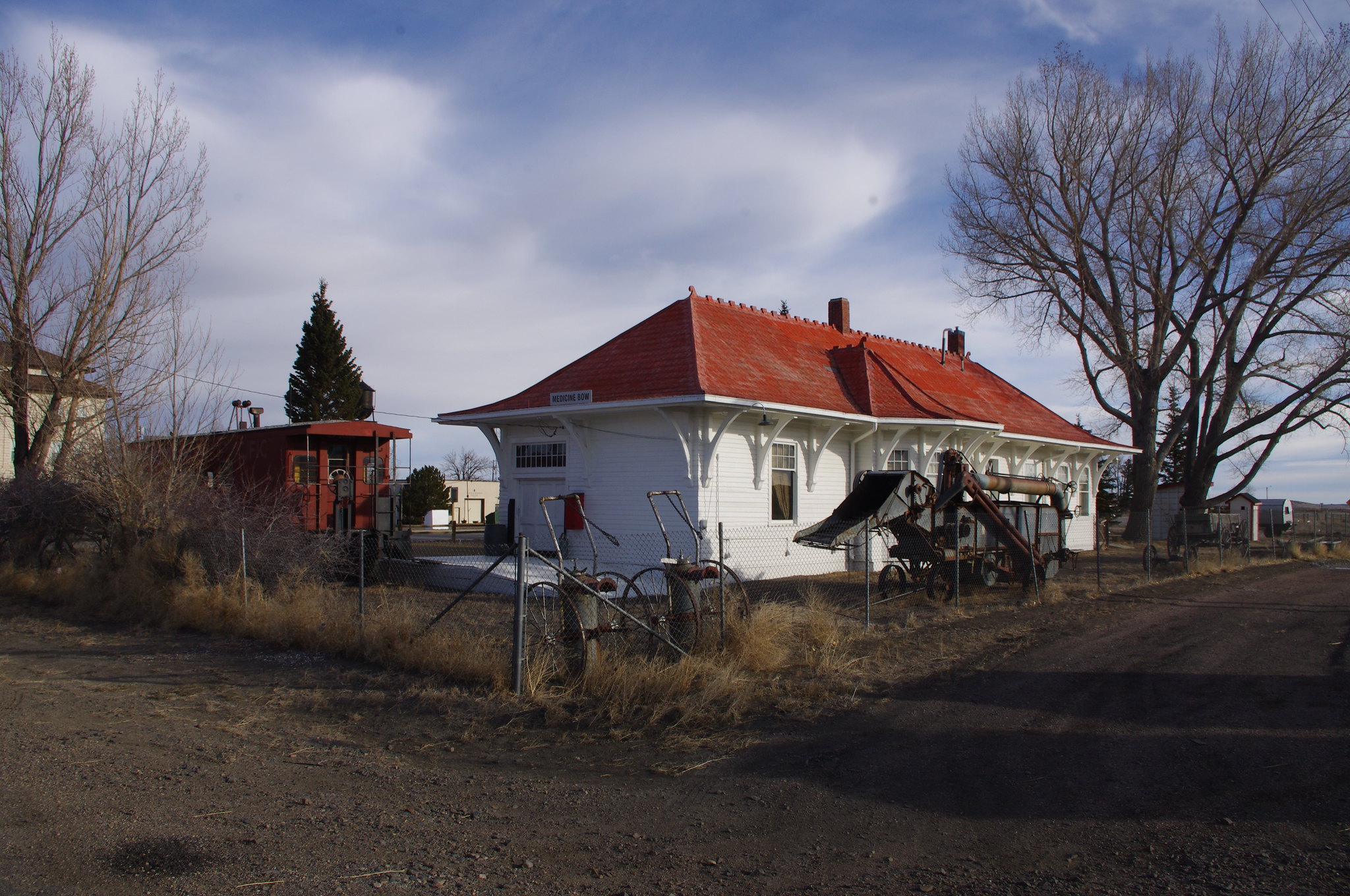
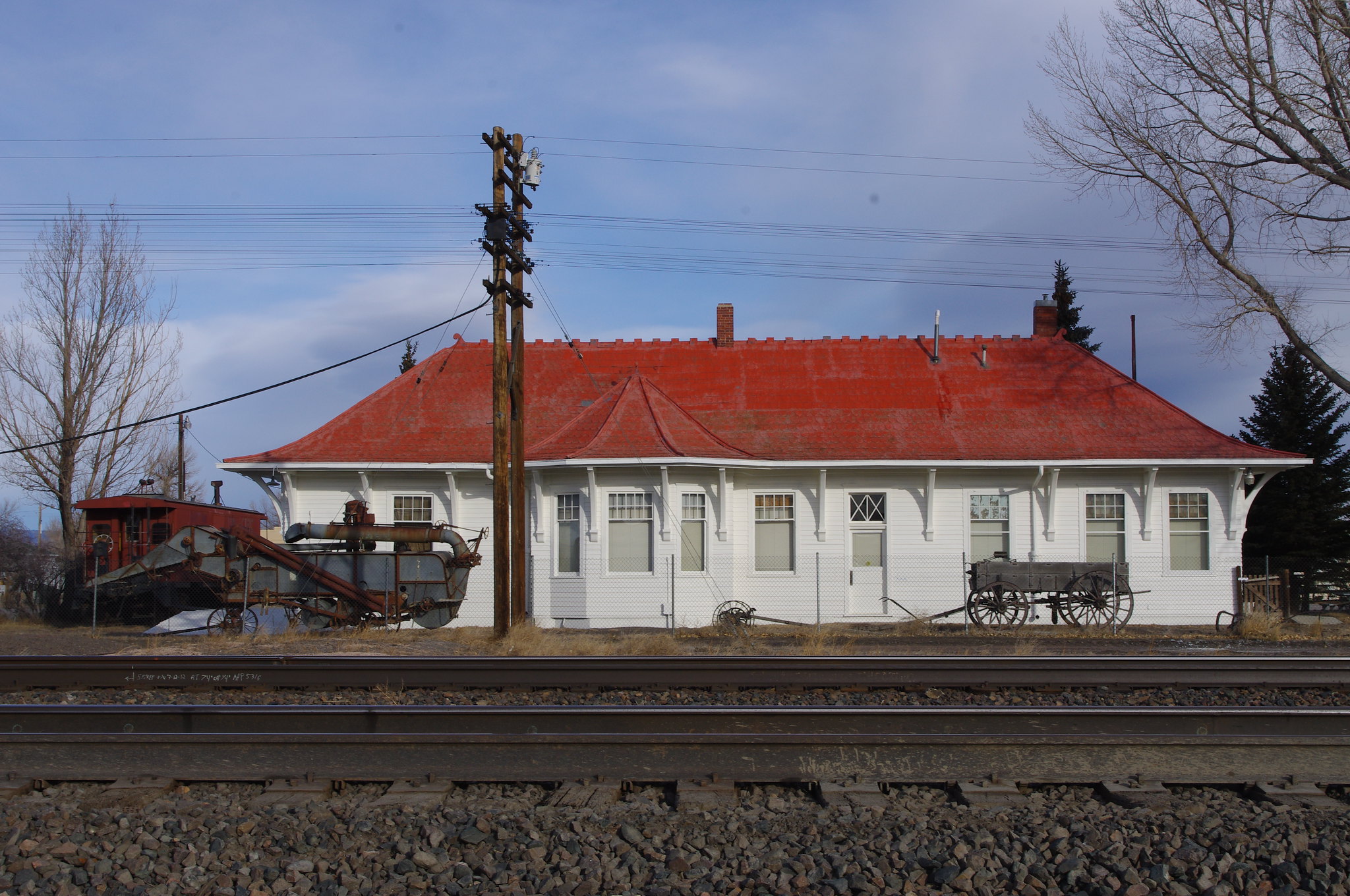
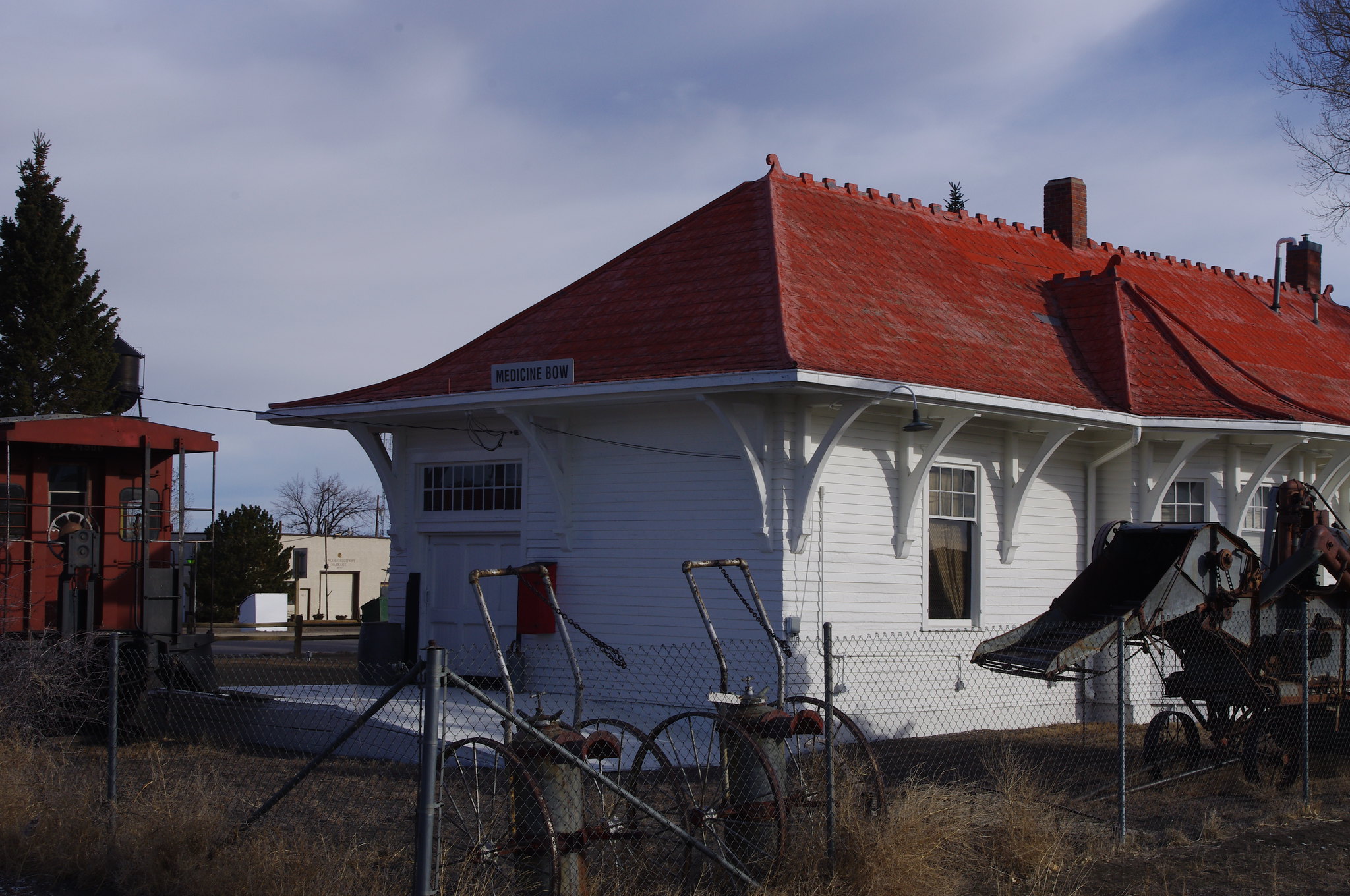
Medicine Bow Union Pacific Station, Medicine Bow Wyoming


This a classically styled small town railroad station, located in Medicine Bow, Wyoming.  It's now a museum.


View with the Virginian Hotel just in the background, showing the typical arrangement between train stations in hotels in the days when long distance transportation was generally by rail.

The concrete dam maintained by Bayless Pulp and Paper Mill outside of Austin Pennsylvanian burst killing 78 people 


A baseball game in Madison, NJ>


Main & Genesee Streets, Buffalo, NY, September 30, 1911.

Last edition:


Friday, June 26, 2009

Saturday, June 26, 1909. Smile when you say that.


Today In Wyoming's History: June 26:   1909  Medicine Bow becomes an incorporated town.

Andreas Cornelis van Kuijk, known to history as Colonel Tom Parker, Elvis Presley's manager, was born in Breda, Netherlands.  While he only entered the US at age 20, he could flawlessly speak English with a Southern accent.


Last prior edition:


Saturday, May 2, 2009

Transportation, late 19th Century


A modern highway map shows as distance of 211 miles from Worland, in the southern half of the basin, to Rawlins, and 293 miles from Cody to Green River, but modern transportation systems are not remotely like those of 1879. In practical terms, Green River and Rawlins were further from the Big Horn Basin in 1879 than they are now from Outer Mongolia, and criminal prosecution was nearly impossible.

There were no roads leading south from the basin, only trails. At least one yearly trip to the Union Pacific had to be made, though, because in the early 1880s this was the nearest railhead, the only real opening to a market to sell cattle and get supplies. E. W. Copps declared that the cattle drive from Buffalo to Rawlins, a trip that did not require a traverse of mountains, took eighteen days. Coming from the basin, however, a cattle owner first had to get out, and any exit required going over an 8,000-foot pass, such as Birdseye Pass or Cottonwood Pass; thus, David John Wasden's estimate of six weeks for a round trip seems about right. Of course, the return trip, when cattle were not being driven, did not take as long but was still arduous. Owen Wister describes a 263 mile excursion from Medicine Bow "deep into cattle land," a trip taking several days by wagon, while "swallowed in a vast solitude." His description sounds like a journey north into the Big Horn Basin.
Goodbye Judge Lynch, by John W. Davis.