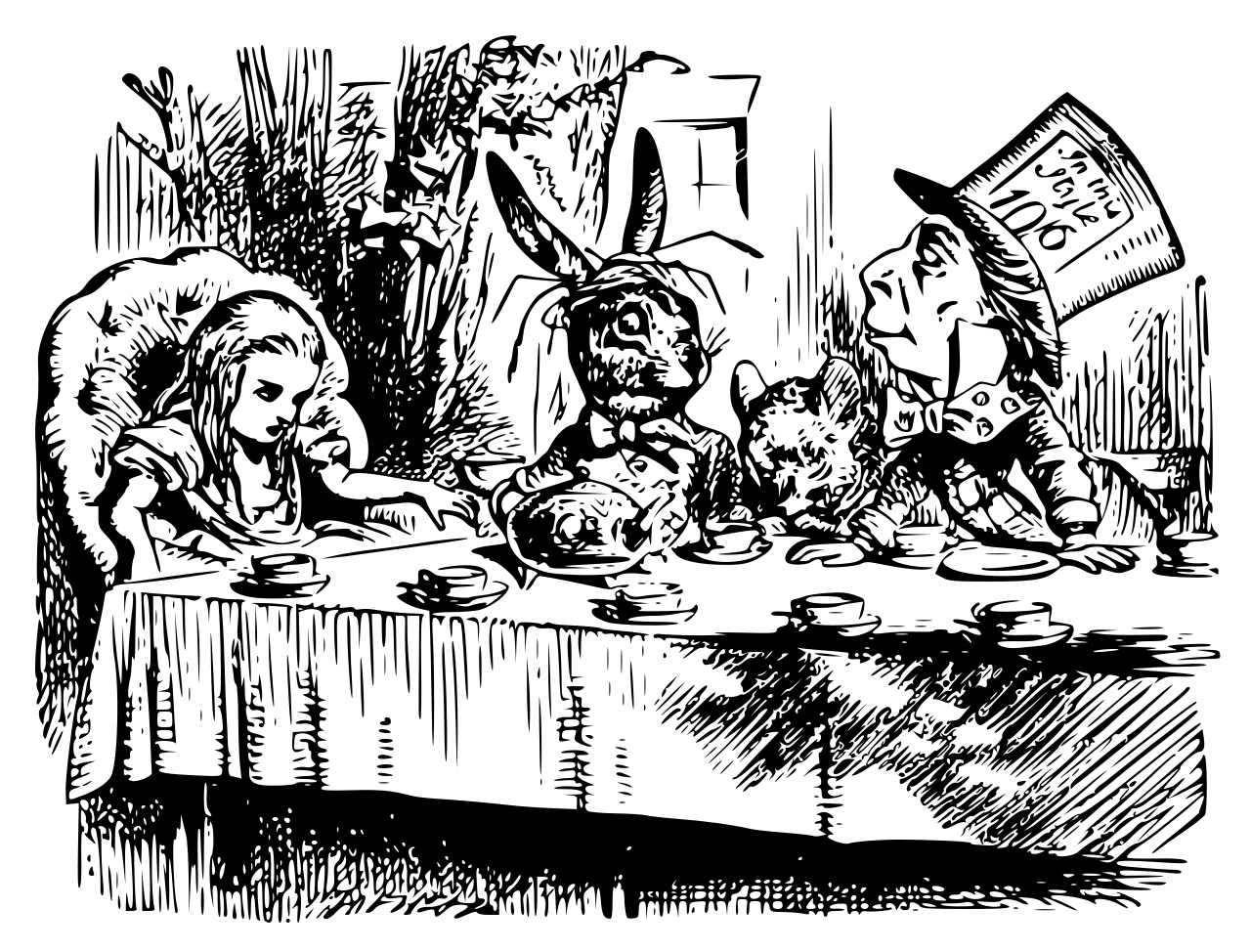
We noted the passing of Wendell Berry here on September 1, but I didn't go into much introspection on him in relation to us. This omission was, ironically, time caused.
I didn't have time to.
Since Berry's death I've ready comments by people, principally on Twitter, reflecting on how influential Berry was on them. He was certainly influential on me, but not quite in the way that he was on others. Berry wasn't the source of my world view. Rather, what he was was the distiller of it.
I had an Agrarian mindset before I'd ever heard of Berry. I came into Berry, in fact, because I had an agrarian mindset. Indeed, I had an agrarian mindset before I had heard of agrarianism in a philosophical sense. I was really a nascent agrarian by the time I graduated from high school, although only vaguely so.
By the time I had graduated from university as an undergrad, I was a full blown, if undefined, agrarian. What I really wanted to do was to hunt, fish and garden, and be allowed to do so. If I could have, I would have ranched. I didn't have the means to do that, or to make my other goals my present habitus or mode of living, at least in full, although at the time wildgame provided most of my meat, and my father's garden most of my produce. What I didn't have, was a good and steady income and the destruction of the extractive economy, which I was disenchanted with anyhow, kept me from having one. I had already found a literary fellow traveller in the form of Aldo Leopold.
Law school seemed my only option, and so I went.
The Agrarian impulse however only strengthened during that time. Getting out of law school in 1990 I recall telling a friend of mine that I had no ambition, as all I wanted to do was ranch. He told me that didn't mean I had no ambition, that was my ambition. Well, that's one of those insights that is a bit shocking when you first hear it, but it was correct. At that time I still carried a sort of weltanschauung that required me to make something of myself in the eyes of the world, something that had been instilled by my mother.
In spite of starting practicing law, my agrarian world outlook only increased. At that time I discovered the Southern Agrarians somehow, which was mind blowing. For the first time, really, I learned that there others who held the same viewpoints on many things that I did. The Southern Agrarians, who are very problematic on some things, nonetheless really helped define my philosophical worldview to me and I realized that what I was, was an agrarian.
The Southern Agrarians were almost all dead by that point in time. Only Andrew Nelson Lytle was left alive. So the movement seemed to be dead itself, but the arrival of the Internet allowed even a very isolated person such as myself to learn who else was out there. That lead me to Gene Logsdon and Wendell Berry. Berry was by far the more influential.
Indeed, Berry took the world out look I had and really distilled it. There were a lot of things I believed but I didn't have the existential nature of defined. Berry did that for me. His influence on how I sese the world was massive.
Distilling my world view didn't stop with Berry. Sometime after discovering him I discovered the Distributist, including Chesterton, and that really completed it, basically. I often say, when there's ears to hear it, that while not all Distributists are Agrarians, all Agrarians are Distributist.
Berry stands in my intellectual formation with Leopold and Chesterton, three men who now are at some lively gathering beyond the veil.
Berry's death is a major and tragic loss for the intellectual life of the nation. Not just agrarianism, but the soul of the United States itself. Berry lived life the way it really should be lead. He was deeply Christian (he was a Baptist) and a man of letters who farmed. He saw America for what it was, what it had become, and what it should return to. He advocated for Christian principles and lived a Christian life, while having a deep land ethic and understanding of the land itself. He urged us to "become native to this place".
I've never really been able to pull off what he lived and advocated. But I may be about to.
Berry, in his youth, was an opponent of the Vietnam War in a region that was likely not opposed to it. His departure comes during the reign of Donald Trump.
Berry, like all true agrarians in contemporary society, likely knew that what he stood for was not going to be adopted by the culture at large. The Southern Agrarians were already lamenting the destruction of the last of agrarianism during the 1930s. The Unsettling of America, a masterpiece, was published in 1977. Particularly after the election of Ronald Reagan, each passing year has made the plight of agrarians worse in this country, as its yielded to an unprincipled culture and greed. Restraints placed on the evolution by the law, which do exist, and by the culture, which also exist but which are greatly weakened, have nearly fallen by the wayside.
Berry was 93 when he died this past week. Donald Trump, suffering from dementia in the Oval Office while nearly ruling as a dictator, is 80 years old. Berry was of the Silent Generation (Leopold was of the Lost Generation). Trump is a Baby Boomer and virtually defines that generation, in spite of what many in it would like to believe.
Berry stood for, and will continue to stand for, the opposite that everything Donald Trump does. He was a sincere Christian deeply in nature and the virtues of self control on al things. Trump is, at best, a faux Christian who stands for destruction and avarice. They represent the two poles that struggle for the soul of the nation, one who would anchor us in a quiet and unassuming harbor, and another who would drag us out into and down under in the tempest.
Wendell Berry, August 5, 1934 – August 31, 2026. May the perpetual light shine upon him.
Something I hadn't expected, but which really says something about our times, is that the murder of Charlie Kirk is already, for the most part, in society's rear view mirror.
Yes, there's a lot of discussion about it still, but it's in the chattering class, which I suppose includes this website. Otherwise, things have already moved on.
The speed at which news moves, and the lack of attention to it, is a very bad thing.
Of course, now that it doesn't really appear to be a politically motivated killing, it's lost its attraction as a story to some degree.
A fictional narrative
The story, as noted, is now in the domain of the chattering classes, but also the possession of right wing myth makers, which are really working on it. The odd thing here is that the media has an incentive to downplay what is being learned about the killer, and to an extent, the MAGA myth organ does as well.
What we now know about the killer, Tyler Robinson, is that he was a homosexual living with another homosexual who was in the process of being mutilated to take on the appearance of a woman. Unless this isn't clear enough, they were in a "romantic" relationship, which means they were engaged in sodomy. The "transitioning" roommate was apparently shocked by the killing, but according to one family member, that person was deeply anti Christian and hated political conservatives.
Now, the reason that this isn't getting this much press as the "transgendered" aren't particularly associated with crimes of any kind, let alone violent ones, and homosexuals certainly are not, but this story is deeply weird. A man trying to become a woman is deeply weird, and it is not the same thing as homosexuality. One man screwing another man who is trying to take on female morphology is very weird as well.
We touched on this in a post about Robert Westman, who was an actual "transgender" figure who committed a mass shooting recently. Indeed, he's the only "transgender" figure I know of to commit one, the overwhelming majority are white hetrosexual men.
We make men without chests and expect of them virtue and enterprise. We laugh at honor and are shocked find traitors in our midsts. We castrate and bid the geldings be fruitful.
C.S. Lewis.
I explored the topic pretty fully there, and I'm not going to repeat it here other than to note that finding a transgender person hating Christianity isn't surprising. Real Christianity holds that to be wholly immoral, even while real Christianity still loves the person. And such a person hating conservatism isn't surprising either, as conservatives hold a similar view.
Robinson wasn't the transgendered person here, but the whole story of this relationship would lend to the theory that he was pretty pliable as a personality. The point is, therefore, this likely wasn't really an act of domestic terror in the conventional sense, so much as it was a person reaching out under the influence of a sexual partner. In an odd sort of way, this killing is more comparable to Dr. Carl Austin Weiss Sr.'s murder of Huey Long, which was over redistricting that impacted his father in law. I.e., a personal connection is likely to have motivated it more than any overarching weltanschauung.
That's a story that's not really going to get explored, I suspect. The right wing wants Kirk to be a martyr, the left doesn't want to talk about the mental health issues this really brings up.
Groypers?
I'd never heard of this term before, but apparently they are followers of Nick Fuentes. As I don't pay any attention to Fuentes, I didn't know that.
Apparently they've drawn a lot of attention following Kirk's murder as there was some peculiar speculation that they were responsible for it. They obviously are not, but that speculation was there, and I'm not sure why.
Fuentes, whose movement is outwardly anti homosexual, as well as anti a bunch of other stuff, has said some really odd things in this arena, one being that having sex with women is gay. Eh? Another apparently was that homosexual sex doesn't mean what it used to, as women aren't living up to their reproductive responsibilities.
A shit post?
This is a really interesting analysis of this topic.
The extra scary part of this is noting, as this person does, how many people in Trump's administration sort of fit into the same demographic.
Not in homilies
Apparently, at least according to Twitter, a lot of people are mad today as their parish priest didn't include a reference to Kirk's murder in their homilies yesterday.
Why would they?
For Apostolic Christians, Catholic and Orthodox, yesterday was the Feast of the Cross, and homilies probably largely had to do with that. Moreover the Catholic Church is just that, catholic, i.e., universal, and this is a domestic American matter that remains unclear. Kirk wasn't attacked because he was Catholic, he wasn't, and the attack upon him may only have a tangential relationship with his Christianity.
Nonetheless, I saw one person who was irate at the Pope for having not mentioned it.
Spencer Cox
The guy who is really coming out looking good after all of this is Utah Republican Governor Spencer Cox. He's spoken multiple times and has been a calming voice every time.
This isn't the first time he's waded into these issues. Following the killing at an Orlando gay bar some years ago he appeared at a vigil and stated:
How did you feel when you heard that 49 people had been gunned down by a self-proclaimed terrorist? That’s the easy question. Here is the hard one: Did that feeling change when you found out the shooting was at a gay bar at 2 a.m. in the morning? If that feeling changed, then we are doing something wrong.
Cox's comments are clearly against the stream of the MAGA mainstream. He was originally a never Trumper but claimed to have changed his mind and voted from Trump in his Presidential contests. I suspect we'll be hearing more out of Cox going forward, and he may very well be a Presidential candidate in 2028.
Ballroom Blitz
King Donny went from being outraged by the Kirk killing to bemoaning how it interrupted his might fine, in his mind, ballroom from being the focus of everyone's adoring attention.
That's pretty weird.
Also weird is how quickly this is going up. It's apparently under construction right now. Trump clearly wants it up before he leaves office, on the theory that will mean nobody will take it down.
The monstrosity will now be 40% bigger than originally planned.
Quite frankly, I thought this vandalization of the White House would not actually occur, as it would, in normal times, take quite a while to design and engineer a building. Indeed, I was frankly planning on just that. I never thought the monstrosity would go up, as whomever is Present next won't be stupid or narcissistic enough to bother with a Trump "look at me!" ballroom. It's really moronic.
But it's going up.
If I were President, which of course I never will be, my first executive order would be for the Army Corps of Engineers to remove the offending pile of dogshit within twenty foour hours of my being sworn in. I'd have the resulting trash hauled and upmed in front of Trump Tower. But that won't happen. Trump is probably right. A giant cancerous growth will be there forever.
Here is the oldest photo of the structure, and what it's actually supposed to look like:
Of course, as it might be noted, the building has been altered before, most notably the addition of the West and East Wings. Those additions were made due to legitimate working concerns, however.
Again, if it were me, I'd be tempted to take it back to purse original. It's just supposed to be a big house.
A rational question would be why does this bother me so much? Well, perhaps I just have an irrational reaction to all things Trump by this point. But the ostentatiousness of the whole thing smacks of trying to be The Sun King.**Have we reached that point in this country? I fear we have.
We've always had rich men, of course, but this is the era of fabulously wealth men. It's not right.
Maybe we have it too darn good (so we're self sabotaging).
It sounds absurd, but there's something to it.
The current Wyoming Catholic Register has an article pointing out that, in 1980, the year before I graduated from high school, 40% of the world's population lived in desperate poverty, an improvement from the mid to late 19th Century when it was 90%.
Now, just 10% does.
Big, huge, improvement.
By any objective measure, the condition of the world has massively improved.
Why do we believe otherwise?
Evolutionary biology has a lot to do with it. We evolved to live in a state of nature, and nature if pretty rough on everyone. So we're acclimated to things not being quite right, and trouble being just around the corner. Now, for most of us, that's not the case.
Gershwin wrote:
Summertime and the livin' is easy
Fish are jumpin' and the cotton is high
Oh, your daddy's rich and your ma is good-lookin'
So hush little baby, don't you cry
Well, it turns out that in summertime when the cotton is high and the fish are jumping, we're looking for a thunderstorm and worried about work on Monday.
I know that I do.
And a super rich society, like ours, seems to make up its own problems.
This is all the more the case when the gates are off the door, as they are. Now, not only are there all our real and imagined problems, but we just go ahead and make new ones up. Woman trapped inside a man's body? Not if the Goths are at the city gates planning on killing everyone.
Anyhow, it seems like we're busy, now that we are in the richest period of our existence as a species, making sure that real problems appear. Apparently we missed them.
Footnotes
*Ballroom Blitz is an early 1970s, rock song by the band The Sweet.
Vance, on the same day he assisted in berating President Zelenskiy.
James Donald Bowman of Middleton Ohio is sort of a hard guy to figure out. Bowman, and that's his real name, or rather the one he held at birth, grew up in a suburb of Cincinnati, not exactly part of Appalachia. His parents divorced when he was very young, and when he was six, his mother married for the third time, and his name was changed to James David Hamel. That's the name he served in the Marine Corps under, and went to university under. He didn't become "J. D. Vance" until he was ready to graduate from Yale Law school. Vance was the last name of his maternal grandmother.
Vance has also changed religions over the course of his lifetime. As a proper Hillbilly would, he was once a member of an Evangelical faith, that of his fathers. By the time he was out in the world, however, he was an atheist. He became Catholic through the influence of a Yale law school friend, and became a very traditionalist Catholic at that.
I don't fault him the change in religions (I do the adult change of names, which I regard as phony). I am, of course, a Catholic, and I therefore welcome those into the faith. Moreover, I often find that converts are more devout than than "cradle Catholics", who often don't know their own faith all that well, although that's certainly not universal. And I admire traditionalist Catholics as well.
But here's where I begin to have a problem with Vance. Just as I don't admire Catholics who become another religion for convenience, something we've always experienced (it often used to be for economic reasons, but now is usually due to divorce and remarriage), I don't admire jettonsing of elements of the faith when it becomes difficult, and Vance has done just that. Catholics believe that life begins at conception, and that conception should always be via natural means. Vance has changed his position on abortion to tolerate it where states provide it should be, and he's okay with IVF ,which Catholics definitely are not.
Having said that, on basic moral principals, Vance was closer to the faith than many Catholic politicians have been since 1960.
But now he's an active Vice President, and things are beginning to shift again. He attempted to strain Catholic social teaching the other day to suggest that Catholics have a diehard family first position in regard to loving our neighbor, and got immediately rebuked.
Vance is actually the highest elected official in the United States right now, given that Donald Trump cannot Constitutionally occupy the position he pretends to without a Congressional dispensation he has not received. He's a convert to Catholicism, but occupies an odd status in that he's an intellectual conservative traditionalist convert, but with a wife who is a Hindu and who hasn't followed him there (my Protestant wife hasn't followed me either) and who has heavily compromised himself on certain principal Catholic moral teachings in his recent campaign.
So he makes for an interesting, if predictable, speaker at the National Catholic Prayer Breakfast, something that I frankly didn't know even existed.
His speech, and some comments.
I came here last year as a very young senator not knowing how much my life would change, and I'm thankful to God — but also thankful to the friendship of the people in this room for helping us get there, because I think that we have turned a new page in Washington, D.C., and we are going to take advantage of the opportunity that God has given us.
We?
So I want to say a couple of words just about Trump administration policy because, while you're certainly not always going to agree with everything that we do in President Trump's administration, I feel very confident in saying that between protecting the rights of pro-life protesters, between ensuring that we have an opportunity to protect the rights of the unborn in the first place, and importantly, protecting the religious liberty of all people — but in particular, Catholics — I think that we can say that President Trump, though not a Catholic himself, has been an incredibly good president for Catholics in the United States of America.
Now we know of course the last administration liked to throw people in jail for silently praying outside of pro-life clinics. We know that they liked to harass pro-life fathers of seven, very often, Catholic fathers, for participating in the pro-life movement. And we know that the last administration wanted to protect taxpayer-funded abortion right up unto the moment of birth.
The Biden Administration was extremely hostile to pro life positions, and tacked to the extreme left on social issues in general. Whomever allowed Biden to take these turns, and I suspect it wasn't Biden's idea, should be severely dope slapped. In large measure, it's such things that gave us King Donald.
On every single one of those issues, in 30 short days, Donald J. Trump has gone in the exact opposite direction and I am thankful for that. And I'm sure that every single person in this room is thankful for that as well. But I actually want to talk about a couple of other things in particular.
One of the most important parts of President Trump's policy, and where I think President Trump's policy is most in accord with Christian social teaching and with the Catholic faith, is that more than any president of my lifetime, President Trump has pursued a path of peace. And we very often, I think, ignore the way in which our foreign policy is either an instrument or an impediment to people all over the world being able to practice their faith. And we know — and as, of course, I learned in this breakfast last year — I believe there were some Nigerian priests who were being persecuted, and were trying to protect their flock despite incredible persecution.
Trump has followed a path of being a bully, trying to extort the mineral wealth of another country, while making it compromise with an invader.
There will always be wars and rumors of war. Ukraine is justly defending itself. Catholics are not pacifists.
We know that some of the biggest groups that are persecuted all over the world today are Christians and the Trump administration promises you that whether it's here at home with our own citizens or all over the world, we will be the biggest defenders of religious liberty and the rights of conscience. And I think those policies will fall to the benefit of Catholics in particular all over the world.
But I would say, my friends, that it's not enough simply to protect the rights of conscience, to pursue funding opportunities and grant-making opportunities that protect the rights of people to engage in religious conscience. We also have to remember that oftentimes the biggest impediments to religious liberty have not come through malice from the United States government but have actually come through carelessness. And one of the things that — I have to be honest — that I am most ashamed about, is that in the United States of America, sometimes it is our foreign misadventures that lead to the eradication of historical Christian communities all over the world.
And so when President Trump talks about the need to bring peace whether it's in Russia and Ukraine, whether it's in the Middle East, we of course have to recognize that, as a policy oriented towards saving lives, and carrying out one of Christ's most important commandments, but I think we also must recognize it as an effort to protect the religious liberty of Christians. Because over the past 40 years, it has often been historical Christian communities who bear the brunt of failed American foreign policy and that is, in my view, perhaps the most important way in which Donald Trump has been a defender of Christian rights all over the world. He has a foreign policy that is oriented towards peace.
Trump's peace policy in the Middle East involves siding with one group of people in their entirety while thinking, as his tiny brain does, that the others can happily simply be moved to a second rate Middle Eastern version of a Florida housing development.
We have done it already so much in the past 30 days, and I'm proud that we will work for peace all over the world in the remaining four years of President Trump's term, and I think that's an important thing.
Now of course, we're not always going to agree, and I'm sure that there are people in this room who agree or disagree with some of our views on foreign policy on any number of issues. The one thing that I will promise you is that you're always going to have an open door with me and with the president. I think that you've already seen that, and if you haven't, please come and bring your concerns — and some of you have already brought many concerns to me over the last 30 days — but also your “attaboys,” because I think that part of being a good presidential administration for people of faith all over the United States, part of it is listening to people of faith when they have concerns.
And I think that it's important — and I'll make this commitment to you in front of God, and in front of all those television cameras back there — that we will always listen to people of faith and people of conscience in the United States of America. You have an open door to the Trump administration even if, and especially maybe when, you disagree with us. So please use that opportunity: communicate with us when we get things right but also when we get things wrong. And that is my solemn obligation but also my request because, of course, as I've learned during the campaign — of course, I've got Secret Service protection and it's bumped up now that I'm the vice president of the United States — I live in a bubble, ladies and gentlemen, I live in a roaming bubble and wherever I go, I'm surrounded by armed agents. The only way to keep me honest, and the only way to know what is actually affecting the real lives of people all over our country, is for you to talk to us. So please, consider that open door very much an invitation, but also a request.
And I will say that I believe that I'm the first Catholic convert to ever be vice president of the United States, [applause] — I appreciate you guys clapping because, it turns out, there are some people on the internet who don't like Catholic converts. And in fact, there are some Catholics who appear not to like Catholic converts. I've learned that the hard way. But of course, the gross majority of of my brothers and sisters in Christ have been incredibly welcoming and Incredibly charitable and for that I'm grateful.
Vance's comments about converts and the Internet here are quite valid. Vance has proven to be polarizing, including amongst Catholics, which has lead to Twitter wars of a very unfortunate nature. As noted, converts are often amongst the most devout Catholics.
I wanted to just reflect on that, on being a Catholic and particularly a Catholic convert in public life, in the hopes that maybe it would provide some wisdom or some guidance, or maybe just some interesting stories for those of you who are enjoying your breakfast. And you know, one of the things that I try to remind myself of as a convert, is that there's a lot I don't know. When I was a kid, we used to call new converts to the faith “baby Christians” and I recognize very much that I am a “baby Catholic” — that there are things about the faith that I don't know. So I try to be humble as best I can when I talk about the faith and publicly, because of course, I'm not always going to get it right. And I don't want my inadequacies in describing our faith to fall back on the faith itself. And so if you ever hear me pontificating about the Catholic faith, please recognize it comes from a place of deep belief, but it also comes from a place of not always knowing everything all the time.
And you know, now I say that of course, I don't try to comment on every single Catholic issue. I try not to get involved in the civil wars between Dominicans and Jesuits and conservative Catholics and progressive Catholics. But as Michael Corleone said in The Godfather, “Sometimes they pull me back in.” Sometimes I can't help — I can't help but spout off. I am a politician after all, ladies and gentlemen.
But the thing that I have tried to remind people of, and the thing that I try to remind myself of, is that what attracted me to the Christian faith, and what attracted me to this Church in particular, is the recognition that grace is not something that happens instantaneously. It's something that God works in us over a long period of time — sometimes many years, and sometimes many decades. I think that when I I was a kid, my assumption was that grace is something where the Holy Spirit would come in and it would solve all of our problems.
I learned the hard way, as a Catholic — in part, by following the sacramental life as best as I could — that grace is very much a process that God works in us over time. He makes us closer to him and makes us better people in the process. And so when I first became a Catholic, I would probably go to confession every other week because I would fail to go to Mass every other week. Things would come up, you'd have business trips you'd have — the kids would get sick — and I just remember that this process of thinking: okay, if I don't go to church this week I'm going to have to go and talk to some stranger about everything that I did bad the last two weeks, and that process worked in me a much better discipline, a much better prayerful life. And you know I'm batting probably like 95% of Sundays now that I actually go to Mass. This is, I think, one of the geniuses of our faith — that it teaches us through repetition in some ways, and it forms us through a process, of course, that is I think at the heart of the mystery of faith, that somehow by practicing the sacraments — even imperfectly, as I certainly do — God transforms us.
And while I am as imperfect a Christian as any person in this room, I really do feel that God is transforming me every single day, and that's one of the great blessings of our faith, and one of the great blessings of following the sacraments as I try to do. So thank you all for welcoming a convert into your ranks, because I certainly benefit from it — and my family does too.
The second thing that I take from my Catholic faith is a recognition that the deepest and most important things are not material. They're not GDP. They're not the numbers that we see in the stock market. The real measure of health in a society is the safety and stability and the health of our families, and of our people. We are in the business, in President Trump's administration, of producing prosperity, but that prosperity is a means to an end. And that end is the flourishing, hopefully, of the life of every single citizen in the United States of America.
Trump, his supposed boss, does believe that the only thing that matters in the world is wealth, and therefore is an extreme materialist. He's put part of the government in the hands of a materialist atheist.
That's why we care about these things. I often remind myself that there have been times in the past where you know the GDP numbers were maybe moving in the right direction, where the stock market was moving in the right direction, but the United States of America was losing life expectancy. I think that what the Catholic Church calls me to do is to say that if the stock market's doing okay, but people are literally dying and losing years off of their life, then we have to do better as a country.
We do, which raises the question of why we'd wipe out USAID, which was a lifeline for many people around the world.
Catholicism — Christianity at its root, I think — teaches our public officials to care about the deep things, the important things, the protection of the unborn, the flourishing of our children, and the health and the sanctity of our marriages. And yes, we care about prosperity but we care about prosperity so that we can promote the common good of every citizen in the United States of America.
And when I think about the deep things, the things that really matter there was something really amazing that happened to me in November of 2024. All my friends were there, all my family was there. We were gathered together in a great moment of celebration and, of course, I'm talking about when my 7-year-old chose to be baptized into the Christian faith. And he's at school right now, so he won't see this, but as amazing as it was to win the election of course in November of 2024, and as amazing as it was to know that President Trump would become president again and would get to accomplish so many good things for the American people, the thing that I was most excited about in November of 2024 is that the week after we won the election my son chose to be baptized in the Christian faith.
Now here's the basic idea, and and for those of you, of course — you all mostly are cradle Catholics, I assume — typically we do water baptism of infants in the Catholic Church very very early on. But as many of you know, I am part of an interfaith marriage. My wife, though she comes to church with us almost every single Sunday, she is not Catholic herself. And so the bargain that we have struck is that we will raise our kids Catholic, but we will let them choose the moment that they want to ultimately become baptized. And if that's terrible sacrilege, blame the Dominicans, because they're the ones who came up with this scheme.
But my 7-year-old elected to become baptized and it was the proudest moment maybe that I've ever had as a father, and he took it very seriously and he wanted to know what are the right things to say: 'Dad what do I need to do? What does this mean? Why is this important?'
And it was an amazing thing for me to see :my 7-year-old working through these things himself and when I talk about the deep things, the important things, that's what I I'm talking about. Of course we care about our economic indicators and of course we care about the wages of our citizens. We care about those things because when our people are doing better they can have the kinds of moments that promote the kind of flourishing that all of us believe is the very core of a good human life and that of course, in my case, was watching my little 7-year-old son become baptized.
And so while, again, I will never be perfect, I will always try to remind myself that the goal of our public policy is to promote the common good and I will fight for that every single day that I am a public official.
And that brings me to the final observation I'd like to make as a Christian, a Catholic convert in public life, is that you know, sometimes the bishops don't like what I say and I'm sure, by the way, sometimes they're right and sometimes they're wrong. My goal is not to litigate when I'm right and when they're wrong or vice versa. My goal is to maybe articulate the way that I think about being a Christian in public life.
When you also have religious leaders in public life who have a spiritual duty to speak on the issues of the day and the way that I try to think about it is, the Catholic church is a kind of technology. It's a technology that was developed 2,000 years ago and it's coming into contact with a technology that's about 10 years old, 20 years old — and that's, of course, social media.
What I I try to remind myself of, is that the clergy are important spiritual leaders. You'll sometimes hear people say, ‘Well we'll let, you know, the clergy talk about matters of the Church, but we can ignore them when it comes to matters of public policy.’ I think that's the wrong way to look at it. That's certainly not the right way to look at it for me. But what I try to remind myself of is that we are not called as Christians to obsess over every social media controversy that implicates the Catholic Church, whether it involves a clergy or a bishop or the Holy Father himself.
I think that we could frankly take a page out of the books of our grandparents who respected our clergy, who looked to them for guidance, but didn't obsess and fight over every single word that came out of their mouth and entered social media. I don't think that's good and I'm not again counseling all of you but I don't think it's good for us as Christians to constantly fight with one another over every single controversy in the Church. Sometimes we should let this stuff play out a little bit and try to live our faith as best we can under the dictates of our faith and under the dictates of our spiritual leaders, but not hold them to the standards of social media influencers because they're not.
That brings me of course to the last point that I want to make which is that, as you've probably seen publicly, the Holy Father, Pope Francis, has criticized some of our policies when it comes to immigration. Again, my goal here is not to litigate with him or any other clergy member about who is right and who is wrong. You obviously know my views and I will speak to them consistently because I think that I have to do it because it serves the best interest of the American people.
I hate the casual use of the world "litigate", but frankly it's one of Vance's favorite.
What I want to do instead is remind, and I talk to a lot of conservative Catholics and I talked to progressive Catholics too, and I think that sometimes a lot of conservative Catholics are too preoccupied with their political criticisms of a particular clergy member or the leader of the Catholic Church. And of course, I'm not telling you that you're wrong because sometimes I even agree with you. I think that what I would say is that it's not in the best interest of any of us, again, to treat the religious leaders of our faith as just another social media influencer, and I think frankly that goes in both ways if I can be so bold.
I think it's incumbent upon our religious leaders to recognize that in the era of social media, people will hang on every single word that they utter even if that wasn't their intention and even if a given declaration wasn't meant for consumption in the social media age, but every day since I heard of Pope Francis' illness, I say a prayer for the Holy Father because while yes, I was certainly surprised when he criticized our immigration policy in the way that he has, I I believe that the Pope is fundamentally a person who cares about the flock of Christians under his leadership. And he's a man who cares about the spiritual direction of the faith.
I say this because every day me and my children have said a prayer for the Holy Father and we pray for his health and we pray for his comfort as he deals with what appears to be a a pretty serious health crisis.
And while, yes, some of our media and some of our social media influencers and even some of us fellow Catholics I think, try to bring the Holy Father into every culture-war battle in American politics, I will always remember the Holy Father — whether he makes his way through this illness, and I certainly hope that he does — I will always remember the Holy Father in March of 2020 at a time of incredible stress for really the entire world, remember that was the height of the COVID pandemic. None of us knew how bad it was. We heard reports from Italy of people dying en masse on ventilators and personally, I had just a few weeks earlier welcomed our second child into the world and so when the pandemic happened, I had a 3-week old baby at home and I went to Dick’s Sporting Goods and I bought 900 rounds of ammunition and then I went to Walmart and I bought two bags of rice and I sat at home with my bags of rice and my 900 rounds of ammunition and said, “All right, we're just going to wait this thing out,” and into that void when a lot of people didn't know how bad it was, and of course, thankfully the pandemic was not as bad as the very worst predictions. It was quite bad, but not as bad as the very worst predictions.
Ugh, the AR15 Effect and the Stalingrad Weltanschauung making an appearance.
I think all of us can remember that moment of the Holy Father standing in an empty St Peter's Square holding the Eucharist above his head and giving a sermon that I returned to consistently because it was incredibly meaningful to me at the time and it remains meaningful today — and so if you'll forgive me, I hope that you'll be okay with me reading just an excerpt of the homily that Pope Francis gave:
‘When evening had come’ (Mark 4:35). The Gospel passage we have just heard begins like this. For weeks now it has been evening. Thick darkness has gathered over our squares, our streets and our cities; it has taken over our lives, filling everything with a deafening silence and a distressing void, that stops everything as it passes by; we feel it in the air, we notice in people’s gestures, their glances give them away. We find ourselves afraid and lost. Like the disciples in the Gospel we were caught off guard by an unexpected, turbulent storm. We have realized that we are on the same boat, all of us fragile and disoriented, but at the same time important and needed, all of us called to row together, each of us in need of comforting the other. On this boat … are all of us. Just like those disciples, who spoke anxiously with one voice, saying ‘We are perishing,’ so we too have realized that we cannot go on thinking of ourselves, but only together can we do this.
It is easy to recognize ourselves in this story. What is harder to understand is Jesus’ attitude. While his disciples are quite naturally alarmed and desperate, he is in the stern, in the part of the boat that sinks first. And what does he do? In spite of the tempest, he sleeps on soundly, trusting in the Father; this is the only time in the Gospels we see Jesus sleeping. When he wakes up, after calming the wind and the waters, he turns to the disciples in a reproaching voice: ‘Why are you afraid? Have you no faith?’
Let us try to understand. In what does the lack of the disciples’ faith consist, as contrasted with Jesus’ trust? They had not stopped believing in him; in fact, they called on him. But we see how they call on him: “Teacher, do you not care if we perish?” Do you not care: they think that Jesus is not interested in them, does not care about them. One of the things that hurts us and our families most when we hear it said is: ‘Do you not care about me?’ It is a phrase that wounds and unleashes storms in our hearts. It would have shaken Jesus too. Because he, more than anyone, cares about us. Indeed, once they have called on him, he saves his disciples from their discouragement.
The storm exposes our vulnerability and uncovers those false and superfluous certainties around which we have constructed our daily schedules, our projects, our habits and priorities. It shows us how we have allowed to become dull and feeble the very things that nourish, sustain and strengthen our lives and our communities. The tempest lays bare all our prepackaged ideas and forgetfulness of what nourishes our people’s souls; all those attempts that anesthetize us with ways of thinking and acting that supposedly ‘save’ us, but instead prove incapable of putting us in touch with our roots and keeping alive the memory of those who have gone before us. We deprive ourselves of the antibodies we need to confront adversity.
And that is how I will always remember the Holy Father: as a great pastor. As a man who can speak the truth of the faith in a very profound way at a moment of great crisis. And so I would ask all of us, if you would join me, in this prayer for Pope Francis:
In the name of the Father and the Son and the Holy Spirit. Almighty and generous God, we thank you for your charity. Please grant your mercy upon Pope Francis so he may be restored from sickness and guide us in watchful care. We pray that you bless our Holy Father's doctors, nurses and medical staff with wisdom and capability so that you may work through them to renew the health of your shepherd through Christ Our Lord. Amen.
As I conclude my remarks here: I'm not ever going to be perfect. I'm never going to get everything right. But what I will try to do is to try to be the kind of leader who helps our shared civilization build those true antibodies against adversity. And if the Holy Father can hear us, I hope he knows that there are thousands of faithful Catholics in this room and millions of faithful Catholics in this country who are praying for him as he weathers his particular storm.
God bless you.
Thank you.
Well, could be a lot worse.
I worry, however, that the Trump administration is going to result in a lot of harm to Christians in general, and Catholics specifically. Trump was raised as as Calvinist and both he and Musk act like them. Trump isn't close to Catholicism, he's close, for political purposes, to the New Apostolic Reformation Evangelical Christians who believe that the United States has a militant Protestant purpose. Catholic itself is a barely evolved Latin word, Catholicus, meaning universal. We have a universal world outlook, which the Trump administration seems to completely lack. When Trump's policies all fall apart, and they're already starting to, those on the outside will cast a negative eye towards "Christians", not realizing that much of what we're seeing has very little to do with "one, Holy, Catholic and Apostolic Church", and that we mean those words.
The last Catholic President, Joe Biden, didn't do Catholicism any big favors. The prior one, John F. Kennedy, didn't either. Let us hope and pray that J. D. Vance as Vice President, and probable President soon, won't walk that well worn path.
We’re going to be selling a gold card. You have a green card. This is a gold card. We’re going to be putting a price on that card of about $5 million and that’s going to give you green card privileges, plus it’s going to be a route to citizenship. Wealthy people will be coming into our country by buying this card. They’ll be wealthy, and they’ll be successful, and they’ll be spending a lot of money and paying a lot of taxes and employing a lot of people, and we think it’s going to be extremely successful.
Trump, who frankly gives no signs of being smart, but who is wealthy, simply sees everything in monetary terms.
That's it.
It really raises questions about what his personal life and the lives of those around him must be like.
And so, we find, a contemporary warped Zeitgeist, virtue signaling, cowardice, and bad reporting, have taken the state down the rabbit hole.
CHAPTER I.
Down the Rabbit-Hole
Alice was beginning to get very tired of sitting by her sister on the bank, and of having nothing to do: once or twice she had peeped into the book her sister was reading, but it had no pictures or conversations in it, “and what is the use of a book,” thought Alice “without pictures or conversations?”
So she was considering in her own mind (as well as she could, for the hot day made her feel very sleepy and stupid), whether the pleasure of making a daisy-chain would be worth the trouble of getting up and picking the daisies, when suddenly a White Rabbit with pink eyes ran close by her.
There was nothing so very remarkable in that; nor did Alice think it so very much out of the way to hear the Rabbit say to itself, “Oh dear! Oh dear! I shall be late!” (when she thought it over afterwards, it occurred to her that she ought to have wondered at this, but at the time it all seemed quite natural); but when the Rabbit actually took a watch out of its waistcoat-pocket, and looked at it, and then hurried on, Alice started to her feet, for it flashed across her mind that she had never before seen a rabbit with either a waistcoat-pocket, or a watch to take out of it, and burning with curiosity, she ran across the field after it, and fortunately was just in time to see it pop down a large rabbit-hole under the hedge.
In another moment down went Alice after it, never once considering how in the world she was to get out again.
The rabbit-hole went straight on like a tunnel for some way, and then dipped suddenly down, so suddenly that Alice had not a moment to think about stopping herself before she found herself falling down a very deep well.
Either the well was very deep, or she fell very slowly, for she had plenty of time as she went down to look about her and to wonder what was going to happen next. First, she tried to look down and make out what she was coming to, but it was too dark to see anything; then she looked at the sides of the well, and noticed that they were filled with cupboards and book-shelves; here and there she saw maps and pictures hung upon pegs. She took down a jar from one of the shelves as she passed; it was labelled “ORANGE MARMALADE”, but to her great disappointment it was empty: she did not like to drop the jar for fear of killing somebody underneath, so managed to put it into one of the cupboards as she fell past it.
“Well!” thought Alice to herself, “after such a fall as this, I shall think nothing of tumbling down stairs! How brave they’ll all think me at home! Why, I wouldn’t say anything about it, even if I fell off the top of the house!” (Which was very likely true.)
Down, down, down. Would the fall never come to an end? “I wonder how many miles I’ve fallen by this time?” she said aloud. “I must be getting somewhere near the centre of the earth. Let me see: that would be four thousand miles down, I think—” (for, you see, Alice had learnt several things of this sort in her lessons in the schoolroom, and though this was not a very good opportunity for showing off her knowledge, as there was no one to listen to her, still it was good practice to say it over) “—yes, that’s about the right distance—but then I wonder what Latitude or Longitude I’ve got to?” (Alice had no idea what Latitude was, or Longitude either, but thought they were nice grand words to say.)
Presently she began again. “I wonder if I shall fall right through the earth! How funny it’ll seem to come out among the people that walk with their heads downward! The Antipathies, I think—” (she was rather glad there was no one listening, this time, as it didn’t sound at all the right word) “—but I shall have to ask them what the name of the country is, you know. Please, Ma’am, is this New Zealand or Australia?” (and she tried to curtsey as she spoke—fancy curtseying as you’re falling through the air! Do you think you could manage it?) “And what an ignorant little girl she’ll think me for asking! No, it’ll never do to ask: perhaps I shall see it written up somewhere.”
Down, down, down. There was nothing else to do, so Alice soon began talking again. “Dinah’ll miss me very much to-night, I should think!” (Dinah was the cat.) “I hope they’ll remember her saucer of milk at tea-time. Dinah my dear! I wish you were down here with me! There are no mice in the air, I’m afraid, but you might catch a bat, and that’s very like a mouse, you know. But do cats eat bats, I wonder?” And here Alice began to get rather sleepy, and went on saying to herself, in a dreamy sort of way, “Do cats eat bats? Do cats eat bats?” and sometimes, “Do bats eat cats?” for, you see, as she couldn’t answer either question, it didn’t much matter which way she put it. She felt that she was dozing off, and had just begun to dream that she was walking hand in hand with Dinah, and saying to her very earnestly, “Now, Dinah, tell me the truth: did you ever eat a bat?” when suddenly, thump! thump! down she came upon a heap of sticks and dry leaves, and the fall was over.
Alice was not a bit hurt, and she jumped up on to her feet in a moment: she looked up, but it was all dark overhead; before her was another long passage, and the White Rabbit was still in sight, hurrying down it. There was not a moment to be lost: away went Alice like the wind, and was just in time to hear it say, as it turned a corner, “Oh my ears and whiskers, how late it’s getting!” She was close behind it when she turned the corner, but the Rabbit was no longer to be seen: she found herself in a long, low hall, which was lit up by a row of lamps hanging from the roof.
There were doors all round the hall, but they were all locked; and when Alice had been all the way down one side and up the other, trying every door, she walked sadly down the middle, wondering how she was ever to get out again.
Suddenly she came upon a little three-legged table, all made of solid glass; there was nothing on it except a tiny golden key, and Alice’s first thought was that it might belong to one of the doors of the hall; but, alas! either the locks were too large, or the key was too small, but at any rate it would not open any of them. However, on the second time round, she came upon a low curtain she had not noticed before, and behind it was a little door about fifteen inches high: she tried the little golden key in the lock, and to her great delight it fitted!
Alice opened the door and found that it led into a small passage, not much larger than a rat-hole: she knelt down and looked along the passage into the loveliest garden you ever saw. How she longed to get out of that dark hall, and wander about among those beds of bright flowers and those cool fountains, but she could not even get her head through the doorway; “and even if my head would go through,” thought poor Alice, “it would be of very little use without my shoulders. Oh, how I wish I could shut up like a telescope! I think I could, if I only knew how to begin.” For, you see, so many out-of-the-way things had happened lately, that Alice had begun to think that very few things indeed were really impossible.
There seemed to be no use in waiting by the little door, so she went back to the table, half hoping she might find another key on it, or at any rate a book of rules for shutting people up like telescopes: this time she found a little bottle on it, (“which certainly was not here before,” said Alice,) and round the neck of the bottle was a paper label, with the words “DRINK ME,” beautifully printed on it in large letters.
It was all very well to say “Drink me,” but the wise little Alice was not going to do that in a hurry. “No, I’ll look first,” she said, “and see whether it’s marked ‘poison’ or not”; for she had read several nice little histories about children who had got burnt, and eaten up by wild beasts and other unpleasant things, all because they would not remember the simple rules their friends had taught them: such as, that a red-hot poker will burn you if you hold it too long; and that if you cut your finger very deeply with a knife, it usually bleeds; and she had never forgotten that, if you drink much from a bottle marked “poison,” it is almost certain to disagree with you, sooner or later.
However, this bottle was not marked “poison,” so Alice ventured to taste it, and finding it very nice, (it had, in fact, a sort of mixed flavour of cherry-tart, custard, pine-apple, roast turkey, toffee, and hot buttered toast,) she very soon finished it off.
“What a curious feeling!” said Alice; “I must be shutting up like a telescope.”
And so it was indeed: she was now only ten inches high, and her face brightened up at the thought that she was now the right size for going through the little door into that lovely garden. First, however, she waited for a few minutes to see if she was going to shrink any further: she felt a little nervous about this; “for it might end, you know,” said Alice to herself, “in my going out altogether, like a candle. I wonder what I should be like then?” And she tried to fancy what the flame of a candle is like after the candle is blown out, for she could not remember ever having seen such a thing.
After a while, finding that nothing more happened, she decided on going into the garden at once; but, alas for poor Alice! when she got to the door, she found she had forgotten the little golden key, and when she went back to the table for it, she found she could not possibly reach it: she could see it quite plainly through the glass, and she tried her best to climb up one of the legs of the table, but it was too slippery; and when she had tired herself out with trying, the poor little thing sat down and cried.
“Come, there’s no use in crying like that!” said Alice to herself, rather sharply; “I advise you to leave off this minute!” She generally gave herself very good advice, (though she very seldom followed it), and sometimes she scolded herself so severely as to bring tears into her eyes; and once she remembered trying to box her own ears for having cheated herself in a game of croquet she was playing against herself, for this curious child was very fond of pretending to be two people. “But it’s no use now,” thought poor Alice, “to pretend to be two people! Why, there’s hardly enough of me left to make one respectable person!”
Soon her eye fell on a little glass box that was lying under the table: she opened it, and found in it a very small cake, on which the words “EAT ME” were beautifully marked in currants. “Well, I’ll eat it,” said Alice, “and if it makes me grow larger, I can reach the key; and if it makes me grow smaller, I can creep under the door; so either way I’ll get into the garden, and I don’t care which happens!”
She ate a little bit, and said anxiously to herself, “Which way? Which way?”, holding her hand on the top of her head to feel which way it was growing, and she was quite surprised to find that she remained the same size: to be sure, this generally happens when one eats cake, but Alice had got so much into the way of expecting nothing but out-of-the-way things to happen, that it seemed quite dull and stupid for life to go on in the common way.
So she set to work, and very soon finished off the cake.
Chapter 1, Alice's Adventures in Wonderland.
Indeed, we've fallen down a very deep well.
Let's recap how we got here.
Our genetic makeup, and all that goes with it, is something that has a 250,000,000-year-old, at least, history. We aren't "assigned gender", like we're given class assignments. Our gender is part of our DNA and in every single cell in our body.
And there's no confusion on that part inside of us, in our natural state or a more natural state. We're so ordered towards our natural gender orientations that recent studies have shown that not only boy meet girl where cultural boundaries exist, they even will where speciation boundaries exist, as long as they're not massive.
I.e., Cro Magnon boy meets Neanderthal girl? No problem.
And yet, now in contemporary, rich (historically speaking) white, European society, which we are part of, there's a segment of society which is claiming that their DNA, in essence, got it wrong.
That's not possible. Your DNA is your DNA, and your gender is not a "birth defect". Indeed, ironically, in an era in which genetic traits that previously were regarded as defective are now to be treated as normal, here's one that is in fact normal, your gender, being treated as defective.
Western psychology and sociology, which is Western, has taken up treating individual inclinations and biological mandates, or perhaps our psyches as divorced in some ways from our bodies, such that any whim and desire, save for a very few, is to be celebrated. In the area of sex, as disturbing as it may be, and it is highly disturbing, the only inclination which is not to be questioned, and not to be celebrated, is the one barring adults (mostly men) preying on children.1
Everything else is okay and not to be questioned, including behaviors that were only recently regarded as species of mental illnesses, among which is people believing that they should be a member of the gender which they are not.
There's no scientific basis for this. Indeed, in real terms, its current suddenly accepted status is a rebellion against science by narcissistic forces. It is, in essence, they argue, "all about me!". We are the centers of our own narcisstic universe, around which everything revolves, and everyone must acknowledge it.
Only a really rich society can engage in such delusions. And because the delusions are destructive, they will only do so temporarily.
Somebody suffering from such a delusion, a man, decided he was a woman, and entered a sorority at the University of Wyoming.
This was reported by the Cowboy State Daily back in October, in an article in which they stated:
Artemis Langford2, of Lander, became the first open-transgender student to be accepted into the Kappa Kappa Gamma sorority in September, according to the Branding Iron, UW’s student newspaper.
Born male, Langford identifies as a woman and attended high school in Lander.
So The Branding Iron reported on the story. That likely wasn't hard, as Langford reports for The Branding Iron. He didn't write the article, however.
Nowhere is it clear how far down the transformation process, if at all, Mr. Langford has actually gone. Photos of him show him dressed as a woman and affecting a female appearance, and indeed perhaps to a degree more successfully than is typically the case in this arena. But is he, as they say about horses in another context, "intact". The articles don't say.
At least one article elsewhere suggest that he is in fact intact, and that some members of the sorority, while it voted to admit him, were uncomfortable with it. One supportive news story just flat out said he was a male that had been admitted to a sorority. The National Review reported that members were uncomfortable about it, with an article about that stating:
A sorority at the University of Wyoming has opened the door to allow a transgender student into the group that has been historically known to only allow females.
Kappa Kappa Gamma (KKG) voted on whether or not the transgender student who is a biological male should be allowed to join the sorority. In a majority vote, Artemis Langford has been accepted to join the group. In an interview with the UW's student newspaper the Branding Iron, Langford says, "I feel so glad to be in a place that I think not only shares my values, but to be in a sisterhood of awesome women that want to make history."
But, not everyone in the sorority joins Langford's excitement. Before Langford was officially accepted, KKG gathered together to discuss the future of the sisterhood. One sorority member told National Review the president and membership chair dismissed the concerns of members who felt "deeply uncomfortable with a male being accepted into their sisterhood."
NR reports the leadership pressured the women into accepting their ideology. The anonymous member references comments made by senior leadership about the girls being "homophobic" if they voted no. Another leader allegedly said, "If you have something to say about this that isn't kind or respectful, keep it to yourself."
Moreover, while appearances on such things aren't everything, it's pretty easy to tell which "sister" Langford is in a group:
Like it or not, in our contemporary society, there's something more than a little ironic about a "taco 'bout mental health" sign in this context.
Assuming he is intact, and to put it honestly which therefore will come across as indelicate and crass, he's got a dick and balls and male DNA, and he's with a group of young women. His currently claimed psychological situation may be telling him he's a woman, but his testosterone and biology tells him he's a man, which he is. And if we know anything about the biology of our species, the mammal with the highest sexual dimorphism and sex drive of any mammal that ever lived, it can override a lot. Indeed, claimed homosexual men fathering children is not exactly unusual.
So, there's a man, perhaps intact, living in a sorority, simply because he claims to be a woman and has been dressing as one.
I'm not saying that he's going to do something improper. Chances are he won't. But I'm saying that, at a bare minimum, it's a bad precedent, as at some point, somebody will.
And of couse we're saying more than that, as this article is focused on, at least in regard to this, biology.
KKG allowed this to occur because it either must affect to be woke, in the zeitgeist of our times, or it doesn't want to appear to be offensive. It should be noted the sorority was recently in the news with bad press elsewhere as its members on one campus were reported to be hostile to their only black member. Based on its material linked in the article above, it's sincerely sipping the Kool-Aid.
UW when it learned of it, which it learned through the Branding Iron, chose to turn a blind eye, taking the position that it's often the best just to do nothing rather than risking offending somebody.
Baptist minister Todd Schmidt, however, did choose to do something, that being to note that Mr. Langford is in fact a man.
Rev. Schmidt was maintaining a booth in the Union which espouses his worldview, which is basically that the entire globe is around 5,000 years old (it's much older) and that evolution is a fib (it isn't, it's the scientific truth). Taking offense at Mr. Langford's decision that he was a "Miss" for sincerely held religious reasons, he was, quite frankly, probably the worst person imaginable to introduce scientific reality into the discussion, but he did. Given the situation, and his Weltanschauung, that was likely inevitable, if unfortunate.
Now UW had trouble. It should have known the trouble was coming.
It reacted to the trouble by booting him off campus for naming Langford by name. But Langford had already outed himself. The widely spread news story, the version we initially discussed here, was that Rev. Schmidt had outed Langford and was being tossed out for that reason. But in reality, that wasn't what had occurred.
Enter constitutional experts like Eugene Volokh, who have said that Rev. Schmidt's free speech rights are being suppressed. Given the full story, Volokh and his fellow travelers are frankly correct. UW had acted to suppress free speech.
Next enter the Freedom Caucus.
What and who the Freedom Caucus is in Wyoming is something that's flown beneath the wire, but as the recent ship jumping of Krysten Sinema had taught, when you are a member of a political party in a legislative body, you "caucus" with them. Basically, the caucus is a political organization within a legislature, nearly a proto political party or even more than that. In this case, the Freedom Caucus has come to be a de facto political party within the GOP, and the extreme right wing/populist one at that.
In that role, it takes Trumpite views, or the ones that work toward him, as part of their Führerprinzip. They also espouse Illiberal Democratic views, taking the outlook of Patrick Deneen to a full conclusion. In that sense, they are open in the sense that not only do they view social trends in the US as disturbing, which they are, and delusional in some areas, which they also are, and espouse the view that ground needs to be taken back essentially by force.
This issue was tailor-made for them as it presents a rare instance in which their Weltanschauung is supported by a concrete issue, and therefore, lead by Illinoisan Jeanette Ward, they've emailed the University, stating:
Well, they're right.
And therefore, what we predicted post Obergefell, has come to pass.
Justice's Kennedy's departing gift.
At the time of the Obergefell decision, which was obviously not supported by the law, we predicted that it would be used to advance an anti nature and anti-traditional liberal world view, even though the delusional octogenarian author didn't see that coming, and those advancing the view of Obergefell, which was to force the issue via a judicial coup, claimed that they'd stop there. The didn't, and haven't. And now a certain section of the American left are busy tearing down all standards.
In no small way, Obergefell lead to Donald Trump, and Donald Trump lead to the radical right antidemocratic Illiberal Democrats.
And stuff like this advances them enormously.
None of which gets to some other issue at work in this trend.
Let's pretend.
Something is massively amiss in a society in which a small but celebrated section of it is so distressed by their natural roles as men and women that they choose to radically opt out of it. Most of those so choosing do not really seek to take up the full roles of the other gender, but seemingly to escape that of the one that they are in.
What has brought that about?
The other day, I rode down the elevator with a woman dressed as a tiger.
She was not, of course, a tiger.
I don't mean that she was in a tiger costume, like for Halloween or a really advance New Year's costume ball. I mean that she was dressed as a tiger, with tiger stripped clothing, and a tiger cape (it was cold), and wearing cat ears.
She also absolutely stank.
I didn't ride all the way down, but halfway down. Boarding the elevator on the top floor of the building, she got on halfway down. You could tell she was surprised that the elevator was nearly full, but she got on, which means that she was in close approximation to all of us.
The weather outside was Arctic. There was a car waiting for her, which was good, as if not, she would have frozen within a block.
But she was dressed as a tiger.
A few years ago, I used to pass, fairly frequently, a girl on here way to high school who was dressed as a cat, completely with a tail.
At that time, I mentioned it to a friend who also had high school aged kids, and he informed me they were "furries", and there were a small community of them in the high school, not surprisingly all female, although not all furries are female. Over time, I'd see a couple more of them as I drove to work who walked the same route.
Furries are still around, and they've come to take themselves fairly seriously. They're people who heavily identify with an animal fantasy. Not just adorning costumes in some instance, but in some really taking it seriously, which has to be a debilitating lifestyle.
Why do I mention this?
Well, again, what brought this about?
People who want to be part of the other gender? Humans who want to be animals?
Hmmmm. . .
Much ado about emasculation.
Some years ago, there were widely circulating cultural trends that were the flip side of each other. One was a conservative concern over a perceived social trend of emasculating men, and the other was a liberal concern over "toxic masculinity". Indeed, at that time I started to post something on the topic, and never finished it. As that one was still in the hopper, and I think it's related to this, I'm going to fold it in here.
The question being posed at that time was twofold, what could we do about "toxic masculinity", and the flip side of it was there a war on men. I started off looking at that with a quote from, well, Sean Penn.
I don’t think that being a brute or having insensitivity or disrespect for women is anything to do with masculinity, or ever did. But I don’t think that to be fair to women, we should become them.
Sean Penn.
The short answer, I thought, was, no. I'm not so sure now.
But, I did think there is a war on biology.
I think that men have, in my view, become quite feminized. I have these very strong women in my life who do not take masculinity as a sign of oppression toward them. There are a lot of, I think, cowardly genes that lead to people surrendering their jeans and putting on a skirt.
Sean Penn.
I've started versions of that thread at least three times under different titles and never completed any of them. Going through my drafts, I saw that I had a semi satyric one called "Girly Men", one called "A Crisis In Masculinity" and one called "A Male Crisis". For no particularly reason, this is the one that I once decided to complete, although this was the "A Male Crisis" one and is now titled as per above, which was the title of a different draft (both of the then surviving drafts were called "The Masculinity Crisis").
This one got about this far before I left it in draft:
The New York Times recently ran an article claiming there is a male crisis in the country.
They have a point.
True, but not a very helpful beginning to this entry.
Let's see if we get this one done.
Well, there is something to this. Maybe not what the various pundits think, but I think there's something to it. And, in my typical evolutionary biology way, I suspect that it has a lot to do with our divorce from nature, which I'll post more about below overall. It has something to do with something noted by Strauss and Howe in their generational theory, and it has something to do with politics.
Okay, let's start with an observation.
While observations of this type are easy to casually dismiss, for anyone age 50 and up, its pretty obvious that there are a lot more effeminate men in 2017 than there were, let's say, in 1987, or 1977, etc.
And transgendered men? Well you rarely ran into this topic except as a really distinct subculture.
At the same time, what also ought to be really obvious, is that in urban areas, there's been a resumption of male affectations as well. There's more young men wandering around with heavy beards and dressed like 1910s lumberjacks now in urban areas than at any time since, well, for a really darned long time.
This isn't the best time in the world to be a male.
Maybe, anyhow.
At least quite a few people seem to think that, and frankly, I think there's something to that. We're going to be taking a little bit of a look at it.
While it may be mere perception, the idea that "it's a man's world" has really declined in the West to the point where some now debate if men have any place left in the world. That's clearly an overreaction, but there is something going on.
And that there's something going on is at least partially evidenced by the fact that there's a lot of press, both of the net type and of the conventional type, on this topic.
Indeed, perhaps the kickoff on this occurred some years ago when a feminist writer (I've forgotten when one) wrote a book called Screwed, lamenting how societal developments had taken away so many traditional male roles. We'll look at that a bit later (hopefully this series actually gets written and doesn't take five years, like some here do). But that book, with an ironworker from the 40s on the cover, was notable.
Since then there's been a plethora of similar treatments in a way. One fellow avoided a career in the law by converting an interest in this topic to a social media business platform, that eclectic treatment being The Art of Manliness, which exists as a website, a Facebook page, and podcast. He's taken some heat, however, from people who claim that his treatment of the topic isn't manly enough.
An example of raw manliness, and a good fun read as a rule as well, is Jim Cornelius's website Frontier Partisans. Frontier Partisans' is male in the raw. The men there are men, to be sure. The women are also women, and if they show up at all, they're likely "hot", as the vernacular would have it, and outdoorsy, and packing heat.
Taking another, more cerebral, approach there are also a collection of Christian sites that have the same focus (not so raw, and omitting, usually, the hot gun toting women). The Catholic Gentleman is one such example. Those Catholic Men is another. And there are more. Quite a few are Catholic in theme (that I know about, but then I'm a Catholic man), but some are protestant. Radically on the other end of things there is the excessively panicky alarmist writings of James Kunslter, who is worried about everything, but who derided millennial men some years ago for dressing like "toddlers in knee pants", perhaps his single greatest moment in print.
He wasn't completely incorrect.
It'd be easy to dismiss all of this, but frankly there's something to it. If you've lived long enough to observe. The question is what's going on, is it societal (what else could it be), or something else?
Well, in terms of it being societal, there's pretty good evidence of that. And according to the Strauss How Generational theory folks, this has happened before. I think there's pretty good evidence of that.
We've dealt with Strauss and Howe's theory before, but basically they hold that human cycles of history repeat with strict regularity.3 They also hold that human characters are fairly predictable in those cycles. And one of the things they hold, although I haven't dealt much with it here before, is that men become the men that women want them to be.
I think there's something to that to a degree. Indeed, here on this site, one of the laws of human behavior notes that young men tend to go through a period of fake character development for a time before reverting to their early characters. That goes against the Strauss Howe theory really, but to credit them, a careful observation of young men over time shows that they often do, depending upon the environment, form themselves in their teens and twenties based on what women appear to want out of them. It has a societal impact. I suspect it has a greater impact the more they are removed from their immediate homes and local cultures, FWIW.
So, if we look at an era like World War One or World War Two, or the early Cold War, manly virtues associated with war were really emphasized. Men became combatants, and they formed themselves to some degree in that role pretty distinctly. It'd be debatable, but it's notable that in that period, eventually, men tended to even groom themselves in their civilian occupations in the fashion that the military adopted. Crew cuts were big in the 1950s and lingered on, for us boys growing up in the 60s, through that era.
Long haired inductee getting a "mighty fine" in basic training, 1967. This was right at the beginning of the Hair epidemic, but the crew cut was still keeping on keeping on, even then.
In contrast, we can see other eras in which men with other qualities were seemingly desired by women. In Jane Austen's treatment of 18th Century England, the desirable males were all genteel in the extreme. Mr. Darcy, for example, was manly, but he wasn't on the Frontier wrestling bears.
But it's more than that.
Just as it's the case that men often go through a false personality period, cultures frankly do, too. Indeed, that's one really weird thing about culture in general, and it's particularly the case the more a culture is removed from nature.
One of my good friends, who has a son the same age as mine, is adamant in his view that there's a societal war on men, and in particular young men, and it's done them damages. At least a decade older than me, and with a very large family, he's raised sons and daughters now through more than one era, and frankly is really pessimistic about things going forward, as somebody with long experience can tend to be. And this relates to that.
The short term view, by which I mean the era extending from the end of World War Two until the present era, has seen a lot of social changes and quite frankly, starting in the 1970s, but looking back to the 1920s, and carried forwards, there truly is a "progressive" attack in some quarters on the basic nature of our human nature. And that has everything to do with this. That is realized in some quarters now, as it's impossible not to. At the point at which a person closes their eyes to biology and science and declares gender just a construct, things have gone more than a little off the rails. That's scientifically completely derailed.
In other words, it's impossible not to notice unless you blind yourself to it.
But it's interesting how this is now working out, which I wouldn't have anticipated when I first started this thread.
When I first started it, I would have noted the assaults on what it means to be male, which were at an epic level. "Toxic Masculinity" was the battle cry of those who wished to force a sort of Toxic Femininity on men and women. And during the last 20 years real intrusions of a destructive nature have been made in this area, including suppressing basic programmed in aspects of what it means to be male, the acceptance of surgical intervention, which is really surgical mutilation, to "reassign genders", to the even such things as pretending that women will do as well as men in combat. It's been surreal.
But during the last few years things have been bouncing back to a degree, which is most notable in the young, and which has become more notable during the Pandemic.
Back awhile ago, I posted a Twitter post from a young woman who was in agony over having to leave her children and work. More recently I've seen posts from a young female engineer who is in agony over being young, well-educated, and single, and finding that her young male cohorts only expect her to put out. She wants children and marriage. A young female doctor posts about her horror over being suppressed by older physicians for opposing abortion, and it is clear that she wants much the same as the engineer.
And this gets back to the industrial construct that we've noted before.
Men left the house and went to the factory and the office, not because they wanted to. They had to. Women followed them with domestic machinery entered the home and made their domestic labor surplus. Everyone has and should have a right to work wherever their talents and desire allow, but society has gone further and determined that they'll be compelled to work. Right now the country is in the midst of the Great Resignation, in which people have determined they'll avoid the work they do not wish to do. The only thing Progressives can think of is to fund the warehousing of children sot that women cannot use taking care of children as an excuse, although its unlikely to have the impact that they imagine.
That's because our view, including the Progressive view, of work is completely industrialized. We exist to serve the machine. . . to consume what it produces, and to work to produce. The benefit is "profit" and fulfillment comes through the service.
Except it doesn't.
But it's clear that this doesn't explain it alone.
Revolutions.
Patrick Deneen, whom we already mentioned, feels that liberal societies evolve towards self-destruction, and frankly all of this presents good evidence that they do. But if that's the case, we have to wonder why the pace of this seems to be a post 1945, and more particularly a post 1965, or even a post 1968, event. Wild social movements and trends have existed before, and not all of them lead to the downfall of standards and ultimately society. Conversely, in some culture, they did so rapidly, and in others, they started to and then were arrested before they did.
In an era like our current one, it's easy to state, as I have here, that the first principal of democratic societies is democracy itself, and that's true. But it can be argued that I've missed something, which is something that tends to be an anathema to Americans, but which is also true. Democracy doesn't really work unless there's a shared set of external values. Indeed, societally, there's really good evidence that "happy" cultures, like that of the Finns for example (often regarded as the happiest in the world), or the Danes, tend to have the singular feature of having very little diversity at all. Hugely diverse societies, in contrast, often devolve into strife and war. Take the example of what was once the British Palestinian mandate, or Rwanda, for example.
The US, of course, has famously fought a Civil War, but not all civil wars have this origin. Indeed, the American Civil War came about at a time when the population of the US was much less diverse than it is now, but the singular topic, an enslaved people who had been Americanized but who were held in bondage, brought it about. Contrary to the occasional criticism of the US on this topic, we've come a very long way since then, even though we still have failed to fully incorporate that population, to our shame.
But of note, in our early history, and lingering well into the 20th, we did have an overarching sort of national culture, albeit one in which what diversity we had was dealt with. What we had was a broadly Christian culture of Protestant origin. It was broad enough that it came to tolerate Catholics, although now without a lot of strife, and it came to incorporate Judaism as well, under the fiction that the culture was "Judeo-Christian", which it was not. It was, frankly, English Protestant. Catholics were tolerated as a minority Christian people as long as they weren't in danger of breaking out into the wider culture, and Judaism was tolerated as they were a minority who didn't threaten to ever become a majority. This gave rise to the overall American culture, which was commonly thought to stretch back, with some good reason, to the Puritans.
The Puritans themselves were, however, part of a rebellion, although they likely didn't see things that way. They were Calvinist dissenters against the Church of England, which they conceived of being too Catholic. The Church of England itself was the official Protestant church of England which had been brought about during the Reformation and which had evolved from King Henry VIII schismatic rebellion against the Church due to his concern about finding reproductive booty, and which had evolved under the cynical administration of Queen Elizabeth I resulting in the Elizabethan Religious Settlement.
The UK, of course, in this regard was following the lead set by Martin Luther. None of these people would have conceived of themselves as supporting men identifying as women, or vice versa, but what's important here is that they stood for an individualistic revolt against a well established order. That is, they stood for the individual over anything else, even if they did not realize it. Luther, in essence, felt that he knew the Christianity so well that he could revise it, even questioning the Canon of the Bible. That amounted to an individual revolt against the experts and expertise, ultimately leading to the anti-scientific revolt that has been going on in the West for some time. Indeed, it helps, to an enormous degree, to explain it. That did not, of course, lead immediately to the present situation by any means, and indeed, while revolutionaries, men like Luther, at least, were also deeply conservative for the most part.
The return of democracy and the liberal society came up through the Age of Enlightenment, which interestingly has been under attack, or perhaps counterrevolutionary attack, by hardcore right wing conservatives in recent years. This isn't a history lesson on a complicated era with complicated ideas, but generally the concept of people governing themselves rather than having a government imposed upon them started to make headway in the 1600s and 1700s.
The first real expression of this came in the British American Colonies of North America, which were under the Crown but self-governing. In fairness, self-governance had been evolving in the United Kingdom itself for a long time. So long, in fact, that it's difficult to say when it really originated. The English monarchy, contrary to the popular idea, had never been fully independent of the vote, but rather dependent upon an ever widening vote which at first was restricted to the nobility but which, by the English Civil War, when parliament went to war with the Crown, had become much wider. Indeed, this is so much the case that it's tempting to discount the influence of the Age of Enlightenment in the case of the English, but this really ought not to be done.
The English Civil War aside, the first real Age of Enlightenment revolution was the American Revolution. This is interesting and important to this story, however, as it was a deeply conservative revolution. While the American rebels sought to establish home and self rule on a democratic basis in North America, they had a broad cultural understanding that was largely the same as that of the body which they were fighting. The same body which would provide that the states were not to establish an official church, like England and Scotland had done, was itself overwhelmingly Protestant, with the majority of the population being in the Anglican Communion, followed next by the Presbyterian Church, and after that, churches like the Quakers. Catholics were present, but in small numbers for the most part.
This meant that the revolution was able to establish something radical, a broad democratic government, while also maintaining a deeply conservative population and, moreover, one that for the most part was fairly homogenous in its Weltanschauung. The revolution was, accordingly, a success.
The next revolution didn't fit this model, and it was not a success.
The French Revolution is often regarded as the mother of all modern revolutions, and in some very significant ways, it really is. Fueled by poverty, and stoked by radicals of the Age of Enlightenment, it was a revolution against everything. It took, therefore, the concepts first advanced by Luther, that of individualism and individual determination, and applied them very broadly. In doing so, they attacked not only the French monarchy, but French society and culture at every level.
Not too surprisingly, the French Revolution, having attacked every standard, descended into anarchy, with order being restored by a caudillo, Napoleon Bonaparte. Claiming to stand for the ideals of the revolution, equality, liberty and fraternity, he imposed a personal monarchy on the French and lead the nation into perpetual war. He was a revolutionary of sorts, but one that mixed liberalism with populism and conservatism, and who further centered France on himself. He succeeded in reestablishing order in France, for a time, but at huge human costs.
The French Revolution was the model for the Communist revolutions that followed World War One, but with the introduction of Marxism in between. The evolution was a natural one, based principally on a misreading of history and economics by Marx and an evolved "them vs. us" point of view. But missed in it is that Marx attacked the social orders once again. Included in Marx's Communist Manifesto was the rejection of the biological order, in the form of the complete rejection of marriage. Women, in the Manifesto, were to be the property of men, who would hold them in common.
Early Communists took that view seriously, and even into the 1920s American Communists continued to. Indeed, Whitaker Chambers, while still a Communist, defied the Communist ideal twice, once by marrying and a second time by having children. And Chambers is relevant to this story for another reason that we'll get to.
Even the Communists, however, where they obtained power, quickly found that destruction of the cultural order and attacking the human biological norm lead to disaster. Given this, every Communist regime everywhere very rapidly became very socially conservative in regard to men and women. They all found that they couldn't hold societies together unless they did.
In the West, however, the introduction of increasingly left leaning thought in "liberal" parties metastasized, in some ways, due to lack of exposure to the political sun. While hardcore radical right wing ideas, such as attacking the teaching of evolution in schools, tended to get exposed and fail, radical left wing ideas did not. Be that as it may, as the culture remained largely if loosely homogenous in its cultural views, no radical individualist attacks really came about until the disintegration of the late 1960s began to set in. By the early 1970s, however, it really was.
It started earlier to some degree. John F. Kennedy introduced the view that a member of a minority religion could be faithful to the country and his religion by observing it only on Sunday, something that had a huge impact on American Catholicism but which effectively introduced the concept that the Establishment Clause's prohibition on state endorsement of a faith meant faith wasn't to be referenced by politicians or governments at all. As Christianity had been the principal foundation upon which all successful post Roman Empire democracies had been built, that essentially rejected the core tenant of democracy, the unwritten rule that people of a common culture could decide political and policy matters.
That erosion meant that by the early 1970s widely held tenants based upon responsibility were eroding. California introduced no fault divorce and the United States Supreme Court forced abortion upon the entire country without a basis to do so. The same trends were advancing, post 1968, all over Europe as well.
With the dam breaking in 1968, it was only a matter of time before we ended up here. A large portion of the political makeup of the country has been attacking rationality and science for decades, and is now shocked that there's a counter reaction.
That counteraction started almost as early as the really big advances in a self-centered American ethos took hold. It first really gained ground politically in the late 1970s and early 1980s, but it continued to gain traction since then.
Then the Supreme Court entered again.
I've long held that there would have been no Donald Trump presidency without Obergefell. Up until that point the really radical woke cultural trends of our current era were only creeping along. I noted at the time that Obergefell was handed down that it threatened democracy, and it very much has.
Justice Kennedy in Obergefell grabbed an evolving social issue and claimed it for the Supreme Court, issuing a mushy opinion based on mushy left wing thinking and then hurling it back at the nation. Much of the populace of the country was shocked, even though, by the time of its issuance, they'd already accommodated themselves to lives deeply contrary to the natural order already. It was the attack on the core principle of biology that shook people. The bland acceptance of Obergefell by the right caused the slumbering populist to really wake up. Trump was there to grab their attention, even though he himself lived a life that was deeply contrary to the natural order.
A caudillo not living by the standards he proclaims is hardly unusual. Napoleon may have stood for liberty, equality and fraternity, but he had himself crowned Emperor. Hitler might have advocated for the German Übermensch, but he was a gassy, vegetarian hypochondriac himself. Indeed, caudillo's have a habit of driving their movements right over a cliff.
So, where are we now?
Well, just where we don't want to be.
As a liberal democracy, we're at a point that Patrick Deneen worried about. Since the early 1970s we've attacked the glue that held us together, sometimes politically but sometimes through the courts, to the point where we're at the delusional state that states governed by radical ideas often are. We won't credit or trust science at all, and we've enshrined individual discernment of reality as reality itself. Men declaring themselves to be women must be treated as women. Women declaring themselves to be men must be treated as men. Children, mostly girls, making such declarations must be provided with pharmaceuticals and surgery to make it so, even though at the same age you can't contract to do anything else destructive.4
And women dressed as tigers? Well, they are tigers.
Okay, but how does that explain. . .
Hypercapitalism.
Anyone still reading, and that's probably nobody at all, is probably asking themselves by this point, well, okay, how does this actually explain a story like that we started off with. Are we saying stripping away the barriers that culture had put up just inevitably leads to girls wanting to be men, and things of this nature?
No, that'd absurd.
And in fact, probably next to none actually do.
And that's not all going on.
At the same time, in the post World War Two era, that liberals in legislatuve office and occupying judicial benches began to hammer away at the guardrails, capitalism went into overdrive and ceased to be the means by which we made a living, to the point in living.
Capitalism has been such a huge economic success that even left wing figures now pretty much completely endorse it. Even such a leftwing figure as Paul David Hewson, aka "Bono" is now on record as saying, in regard to the economic development of Africa:
Commerce [and] entrepreneurial capitalism take more people out of poverty than aid. We need Africa to become an economic powerhouse.
And;
Entrepreneurial capitalism takes more people out of poverty than aid.
He's right.
Truth be known, capitalism is so efficient at generation of wealth that its buried Socialism. Even college reds who like to pretend they're socialist are capitalist. Left wing economist like Robert Reich who like to run around presenting to be really far thinking on this, spend their actual time arguing about slight adjustments to things like taxes and public funding of this or that. Current economic debates, in the real world, have all the content and meaning of two basketball fans arguing over which teams in NBA are good vs. really really good.
Missed in all of that, the system became so efficient that it went from being a tool, to the only purpose in living. Modern employees are like the galley slaves in Ben Hur, they live to serve the ship, and are told, in all seriousness, the same things the POWS are told in The Bridge On The River Kwai, "be happy in your work".
But people aren't.
And that's part of this.
This is a liberal, American, white, phenomenon for that reason.
The children of white liberal Americans are pretty much told that individually, they're really, really special, and that each of their individual needs, no matter what they are, have very special, if not cosmic, importance. They're also at this point basically unchurched, so they're not given any sense of how cosmic the cosmos is. They're special role in the universe is to consume. In order to best consume, they need to get good paying jobs, which their status in the upper middle class nearly guaranties, and then serve their individual wants, as consumers.
In short, they know nothing more important than themselves.
With so little grasp of themselves and with no guardrails, the world is a really scary place. The basic human drives towards community, reproduction and all still exist, but everything is disordered. People's activities are not natural. People don't burn off calories in pursuit of the things they were evolved to do, but at the gym. People secure their food from sources that are so remote and distant that their basic nature is a mystery. Pop fads scare people into eating unnatural diets, to the extent that an urban food production industry isn't doing that anyway. A pronogrified culture demands that they have sex, and has gone from that to demanding that they observe, accept, appreciate, and engage in sexual acts that are deeply unnatural.
It's not too surprising that a lot of people want to drop out.
And they're dropping out in every way imaginable. Out of the workforce. Out of being productive employees. And out of their natural roles.
The other thing that capitalism helped very much do, by putting a focus on nothing other than the bottom line, is to commence a war on nature. It's so engrained in our society that most people don't even know it.
Perhaps no one but a hunter can understand how intense an affection a boy can feel for a piece of marsh…. I came home one Christmas to find that land promoters, with the help of the Corps of Engineers had dyked and drained my boyhood hunting grounds on the Mississippi river bottoms…. My hometown thought the community enriched by this change. I thought it impoverished.”
Draft foreword, A Sand County Almanac, in Companion to a Sand County Almanac.
At heart, we remain what we always were. Hunters and gatherers on a wild landscape, that are part of it, subject to it, and a lesser in a greater whole. Capitalism has told us that we're to be mindless consumers who are the centers of our own personal universe.
Indeed, it's good for business. The more individual and alone you are, the more consumptive you will be. Looping back to transgenderism, for those who take the route down to radical intervention, they made themselves the subject of a branch of medicine that isn't about care at all, but merely about appearances. It isn't cheap, however. And those who consume that will become prisoners of pharmaceuticals for life.
Again, we're so used to this that we just don't see it. Even radical leftist, or those who think they are, serve the machine. Left-wingers rail against the Dobbs decision, as a societal elimination or reduction of abortion would mean that fewer women would exist to serve industry. The same individuals campaign for Federally funded daycares as that would "free" women to work, which really means it would compel them to do so. Everything must serve that ultimate goal.
You live to serve this ship. . . Consumer.
The male role in this goes back to the Industrial Revolution. The female role was impacted by the removal of men from the households to go to the mines, but putting women in the mines themselves is newer (we experimented with putting children in them, of course, but gave that up as too cruel). People who were not willing to cooperate voluntarily were compelled to do so in some fashion or another.
Following the Second World War, fueled by developments that occurred during it and during the Great Depression, the really radical shit to a consumer economy began. It was aided by new "industrial" developments and cultural trends that assisted it. The Sexual Revolution of the 60s and 70s, combined with pharmaceutical birth control followed in the wake of the Playboy assault on marriage, all of which basically served to remove men from real women and thereby liberate their wallets and time for more consumption. First Wave Feminism followed along and made the same push for women.
In this new world, what do young people have to look forward to? Careers, mostly. Lives in sterile boxes, broken up by occasional vacation and wide variety television, and the Internet.
It's no wonder we're at the Mad Hatter's tea party.
So how can this be addressed?
Opposed to the industrial society is the agrarian, which does not stand in particular need of definition. An agrarian society is hardly one that has no use at all for industries, for professional vocations, for scholars and artists, and for the life of cities. Technically, perhaps, an agrarian society is one in which agriculture is the leading vocation, whether for wealth, for pleasure, or for prestige-a form of labor that is pursued with intelligence and leisure, and that becomes the model to which the other forms approach as well as they may. But an agrarian regime will be secured readily enough where the superfluous industries are not allowed to rise against it. The theory of agrarianism is that the culture of the soil is the best and most sensitive of vocations, and that therefore it should have the economic preference and enlist the maximum number of workers.
I'll Take My Stand.
In actuality, this likely will be addressed all on its own, if not addressed, by sheer force of nature. Nature can't be conquered. It can be harnessed, directed, but not ignored.
Indeed, it gets even with those who attempt that.
Nature, quite truly, is a real bitch.
This provides the basis for some Conservatives of various types to argue that the culture is dying. It isn't really dying, but the culture of the Reformation is. Combined with it, the culture of the Industrial Revolution is being rejected.
Left wing hip, cool, and highly white, heirs to the WASP culture, but probably not observant in anything, like to wear shirts that say "the future is female". Well, in reality, the future is probably not WASP'ish but Latin, or Romantic in the original meaning of the word, in all sorts of ways, including culturally. What the founders of the Republic worried about up in Quebec in 1776 is probably likely to return with a vengeance, broadly speaking.
But not before the last gasp of the WASPish world damages a lot of things in its death throes, if this continues unabated.
There's no reason that things have to go the way they currently are, with so much destruction that it's bringing, at the present time. In other words, it isn't really the case that post Reformation Western culture has to let the madness snuff it out, it can adjust to arrest the suffering itself, and correct course.
If it doesn't however, it'll be addressed for it.
That's already starting to occur, to the great distress of some.
The overall question is, in our vast wealth, why can't we change course now? Two political parties, both products of the industrial capitalist age, provide a big part of the reason why. Bifurcation of every single issue on earth isn't possible. Some legislatures have begun to see that, which is why some have now gone to a ranked choice system, like Alaska. Wyoming looked to potentially attempt to head that way, but timing ostensibly prevented that move. Fear of what it would mean for the GOP's grip on the state likely had more to do with it.
In the political parties the knowledge that something has gone wrong is appearing, and we see all over the globe the rise of Illiberal Democracy, which seeks to reestablish the cultural standard by fiat. The throes of Liberal Society, are fueling it, as they make final efforts to force radical anti-scientific liberalism on society as a whole. Again, the bifurcation of things aids in the destruction of everything.
But at a lower societal level, there's some reason for hope. People seem to be waking up, but only very slowly, and mostly in younger generations that will have to live with whatever a Boomer controlled society leaves for them to deal with. Quiet Quitting and Laying Flat are really just votes on the Consumer Society, and big no votes at that.
Going home
We once observed here;
Yeoman's First Law of Behavior. You are going home again.
Thomas Wolfe is famously quoted as having written "You can't go home again.". I believe that the more accurate quote is "You can't go home again, and stay there." I'll be frank that I've never read Wolfe's work that this quote comes from, or much of Wolfe at all, so I can't really say how the quote should be taken in context. The bad thing about pithy quotes is that it's very easy to do that, and loose the meaning that the author intended for it.
Be that as it may, the quote that people like to cite to here, in the context that the quoter makes of it, is completely in error. Not only can you go home again, you are going to. At least you're going home again in terms of your basic personality.
From long observation, I'm pretty convinced that everyone's basic personality is set by the time they're about five years old. Likes, dislikes, intense interests, the whole smash, in some way, is there. Kids who are outdoorsy at five will be outdoorsy as old men. If a kid is fascinated with fishing at that age, he'll be fishing when he's 80. A dedicated reader at five will be at fifty. Nerdy at 5, nerdy at 95. And so on.
This is a fact, I think, that's hardly appreciated, but it's there. I've watched kids who loved one thing or another grow up and continue to love it. I've also seen those same people suppress something that they loved early on, and suffer for it.
This doesn't mean that people can't learn or develop new interests. They certainly can. But something of that spark of interests is in there very early as a rule, even if it's only really intensely brought out later.
What's also important about this, however, is that a person's real personality can be suppressed, but very often with bad results. Some people suppress it, to their misery, their entire lives. Everyone has seen people who are unhappy in a career or occupation, and wondered why. Well, perhaps that accountant saw himself as a kid as a commercial fisherman, and still does. Perhaps that cubicle dweller wanted to be a forester, and it hasn't left him. Perhaps that math teacher really loves baseball, and that's all that he thinks about each day. These things can't be fully repressed.
They can come roaring back, however, and I've seen that from time to time. Every adult knows one or more instances in which somebody in a seemingly solid career up and bolted for something surprising. I've known, for example of several instances in which successful lawyers suddenly quit and entered the seminary, or in one instance, Rabbinical school. I doubt that was a simply newly discovered interest, it'd likely been there all along in some fashion. I've known other instances in which which lawyers became teachers, teachers became lawyers, or successful business people took jobs as poor farm hands. I've seen a lot of instances in which a person left a rural area for career in business where they accumulated a fair amount of wealth pretty much with the exclusive desire to go back to their original hometown and live the lifestyle of their youth, often when they're too infirm to do so, which they could have done had they never left. And, most strikingly at all, I've seen people who lived face paced modern lives, focused on careers and wealth where they had abandoned a simpler rural lifestyle and the religion of their youth, struggle with it in middle age, and return to what they had originally been. That really was who they always were.
That doesn't mean that things don't wax and wane, in terms of interest. That's another oddity all to itself. Some people have genuine intense loves that they slowly loose. But they can come back. Absent some other sort of degeneration, people who were intensely interested in one thing, to seemingly loose their touch, can suddenly regain it and do.
This also doesn't mean that if a person was a snotty brat at 5 their doomed to a life of snotty bratness, although that can also happen. Indeed, for some, a personality trait can become a cross to bear that's lifelong, but still one that can be handled.. Being a brat is more of a personality defect, at least normally. Just as a person with abominable speech can learn to speak like a gentleman, a snot can learn correct behavior. No, what we're speaking of here is core personality traits. Those are pretty fixed by about age five.
What's true of individuals is true of cultures as well. This will not last indefinitely.
Nor should it. And people don't want it to. It's that last thing that makes this all so amazing. Fear of speaking their views, and of living a more authentic life, are everywhere.5
Apache woman.
At one time, it had become a cultural practice of the Apache to actually sacrifice a virgin, as so often fabled about various people. One year, however, a young man simply rode and grabbed the girl so chosen and rode off with her.
It never happened again.
Sometimes, that's what it takes. An individual action. Perhaps many of them, but in contravention to what is expected.
1. There is, however, a movement that seeks to change even this, although this is so extreme that it would seem unlikely to ever succeed. Having said that, much of what we're talking about was once regarded as nearly equally extreme.
2. A real oddity of this is that Langford has retained his name, although "Artemis" can apparently be a male or female name. To Americans, the name sounds male. The name descends from the Greek word for "butcher".
Also, while various press reports have omitted his name, it's become clear its very widely circulated, including by Langford himself, who apparently had no hesitation about doing so.
3. Since this text was written, we've referred to it much more often to the point where its definately a reoccuring theme here.
4. Indeed, while I support the bill, it's ironic that in the same age in which legislatures are making it illegal to contract marriages below 17 years of age, they're forcing society to allow girls to undergo treatment to permanently damage their bodies below that age on a gender assignment theory. If girls at age 15 are too mentally immature to marry, surely they are too immature to attempt to change their genders.
5. Groupthink and the press have really added to this.
While I generally like NPR, an example of this is provided by a recent NPR Politics podcast discussing what is going on at the state legislative level. All the panelist were simply amazed by the state level legislation regarding medical intervention in gender and freely used the term "gender affirming care".
Gender affirming care would affirm your gender, not surgically and pharmaceutically impose a new one on your nature. But the fact that they all acted like this was so obviously not the case demonstrates that the Press really is largely left-wing as a rule, and serves to shut people up who might otherwise be likely to join the debate on a non-extreme level.