Saturday, December 4, 2010

Sunday, December 4, 1910. Contesting forces in Mexico negotiate.

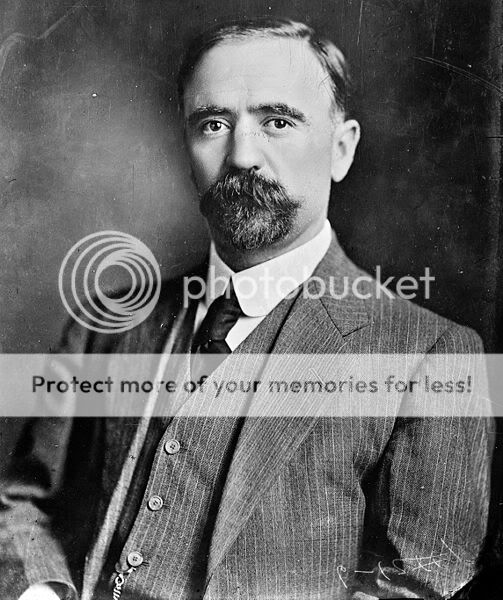
A peace commission in  Chihuahua, Mexico attempted to broker a truce between the Diaz government and the "Maderistas" who supported Francisco I. Madero.

Cynthia Ann Parker, captured by the Comanche as a child and then recaptured by the Texas Rangers unwillingly as an adult, was reinterred in Oklahoma.  She had passed away in 1870.

She was the mother of Quanah Parker.

Last edition:

Saturday, December 3, 1910. Neon.

Wednesday, December 1, 2010

Thursday, December 1, 1910. Diaz inaugurated. . . again. Taft introduced to society.

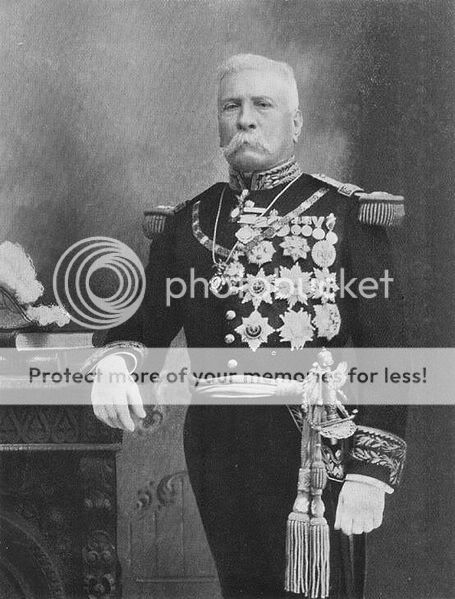
Porfirio Diaz was inaugurated for his eighth term as President of Mexico.  His status in that role was already disputed.  His refusal to know when to go had already started a revolution, although at this moment, it was small.

Diaz might actually be remembered as a great leader of Mexico, in spite of his anti democratic tendencies, had he stepped down in 1910.

19 year old Helen Taft, the daughter of President Taft and his wife Nellie, had her debutante ball at the White House.

Miss Taft in 1908.

She was a historian and academic, and had an extraordinarily successful career.  Her focus was history, and she obtained a doctorate from Yale.

Today In Wyoming's History: December 1: 1910  A bounty on coyotes in the amount of $1.25, a not unsubstantial amount at the time, established. Attribution:  Wyoming State Historical Society.

Last edition:

Monday, November 29, 2010

Tuesday, November 29, 1910. Race to the Antarctic.

The British Antarctic Expedition, led by Robert Falcon Scott, departed from New Zealand on the Terra Nova while Roald Amundsen, on board the Fram was also en route to the Antarctic and the Japanese Antarctic Expedition, led by Nobu Shirase, departed Tokyo on the ship Kainan Maru.

Last edition:

Wednesday, November 23, 1910. Provisional President of Mexico.

Tuesday, November 23, 2010

Wednesday, November 23, 1910. Provisional President of Mexico.

Undeterred by an unimpressive start to his attempt to overthrow the Mexican government three days prior, Francisco Madero proclaimed himself, with some justification, as "President of the provisional government of Mexico".

President Taft returned to the United States after visiting Panama and Cuba.

Visitor II, a yacht owned by Commodore W. Harry Brown, became the first vessel to travel the Panama Canal, which was completed as far as the Gatún lock.

The Army and Navy Academy, a prep school, opened in Carlsbad California.  I've never heard of it, but it's still in operation, and has beachfront property.

It's interesting how many of these there were at one time, or for that matter, still are.

Last edition:

Saturday, November 20, 2010

Sunday, November 20, 1910. Madero crosses. . . and then returns.

Modero in San Antonio.

Francisco I. Madero crossed into Mexico from Texas somewhere between Laredo and Eagle Pass at 6:00 p.m. with ten men and 100 rifles in order to start an armed insurrection against the sitting Mexican government.  

Upon crossing, he found only ten additional men, and then returned to Texas to regroup.  

It was, nonetheless, the beginning of the Mexican Revolution and it is celebrated today as Revolution Day in Mexico.

We have said elsewhere:

1910  Francisco Madero declares a revolution in Mexico.  Madero's revolution was a success in that Diaz fled the country in 1911. He died in France in 1915, but Madero died well before him, as he was assassinated by those loyal to Gen. Huerta, who had no sympathy with Madero's views.


Diaz's long life was one that featured many interesting turns. He joined the Mexican army in the first instance in order to fight against the United States in the Mexican War. He lead guerrillas against Santa Ana upon his return to Mexico. He fought the French with Juarez but was an opponent, sometimes a revolutionary, against Juarez thereafter. He came to rule Mexico in 1877 by popular election, and ironically stepped down after one term having run on that platform. He ran again in 1884 and remained in power until the revolution. While he ultimately was toppled in a revolution, his authoritarian rule of Mexico was the first real period of peace in Mexico since the revolution against Spain, and the country generally prospered. Had he stepped down, as he had indicated he was willing to do, he would be well remembered today.


Heurta would die in El Paso Texas, in exile, in 1916, where he was under house arrest after having been detected negotiating with the Germans for arms in violation of the Neutrality Act.


Of note here, the involvement in the US in the Mexican Revolution proved to be almost inevitable. The border region was chosen by participants in both sides as a place of refuge, to include both the humble and the conspiratory. Madero, Villa, and Huerta all chose the US as a place of refuge, and a place to base themselves in the hope to return to Mexico and achieve power. Tensions on the US border started with the revolution being declared in 1910, and as early as the first day of the revolution Mexican authorities were assuring the US not to have worries. Tensions would last long after World War One, and the cross border action that started before the war would continue on briefly after the war.

The Wyoming National Guard, like that of every other state, would see border service in this period, first being mustered to serve on the border in 1915.  National Guard service involved nearly constant active duty from March 1915 through World War One.

Leo Tolstoy, age 82, died.


A great novelist, he was also an oddball in more than one way.

Last edition:

Thursday, November 18, 2010

Friday, November 18, 1910. Riots. Suffrage Black Friday

Riots in Puebla Mexico resulted in the death of more than 100 people, including Aquiles Serdán, a politician and a supporter of Madero, who was killed defending his home in hopes of a general local insurrection.

A huge British Suffrage march turned violent, resulting in what was termed Black Friday. 

Last edition:

Thursday, November 17, 1910. First annual conference of Wyoming clergy.

Tuesday, November 16, 2010

Wednesday, November 16, 1910. No canal grabbing.

President Taft was in Panama City inspecting the Panama Canal, where he assured Panamanians that the US wasn't going to grab the canal "so long as Panama performed her part under the treaty."

And there's this


"Samuel F. Perkins on Broad St., Philadelphia, Nov. 10th, 1910 - just going up First special permit ever granted in any American city, for man carrying kites."

Last edition:

Monday, November 14, 1910. First Ship Launch.

Sunday, November 14, 2010

Monday, November 14, 1910. First Ship Launch.


Eugene B. Ely took off in an airplane from the USS Birmingham in the first shipboard takeoff.

He landed in Hampton Roads.

He'd follow that up by being the first person to land an airplane on a ship on January 18, 1911.

Not too surprisingly, he died in an aviation accident on October 19, 1911. He received a posthumous Distinguished Flying Cross on February 16, 1933.

Last edition:

Tuesday, November 8, 1910. The Republican Party loses the House.

Monday, November 8, 2010

Tuesday, November 8, 1910. The Republican Party loses the House.

The Republican Party lost control of the House of Representatives.  The 62nd Congress would have 230 Democrats, 162 Republicans, one Progressive Republican, now an extinct species, and the first Socialist ever elected to Congress, incoming U.S. Representative Victor L. Berger of Milwaukee.

Overall, politics were swinging leftward, with the Democrats, which had been the conservative party, beginning their slow migration to the left.

Last edition:

Monday, November 7, 1910. Dawn of commercial aviation.

Sunday, November 7, 2010

Monday, November 7, 1910. Dawn of commercial aviation.

The first commercial airplane flight took place when Wright Company pilot Philip Parmalee transported two bolts of silk (worth $1,000) from Dayton, Ohio, to Columbus, for delivery to the Morehouse-Martens Department Store in Columbus.

Predictably, Parmalee died two years later in an airplane crash.

Philip Parmalee

Oddly enough, showing the dangers of an earlier age, his mother had been killed when he was a child by a runaway horse.

The HMCS Rainbow arrived at Esquimault, British Columbia, to begin her service patrolling the Pacific coast.  She was the Royal Canadian Navy's second ship.

Last edition:

Thursday, November 3, 1910. La Matanza

Wednesday, November 3, 2010

Thursday, November 3, 1910. La Matanza

Twenty-year-old ranch hand Antonio Rodriguez was lynched by being burned alive by a mob in Rocksprings Texas after having been accused of murdering a "white woman".  His murder in Texas sparked a reaction in Mexico, which was on the verge of revolution as it was, leading to boycotts on U.S. businesses and partially leading to the Plan of San Diego.

President Taft denied that the US was considering annexting Panama.

Interesting, isn't it?  The U.S. was in its high colonial era, having just beaten Span in the Spanish American War, and yet it didn't annext Cuba and it wasn't threatening to annex Panama, where it had constructed the canal.  Oh for the days when Republican Presidents weren't threatening to annex everything in site.

Of course, McKinley, Roosevelt and Taft weren't demented narcissists.

Former Democratic Mayor of New York City, the city's second Roman Catholic mayor, died at age 55.

Last edition:

Tuesday, November 1, 1910. The Pale of Settlement.

Monday, November 1, 2010

Tuesday, November 1, 1910. The Pale of Settlement.

Czar Nicholas II expanded the Pale of Settlement, that area within the Russian Empire in which Jews could reside.

The Pale of Settlement in 1884.

Last edition:

Wednesday, October 26, 1910

Tuesday, October 26, 2010

Wednesday, October 26, 1910


New York City, October 26, 1910.

Ponca City, Oklahoma, October 26, 1910.  One of my high school friends is from Ponca City.

Last edition:

Monday, October 18, 2010

Tuesday, October 18, 1910. Radio Rescue and Hurricane hits Florida.


The 1910 Cuba Hurricane hit south Florida.

The British ocean liner Trent rescued the crew of the dirigible America.

The three day later rescue was made possible by the fact that the America had been equipped with a radio.

Whatever It Is, I’m Against It: Today -100: October 18, 1910: Whither America?: What has happened to the America? And more to the point, what happened to Kiddo the cat? The airship (and the cat) have disappeared and ha...

Last edition:

Wednesday, October 17, 1910. The 1910 Cuba Hurricane,


Friday, October 15, 2010

Saturday, October 15, 1910. Episcopal concept.

American Episcopalians nearly changed the name of the Episcopal Church from the "Protestant Episcopal Church" to the "Holy Catholic Episcopal Church" during a conference in Cinncinnatti.  A resolution to do the same failed by one vote.   The motion passed 42–25 by the clergy, but declined 31–32 by the laymen.

This vote is actually quite significant as it showed the lingering impact of The Oxford Movement from the mid 19th Century.  The Oxford Movement sought to prove that the Anglican Church was in fact part of the Apostolic Churches, like the Catholic and Orthodox Churches, and it advanced High Church Anglicanism as a result.  As can be seen by this vote, the clergy was very much of the view that the Episcopal Church was not a Protestant one, but a Catholic one.  The movement also had rippled effects in the Lutheran churches via students who had studied during the Oxford era in the United Kingdom.  The lasting impacts are very much in evidence today as the Anglican Church struggles to stay together over issues originally raised, to some degree, during the Oxford era.

Presently the church uses two names, The "Protestant Episcopal Church in the United States of America" (PECUSA) and "The Episcopal Church" (TEC).

Interestingly, the more common global name, Anglican, comes from the Magna Carta's statement that "in Anglicana ecclesia libera sit", meaning that in England the church shall be free of government control.  That actually doesn't reflect at all how the Anglican Communion came about.  The term itself was not used, however, until the late 19th Century as in England it was simply "the Established Church".  While it would be speculating, in the late 19th Century parliament began to loosen up on restrictions on Catholicism, and thereafter some identifying term was likely needed for common conversation.

Episcopal, in contrast, derives from the Greek word for Bishop and was always a direct claim of Apostolic succession.  The use of the term in the United States dates back to a crisis in the Anglican Church brought about by the American Revolution, as clergymen had been required to take an oath to the Crown and the overwhelming majority of northern clergymen retained loyalty to the Crown as a result.  The American church had to find a way to work around this, which ironically to some degree put them where clergymen loyal to the Catholic Church found themselves during the Reformation.

The American Episcopal Church was, for many years, including in 1910, the preeminent Protestant denomination in the U.S.  It was not a dissenting church.  It's fortunes have declined enormously in the late 20th and 21st Centuries.

It occurs to me that I've known, somewhat, two Episcopal clergymen who reflect the concepts noted above.  One was the brother of a friend of mine, which is interesting in that the family was Lutheran.  He converted to the Episcopal Church and became an Episcopal Church, and later left the Episcopal Church to become an Anglican of the Anglican Church of North America branch, which I believe he still is.  He openly could not remain in the Episcopal Church due to its liberal drift.

The other was a lawyer who was on what seemed to be a continual religious drift.  She was a Methodist when I first knew here, converted to Catholicism to marry, and then divorced and became an Episcopalians and then an Episcopal priest.  While an Episcopal priest she remarried, which is interesting in that the Episcopal Church does not actually recognize divorce.  I don't know if she still serves in that capacity or not, but it's interesting in that it reflects something about the modern nature of the church in which it can become sort of a weak tea version both of its former self and Catholicism. 


France lifted an 1875 ban on American potatoes, a measure that had been introduced to combat potato blight.

The first attempt to cross the Atlantic by flight, in this case a dirigible, was commenced.  It'd only lasted three days before it went down.

Japan launched the battleship Kawachi.  A magazine explosion would sink the ship in 1918.