Modero in San Antonio.
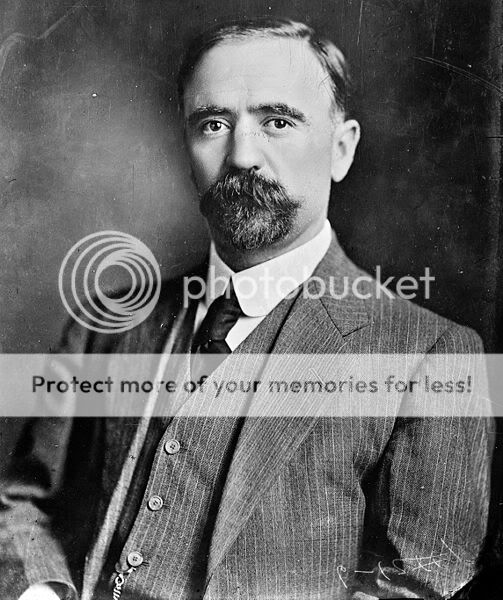
Francisco I. Madero crossed into Mexico from Texas somewhere between Laredo and Eagle Pass at 6:00 p.m. with ten men and 100 rifles in order to start an armed insurrection against the sitting Mexican government.
Upon crossing, he found only ten additional men, and then returned to Texas to regroup.
It was, nonetheless, the beginning of the Mexican Revolution and it is celebrated today as Revolution Day in Mexico.
We have said elsewhere:
1910 Francisco Madero declares a revolution in Mexico. Madero's revolution was a success in that Diaz fled the country in 1911. He died in France in 1915, but Madero died well before him, as he was assassinated by those loyal to Gen. Huerta, who had no sympathy with Madero's views.
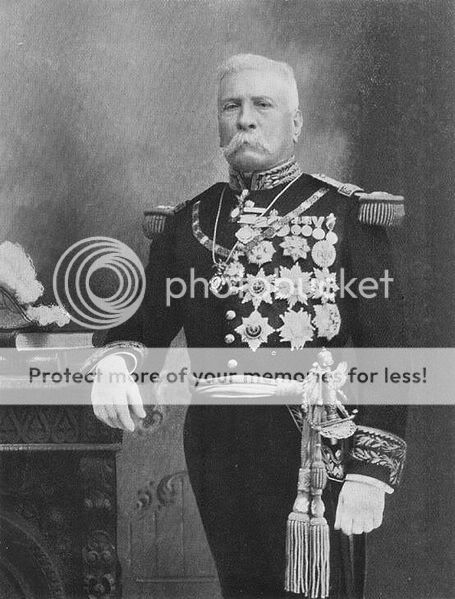
Diaz's long life was one that featured many interesting turns. He joined the Mexican army in the first instance in order to fight against the United States in the Mexican War. He lead guerrillas against Santa Ana upon his return to Mexico. He fought the French with Juarez but was an opponent, sometimes a revolutionary, against Juarez thereafter. He came to rule Mexico in 1877 by popular election, and ironically stepped down after one term having run on that platform. He ran again in 1884 and remained in power until the revolution. While he ultimately was toppled in a revolution, his authoritarian rule of Mexico was the first real period of peace in Mexico since the revolution against Spain, and the country generally prospered. Had he stepped down, as he had indicated he was willing to do, he would be well remembered today.
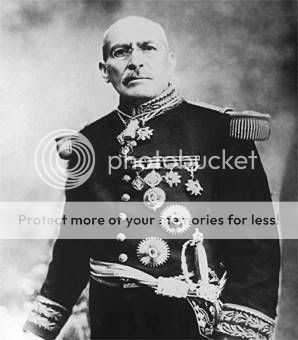
Heurta would die in El Paso Texas, in exile, in 1916, where he was under house arrest after having been detected negotiating with the Germans for arms in violation of the Neutrality Act.
Of note here, the involvement in the US in the Mexican Revolution proved to be almost inevitable. The border region was chosen by participants in both sides as a place of refuge, to include both the humble and the conspiratory. Madero, Villa, and Huerta all chose the US as a place of refuge, and a place to base themselves in the hope to return to Mexico and achieve power. Tensions on the US border started with the revolution being declared in 1910, and as early as the first day of the revolution Mexican authorities were assuring the US not to have worries. Tensions would last long after World War One, and the cross border action that started before the war would continue on briefly after the war.
The Wyoming National Guard, like that of every other state, would see border service in this period, first being mustered to serve on the border in 1915. National Guard service involved nearly constant active duty from March 1915 through World War One.
Leo Tolstoy, age 82, died.
A great novelist, he was also an oddball in more than one way.
Last edition:
Labels: 1910, 1910s, Aquiles Serdán, Black Friday (British Suffrage), Francisco I. Madero, Mexican Revolution, Mexico, Mexico (Puebla), suffrage, The roles of men and women, Women


No comments:
Post a Comment