Saturday, October 8, 2022

Going Feral: Haub School of Environment and Natural Resources to receive $1,000,000 Grant.

Going Feral: Haub School of Environment and Natural Resources t...

Haub School of Environment and Natural Resources to receive $1,000,000 Grant.

Wyoming's Haub School of Environment and Natural Resources received an $1,000,000 to establish an Intentional Wildlife Conservation Chair.  The purpose is to boost the pursuit of careers in that area.

The fund will be named for John L. Koprowski , Dean of the school, following his retirement.

Friday, October 7, 2022


Declined Sartorial Standards. Have we gone too informal?

This post dates back to the first January 6 hearing, which was broadcast in the evening.  

That's quite awhile back, I'll admit.  This has been a lingering thread. But, given some recent observations, it's expanded out.  

Indeed, this is sort of a collision of three influencing items coming together; one the January 6 hearings, one an advertising item, and one being an older (2016?) First Things podcast episode, which I only recently discovered.

In the overall scheme of things, clothing worn in a hearing don't matter much, we think.  We actually had a quote about this just recently from an old work, The Velveteen Rabbit:

When you’re real, shabbiness doesn’t matter.

The Velveteen Rabbit


That's probably the way things ought to be, but . . . well maybe they do.

For some gravitas, let's be blunt.  We're in the midst of a crisis which involves slipped standards.  That slippage includes one group of people who seem to take their oath to the Constitution lightly (which ironically involves a group of people styling themselves "Oath Keepers" who are, in fact, Oath Breakers), and a general decline in civility that reaches up to the highest levels of our society.

It's sad.

The January 6 crisis, that is.

It's disgusting.

And it sort of involves poor dress.

Okay, that's a stretch, but bear with me.

On the first day of the hearings in the audience was a police officer, off duty (or perhaps now retired) who was at the event.  He was there, in the Congressional committee room, wearing a t-shirt.  Another testifying retired policeman was wearing a sports coat and dress shirt, but was there sans tie, a massive tattoo that ran up to his neck clearly visible.  Since then, in these hearings, such dress has been common.  A documentary filmmaker, for example, appeared in a rumpled shirt that looked like it had been slept in the night before.  A former spokesman for the Oath Breakers, who take their name from their massively misconstrued oath to uphold the Constitution which is taken when a person joins the military or a police force, appeared in a jean jacket.

There were exceptions, to be sure, particularly with former members of the government and lawyers, but beyond casual dress was in evidence.  Frankly, not even a decade ago, appearing in Congress dressed like that would have been unthinkable.

And it's not just there.

At one time, if I entered a law office thirty years ago, when I first was practicing, every man in the office would have been dressed appropriately for the season and at least in semiformal clothing.  It would have been impossible to enter a law office of any substantial size and not find at least one man wearing a tie.  Indeed, in a much earlier post on this blog, I noted a quote from The Wyoming Lawyer:
This is certainly no longer the case.  I can enter almost any law office now, any day of the week, and find quite a few male lawyers wearing extremely informal clothing.1 Indeed, the change in standards is, as noted, one of the topics of one of the very early posts on this blog, going back to at least 2011, which is the first year that this blog became really active.  And as the related threads below show, it's come up a lot.

Anyhow, on slipping standards, as recently as about fifteen years ago or so, a person I worked with took enormous offense at a lawyer who appeared in his office wearing shorts and no socks.  It made a permanent impression with him (he was not a lawyer).   And in my own case, I can recall a client, more recently than that, objecting to my wearing boat shoes.

Note that I have distinguished this to male lawyers.  Female lawyers still dress fairly formally, interestingly enough.

The other day I went to a meeting wearing a tie, as it was a meeting between four lawyers and their staffs. Two were dressed informally, one very informally, the other in business casual.  One was dressed relatively formally, but sans tie.

Or, by example, up until recently I always wore a tie at a deposition.  I just started to suspend with them in some instances, as I was definitely the only one wearing one.

To give yet another example, in another context, I went to a funeral just recently.  It was very small.  I came right from work, and as I had the aforementioned meeting, I was wearing a tie, but I had no coat (it was about 100F outside).  At the funeral, there were a few people in rural semi dress, common for rural people, but other people were simply wearing very informal clothing.  I was, once again, the only one with a tie.

Clearly things have changed in the past thirty years.

And not only have they changed, COVID-19, accelerated a change that was already ongoing.  People stayed home, stayed in their jammies, and they haven't dressed back up.  But the change itself was already going on.

Why?

I'm not really sure.  I've seen some written commentary on it, but that commentary tends to fall flat.  One person, for example, related the formality of prior eras to the cost of clothing, but that makes no sense whatsoever, as quite frankly up until the 1950s, clothing was really expensive.

Or, actually, maybe it does.

This is where the second influences for this thread comes in, which was a First Things podcast episode that amounted to simply reading an article for the podcast, with the voice provided by a woman who, if not upper class, certainly had that upper class accent we all used to know, before our Presidents tried to start sounding like extras from Goodfellas.2

Clothing has always served to make distinctions between people, as well as to serve practical functions.  Romans who worse purple did it not simply because they liked the color, but because the dye was expensive, and it showed they were in the elite. 

When clothing was more expensive, middle class Americans, and the middle class everywhere in the Western World, tried to have at least one set of formal clothes that roughly emulated that of the wealthy, as well as those who approached being wealthy and worked indoors.  This showed that they weren't poor.

John Hancock.

And if you couldn't do that, that was probably because you were in fact poor.

And this essentially set the standards for what was worn in certain places.

Now, this doesn't mean that everyone would be dressed as fancifully as John Hancock, in the photograph above.  Indeed, clothing varied quite a bit by status, occupation and region.  But you can take this to mean that a farmer who lived in Maine, let's say, who did well enough, would also have a coat, vest and breeches.

But probably only one set.

And that gets us part of the way to the explanation.  Up until the 1950s, with clothing being expensive, people tended not to have a lot of clothing.  This too set the standard.  Clothing has become so cheap that people now have lots of clothing, and can dispense with concern over what it means to have hardly any at all.

The added part of this is that up until the second half of the 20th Century, most people in the Western world worked in some sort of manual labor.  That didn't mean that they weren't middle class.  Particularly in North America, a person could work in an industrial job as a skilled laborer, or in agriculture, and be solidly middle class.  But people were conscious of their standard.  They wanted to appear as part of the mainstream of society, if they could afford to do so, and most could.

That trend really began to amplify in the early 20th Century, that period in which we recently saw a post regarding whether a young woman would be willing to be escorted by a young man if he omitted tie and vest.


First Things did a nice job of picking this all up, and indeed going back just as far as I did.  What it noted is that seemingly average people, but which we mean in this context people living on the edge of poverty, didn't begrudge the more wealthy wearing finer clothes on formal and even informal occasions, and even sort of expected it.  Be that as it may, at some point, let's say loosely the late 18th Century, the clothing style of the rich and at least middle class began to merge with less distinction between them, at least in so far as daily clothing was concerned.3  Nonetheless, distinctions between the clothing of those who worked with their hands, and those who did not, and based on occasion, remained.  

So, put another way, if you showed up at Church dressed like you had just plowed a field in 1890, it's probably because; 1) you had in fact just plowed a field and 2) you were too poor to get another set of clothes, or 3) if you were Catholic, it was your last chance not to miss Mass.

This same basic set of rules applied to everything. Consider this photograph of Tom Horn's 1902 jury in Wyoming.


Now, there are two things you ought to notice about this photograph of these twelve men.

Everyone is dressed as well as he could be, and better than the average juror today.

And one, in 1902, is black.

Who were they and what did they do:

H. W. Yoder, Ranchman, Goshen Hole
O.V. Seeburn, Ranchman, Goshen Hole
Charles Stamm, Ranchman, Wheatland Flats
T. R. Babbit, Ranchman, LaGrange
H. W. Thomas, Ranchman, LaGrange
G. W. Whiteman, Ranchman, Uva
Amos Sarbaugh, Foreman, Swan Land and Cattle Company
Homer Payne, Cowboy, Swan Land and Cattle Company
Frank F. Sinon, Foreman, White Ranch, Little Horse Creek
E. C. Metcalf, Blacksmith, Wheatland
Charles H. Tolson, Porter, Cheyenne
J. E. Barnes, Butcher, Cheyenne

Mr. Tolson was probably the black juror4 

Now, the last jury I drew, I drew in Denver, Colorado.  More specifically, Denver County, Denver, Colorado. This jury in 1902 makes that jury look. . . well. . . .slovenly.

More on that to follow.

What happened?

According to First Things, the clothing distinction carried on right into the 1960s, but then crashed into 1967's Summer of Love.

Mounted Policeman in San Francisco at an anti-war demonstration in 1967.5   By BeenAroundAWhile at en.wikipedia, CC BY-SA 3.0, https://commons.wikimedia.org/w/index.php?curid=47396940

Pinning a huge clothing shift on a single year is probably a bit much, but there's some evidence to suggest it's at least true in a larger sense.  Maybe not 1967, but maybe 1966 to 1980, with steady erosion the entire time.

So why?

Let's talk about the GI Bill again.

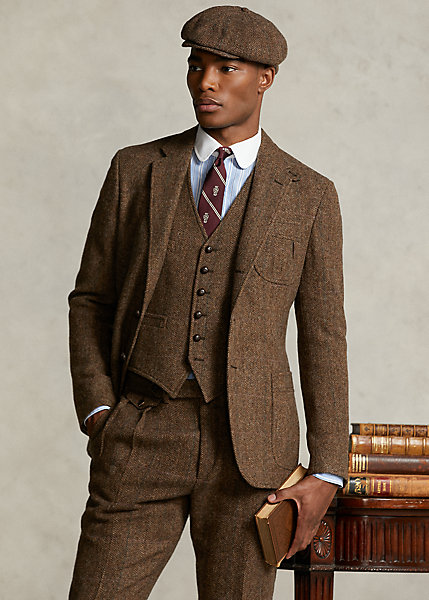
But before we do that, let's talk about the mid 20th Century standard of dress a bit more carefully.  And in doing that, let's look at a current attempted commercial revival of that standard, but none other than Ralph Lauren.

We see that here.


Now, what exactly are we seeing here? 

These are uploaded and linked in photographs from the Ralph Lauren collection recalling Morehouse and Spillman colleges in the mid 20th Century. They still exist, and donations from the sale of this clothing goes to those traditionally black colleges.


And not just that, here's another Lauren collegic collection.


This no doubt takes us all back to those heady youthful college days, right?

Ummm. . . well probably not if you graduated any time in the last several decades.

But Lauren actually isn't that far off in how college students of the mid 20th Century actually dressed.


And those Morehouse and Spillman students of that era, they weren't merely complying with the standard of dress of the era, they were engaged in a radical act by dressing that way.  I.e, by dressing to the Middle Class standard, they were proclaiming that they were not, and had no intention of being, somebody's second class hired hand.

Okay, let's deep dive on this a little deeper.

The First Things article points out that while, over a long stretch of time, dress became more informal, it still retained formal elements in an unchallenged fashion up until the 1960s, when this really began to erode.  Indeed, just recently, and coincidentally, this was illustrated in something I happened to watch on television, that being an older documentary, narrated by a very young Jeff Bridges, regarding a Creedance Clearwater Revival tour of Europe.  The documentary went into the history of the band, which was at that time fairly short.  The group originated in El Cerrito California, a Bay Area city, and performed under the name The Blue Velvets, Vision, and then the Golliwogs, before changing its name to the final variant. As early as 1964 they had a record contract.

The band basically had a mid 1960s hiatus due to the military service of three of its members. The remarkable thing about this is that in 1964 photos of the members show them all turned out with short hair, sports jackets, and ties. They look like, well. . . a collection of young college men of that era.  By the late 1960s, however, they had their familiar appearance.

Creedance Clearwater Revival in 1968.

The clothing standards had changed.

But why?

They'd actually begun to change in the 1950s, but that didn't create a switch overnight. And in fairness, the change of the 1960s didn't change everything overnight, either.

In the 50s, the challenge to the existing clothing standards started with certain sections of "rebellious" youth sporting leather jackets and Levis.  At the time, that identified them, intentionally, with the working class, the only class that had worn blue jeans routinely, and also with the post Second World War motorcycle gangs.  It caused a spike in popularity of blue jeans, however, which rapidly entered general wear among teenagers and younger adults.  This carried over into the late 1960s, when widespread youth protests movements broke out everywhere. But that time, as a symbol of uniform rejection of their parents' generation, a section of the Boomers adopted really outlandish styles, while others simply adopted styles that, once again, reflected working men's clothing to some extent.  The rebellion became wide enough that the dress code was basically cracked, and formal clothing attempted to mimic it, modifying the style of suits and semiformal clothing of the era.

While the fashion industry did attempt to retain the suit, and successfully for a while, the reaction was with designs so hideous that they would ultimately be self-defeating. And by that time, the damage had been done.  It had particularly been done among the younger demographic, which would basically grow up suitless.

I'm an example of that.  From photographs, I know that my father frequently wore suits in the 1950s. although annual photos from the 40s show that not occuring at all in high school.  No ties either.  I recall him having a pretty nice suit in the 1960s and early 1970s, although I don't recall him wearing it often.  In the 1970s, when he left for his office, he normally wore a sports coat and tie, and I very much remember that.  Indeed, he worse wingtip shoes nearly every day.  But as a kid in school, at no time did I ever have clothing that required a tie or even a dress shirt.  I recall a blue button down shirt being bought for me when I was in grade school for some reason, and a double-breasted blue blazer.  It was probably for a wedding, but I can barely remember ever wearing it.

By junior high, I lacked any such formal clothing at all, and that's significant.  I went into high school the same way.  The only time you ever saw any kid wearing a tie, for anything, in high school, was when the JrROTC cadets had to wear their uniforms, which was once a week.  I got all the way through high school without ever wearing a tie to anything, including by my recollection my high school graduation, at which point my parents tried to by me some dress pants. Those pants were horrible powder blue polyester pants, the only thing readily available, and I only wore them once.

Dancing Zoot Suiters. Apparently the photographer was so fascinated he forgot to include the heads of the dancers in the photograph.

The first time I can recall wearing a tie, post high school, was in basic training. The Army dress uniform at that time was the Green Pickle Suit, and it had a black regular tie you had to learn how to tie.  The current Army dress uniform still does.  As a college undergrad, I took the position that I was "never going to have a job that required wearing a tie", which means that there were still those who did that every day.  Indeed, college professors often did at that time, and that was common, I'll note, all the way through to my law school graduation in 1990.

Still, I didn't wear ties very often.  Probably the only time in my undergrad years that I did was when I was attending weddings or funerals.  The first suit I owned was one that I bought, I think, in 1986 for a friend's wedding.  

All of this is somewhat significant, by way of an illustration, as during this time I would have done things that only twenty years prior would have required coat and tie, although I never thought of it in that fashion.  Simply going to university would have.  Going out on dates would have.  When I was an undergrad, however, the only thing that really did were attending weddings and funerals.

For some of that time, the reason for this was that I was a geology major, and as a geology major I hung out mostly with other geology majors.  Everyone I knew was outdoorsy, and the clothing we had was outdoorsy.  But by the late 1980s the expectation that a young man (it was less true for young women) would have any sort of "dress up" clothing had simply evaporated.

When I was first practicing law it remained, however, ad we were expected to wear ties most days, unless we were only going to be in the office, or it was summer during which summertime office rules allowed for polo shirts, although they were tolerated only with the greatest expressed reluctance by the office manager.  In court, in the summer, we could dispense with the jacket, but never the tie.  But this was the office.  When I started dating my wife, I never wore formal clothes, and as far as I can tell, she never expected me to.

Now, due to this evolution, a lot of people don't even have formal clothing. And it's eroded enormously even in the law.  People go to depositions, for example, dressed in jeans and button down shirts, and by people, I mean the lawyers.  At an administrative hearing I was at the other day, at least a couple of lawyers were there without ties, something that up until very recently would never have occurred.

During the January 6 hearings, mentioned way above, some of the witnesses were in t-shirts, disheveled button downs, and very few of the men wore ties.  Up until very recently, it's simply impossible to imagine somebody appearing in front of Congress in a t-shirt, let alone without a tie.  It would have been regarded as rude and disrespectful, which is frankly just how it struck me.

I mentioned the Denver County jury above, and this provides an interesting example.  Denver County is downtown Denver, and it's the heart of the city's financial and business district.  If a jury had been drawn from there as late as the 1960s, the men would have largely showed up in at least coat and tie and the women in something relatively formal.  By the 70s, this wouldn't have been true, but their dress would have still been fairly clean and not extraordinarily casual. [1]

In the 2020s, however, jurors show up in shots and t-shirts, to a large degree.

So the question becomes, does all of this matter?

I think that it does.  Here's why.

We've gone over it before, but something deep inside of human beings causes there to be an instinct in regard to dress and message.  All peoples, everywhere, exhibit this behavior.  Even societies that have a large scale lack of clothing do this, even it comes down to wearing something ornamental.  Men dress differently than women, everywhere, and everywhere people dress differently based on their status and occupation in life.

Some societies have attempted to purposely destroy this from time to time, the Red Chinese following the Revolution providing a particularly notable example.  Everyone dressed in a suit like Mao, men and women, assuming that they weren't working in a field.  The idea was to wipe out class distinction.

It didn't work, and ultimately the Chinese gave up on it.  Now, the Chinese elite wear suits.

As part of the distinctions that this brings, it also singles out those of particularly special distinction.  And beyond that, it signals when certain events are particularly significant.

We've really lost that.

And in losing it, oddly enough, we've separated society at large all the more from people whom still retain the standard for some distinct reason.  Clerics, for example, continue to wear black suits and Roman collars, as they have for eons. But if you see a photograph of, let's say, a Catholic Priest in the 1940s, except when in his vestments, the distinction between him and his flock, while real, isn't all that great as a rule.  Now he's singled out like no other.

And that quite frank is something that's overlooked in this area.  It's common to hear that the collapse of the dress code leveled things out as now everybody looks the same, more or less, even though that's not really true.  Indeed, those who work in heavy industry don't look the same, as their clothing remains highly specialized, and that's true of others as well. But what isn't noticed as much is that as some people remain in occupations which, for various reasons, a formal code appears in some setting, those who could have claimed some portion of that status have lost it, at least a little.  Now those who must wear it are set out as truly separate and apart, as if they're truly above everyone else.

And the loss of the standard has contributed, a bit, to the concept that nothing is really specialized, or special, to some degree.

Court provides a good example of both.  A small businessman appearing in court with a lawyer, or a mechanic, may not have had a suit that was as nice as the lawyers, but if he had one, it said that he was a professional too, just of a different type.  The lack of one suggests he's not.  And court is a special setting, which deserves acknowledgement of its status, just as Congress, or a legislature, or perhaps numerous other settings are, or should be.

But is there any going back, at least in part?

If there is, it isn't obvious.

Footnotes:

1.  This is much less true of female lawyers, for some reason. They largley continue to adhere to a higher dress code.

2.  I've written about this before, but its intersting how this applies so much to New Yorkers.  In the early 20th Century the United States had two Presidents from New York, both Roosevelts, who had very distinct upper class New York accents.  Their speech was distinct and polished.  In contrast, we just had President Trump who has affected the odd Goodfella style of speech mixed in with a personal style of speaking that's odd and sometimes oddly childish.

3.  Distinctions remained with very formal clothing, which was the province of the well to do.  If you look at wedding photographs, for instance, taken up until the 1970s, average middle class men tended to wear a suit that they already had, as did the male wedding party.  Women's clothing was different, but men came in a suit that they othewise wore to other things, including work.  If you see tuxedos in evidence, it's an indication of wealth.

4.  Porters were often African American, and all Pullman Porters were.  The reason for the latter has been explained to me by a person who remembered them by way of "people liked to be served by black people", so it was racist in nature, but in a very odd fashion in that the job paid fairly well.   The Pullman company's porters actualy contributed to the rise of the black middle class both through their pay, but also because they traveled widely and were a source of information to African Ameican communities.  They also interacted with European Americans routinely and becuse of their sharp appearance generally left a good impression. They remained an all black institution up until the Pullman company went out of business in 1969.

5. This photograph is also intersting in that it shows how much police uniforms have changed since the 1960s.  These mounted policemen are all wearing leather jackets, something that became very common with policement starting in the 1920s, depending upon their roles.  At first heavily associated with motorcycle policemen, by the post World War Two period some departments issued leather jackets to every patrolman.  Chicago actually issued a fur collared leather jacket up until 1965, at which time they went to another one that was more like a Second World War flight jacket which was issued until 2013.  Current mounted policemen would wear a helmet, rather than a peaked cap, something that came into mounted police use following World War Two.

Related threads:


Saturday, October 7, 1922. Accidents and Incidents.


On this day in 1922, an Allied Commission agreed that East Thrace would become Turkish territory, although the Greeks would have thirty days in which to withdraw from the territory.

An automobile accident happened at 13th and S in Washington, D.C.


U.S. troops engaged in a mock battle for an audience.


The New York Giants won the fourth game of the 1922 World Series, 4 to 3, in a game taking under two hours.


Oh no. .

Nebraska Republican Ben Sasse to resign his Senate seat to become University of Florida president, source tells CNN


Don't do it, Senator Sasse.

A pardon isn't an endorsement, or shouldn't be.

Probably the right thing to do.

Statement from President Biden on Marijuana Reform

OCTOBER 06, 2022

STATEMENTS AND RELEASES

As I often said during my campaign for President, no one should be in jail just for using or possessing marijuana.  Sending people to prison for possessing marijuana has upended too many lives and incarcerated people for conduct that many states no longer prohibit. Criminal records for marijuana possession have also imposed needless barriers to employment, housing, and educational opportunities.  And while white and Black and brown people use marijuana at similar rates, Black and brown people have been arrested, prosecuted, and convicted at disproportionate rates.

Today, I am announcing three steps that I am taking to end this failed approach.

First, I am announcing a pardon of all prior Federal offenses of simple possession of marijuana.  I have directed the Attorney General to develop an administrative process for the issuance of certificates of pardon to eligible individuals.  There are thousands of people who have prior Federal convictions for marijuana possession, who may be denied employment, housing, or educational opportunities as a result.  My action will help relieve the collateral consequences arising from these convictions.

Second, I am urging all Governors to do the same with regard to state offenses.  Just as no one should be in a Federal prison solely due to the possession of marijuana, no one should be in a local jail or state prison for that reason, either.

Third, I am asking the Secretary of Health and Human Services and the Attorney General to initiate the administrative process to review expeditiously how marijuana is scheduled under federal law.  Federal law currently classifies marijuana in Schedule I of the Controlled Substances Act, the classification meant for the most dangerous substances.  This is the same schedule as for heroin and LSD, and even higher than the classification of fentanyl and methamphetamine – the drugs that are driving our overdose epidemic. 

Finally, even as federal and state regulation of marijuana changes, important limitations on trafficking, marketing, and under-age sales should stay in place.

Too many lives have been upended because of our failed approach to marijuana.  It’s time that we right these wrongs. 

Be that as it may, this nation doesn't need to be any more stoned than it already is.  It says that something is deeply wrong with things.

Thursday, October 6, 2022

Friday, October 6, 1922. Expanding Prohibition on the Sea and Setting Records in the Air.

The United States issued an order requiring all American flagged ships to be free of alcohol, and all foreign ships entering U.S. waters to be alcohol-free as well.  The order went into effect on October 14.

These photos of a confiscated still were taken on the same day.


Two U.S. Army pilots set a new record by remaining in the air for two days in a Fokker T-2. The endurance feat took place at Rockwell Field, California.

Fokker T-2.

The plane had been modified to allow for dual controls and extra fuel.  When it took off, its weight exceeded its maximum normal payload.  Only two T-2s were made, and both were acquired by the U.S. Army.

Monday, October 3, 2022

Wars and Rumors of War, 2022. The Russo Ukrainian War Edition, Part Seven

September 1, 2022

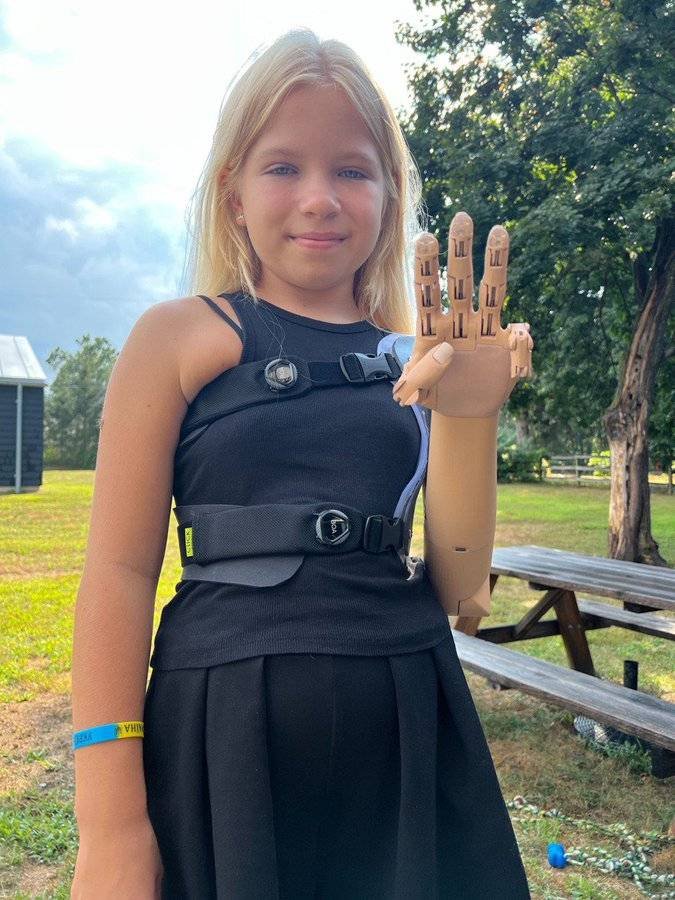
Sasha, age 9, with prosthetic giving the Ukrainian trident salute.  She lost her arm due to a Russian attack.Whatever Russia's excuses for invading a neighboring country that doesn't wish to be part of it may be, taking off the arms of children as part of the cause is beyond any excuse. Live URL Link from: https://twitter.com/DefenceU

Russian propaganda is attempting to portray Ukraine's long anticipated offensive has having already failed, which it has not.

The Ukrainian government, in contrast, is observing operational silence, and requesting that media sources abstain from predicting Ukrainian moves.

September 2, 2022

  • Afghanistan

The Taliban has arrested a woman for defamation for accusing her husband, the former Taliban interior minister, of forced marriage and rape.

The charge by the entity which the United States allowed to take power due to Donald Trump's Doha agreement followed by our withdrawal under President Biden was based on the Taliban position that nobody is allowed to defame the Taliban.

September 2, cont

Israel struck a Syrian runway yesterday.

September 3, 2022

  • China/Taiwan

The United States is selling $1,100,000,000 in arms to Taiwan

September 5, 2022

  • Russo Ukrainian War

The Ukrainians liberated Vysokopilla in Kherson Oblast.  Gains were also made in the Donetsk Oblast.   The Ukrainians have had a news blackout on their operations, and it appears clear that the announced successes are just part of a collection of wider successes they have not yet felt comfortable in publicly stating.

September 6, 2022

Russia has postponed a referendum on Kherson joining Russia for "security reasons".

September 7, 2022

Russia is getting ready to purchase rockets and artillery shells from North Korea.

The fact that Russia is in the position of buying this sort of ordinance suggest that it is either seriously depleted its stocks of the same, or that it is worried about doing so and seeking to use up newly purchased stores so as to have a reserve ammunition supply for other contingencies, real or imagined.

Ukraine retook territory near Kharkiv.

September 9, 2022

While it's not at all clear what's going on, it suddenly seems to be the case that the Ukrainians are advancing all over the front.  Fighting has been hard in Kherson, but there are reports today of advancing in the north and the center, with some of these reports coming from Russian sources.

It's too early to really predict what's going on, but if this keeps up, the Russians are in a very bad spot. 

September 10, 2022

What seemed to be promising local advances a couple of days ago is developing into open field running by the Ukrainians, who are now outsmarting and outfighting the Russians darned near everywhere.

Ukraine has retaken Izium in the Kharkiv region, with the Russians openly retreating and admitting as much.  This region of Ukraine wasn't even imagined to be the focus of what is turning out to be an effective broad front offensive.  They're closing on Sievierodonetsk, whose loss in June was regarded as a major Ukrainian defeat.  Some reports had the Russians deploying helicopters to intercept their own fleeing men as they attempted, and failed, to reinforce Izium.

It's still too early to tell, but things are beginning to take on an appearance of a systemic Russian collapse.

September 11, 2022

Situation as of September 11, 2022.  By Viewsridge - Own work, derivate of Russo-Ukraine Conflict (2014-2021).svg by Rr016Missile attacks source:BNO NewsTerritorial control sources:Template:Russo-Ukrainian War detailed map / Template:Russo-Ukrainian War detailed relief mapISW, CC BY-SA 4.0, https://commons.wikimedia.org/w/index.php?curid=115506141

Further reports now reveal that the Russian withdrawal from Izium is a disorderly route, with retreating troops mixing with an attempt to reinforce the southern Donbas.  Ukraine has retaken Velikiy Burluk which puts them with 15 kilometers of the Russian border.

September 13, 2022

  • Russo-Ukrainian War

Russia has suspended sending volunteer units into Ukraine, apparently being concerned that they are not dependable.

Ukraine is making advances in the Kherson Olbast.

29 additional municipalities have signed a petition asking Putin to resign, making the number 47.

  • Armenia/Azerbaijan
The countries have fought two prior wars over areas they assert a right to control, with the last one going badly for Armenia.  Yesterday there were clashes between their forces.

September 14, 2022

The Russians are engaging in some serious spin, acknowledging defeat in northern Ukraine while also attempting to blame anyone other than Putin.

Russian authorities in Crimea have urged their families to flee Crimea, and there have been home sales and family evacuations by Russian authorities there.

September 16, 2022

Pope Francis in interview on September 15 regarding providing weapons to Ukraine by third party powers:
This is a political decision which it can be moral, morally acceptable, if it is done under conditions of morality … Self-defence is not only licit but also an expression of love for the homeland,. . .  Someone who does not defend oneself, who does not defend something, does not love it. Those who defend . . .  love it.”
September 17, 2022

Ukrainian advances into territory that has been occupied by Russia has revealed evidence of torture and murder by the Russians.

Putin has threatened increased attacks on Ukrainian infrastructure in retaliation for Ukrainian partisan attacks on Russian property in the territory occupied by Russia, taking a page, more or less, out of Hitler's book, to the extent he's not already operating from it.  He might want to skip to the last chapter and see how that worked out for Hitler.

Ukraine is warning of false flag operations in Russian occupied areas over the next few days.

September 18, 2022

Ukrainian troops continue to advance in the north.

By Viewsridge - Own work, derivate of Russo-Ukraine Conflict (2014-2021).svg by Rr016Missile attacks source:BNO NewsTerritorial control sources:Template:Russo-Ukrainian War detailed map / Template:Russo-Ukrainian War detailed relief mapISW, CC BY-SA 4.0, https://commons.wikimedia.org/w/index.php?curid=115506141

September 21, 2022

A long feared mobilization of Russian forces may be starting to occur in the wake of recent Russian defeats.

What's held Russia back from full mobilization, a step urged by Russian milbloggers and some parliamentarians, isn't known, but it may be the fear that Russian reservists just won't show up, or that the move will spark large scale discontent.  

300,000 reservists will be called into active Russian service.

Putin also vaguely threatened to use nuclear weapons if Ukraine continues its efforts to reclaim its territory.

And Putin is also holding "referendums" in the territory which Russia occupies nearly immediately, which will have the guaranteed result of resulting in Russian annexation of the same.

This step takes the world deeper into the war, not further from it. Essentially, Putin is placing Russia in a position in which it will be committing its reserves to an effort which will now be claiming to defend its own territory. Putin, and maybe Russia itself, will not be able to back out of this, and Ukraine and the rest of the non toady world will not be able to recognize it.

It'll be interesting to see what the mobilization accomplishes.  It's effectively a massive admission of Russian military weakness.  Russia has the numbers, but the numbers haven't worked in their favor so far.  With discontent on the war growing inside of Russia, Putin may be going down the same path as Czar Nicholas II.

September 22, 2022

It now appears that the Russian call up of reservists shall be in stages and will not have an immediate effect on the war in Ukraine, as long as Ukraine continues to act swiftly. That is, the impact shall not be for many months.

While at the 300,000 level, this should raise some questions on whether the call-up is to offset losses.  It really isn't clear what Russia's combat loss has been.

Russia, like many other countries, only requires a year of service for conscripts.  While this practice is common, for the most part it leaves those trained in that fashion with incomplete military skills that wane fairly quickly.  Called up reservist, therefore, are likely to need months of training if they're to be combat worthy troops, although Russia has certainly seemed to be willing to commit troops with less than adequate combat skills.

The British Ministry of Defense has stated that Russia has run out of willing volunteers.

Protests in Russia resulted in 1,200 arrests.  Reports have held that flights out of the country have received an enormous boost as men eligible to be called into service have sought flights out.

September 23, 2022

Russia's partial mobilization is spawning domestic discontent and protests, which in turn has caused the Russians to conscript protesters as part of its reaction.  Rather obviously, the tactic of conscripting those bold enough to protest against the war isn't likely to produce combat worthy troops.  Indeed, at some point, it has the effect of arming and training those who are likely to turn their guns on their government.

Russia has also gone beyond calling trained reservists into service in other ways, now conscripting men who have never served and actually, in at least one instance, using a press-gang university on students to drag them directly from classes for services, something directly contrary to a statement exempting students from this levy and a shocking reversion to very primitive conscription methods.

In response, some Russian federal regions are passing laws prohibiting reservists from leaving their places of permanent residence in order to attempt to keep men from fleeing service.  Reports also indicate that the Russians are disproportionately conscripting non Russians.

All of this would suggest a Russia much more at trouble at home, and with much wider opposition to the war, than previously expected.  The chances of building an effective replacement army under these circumstances is slight.  Moreover, this must be obvious to Russia's allies, such as China, demonstrating the nation is rotting from the edifice.

September 28, 2022

Russia's sham elections were held in the last couple of days with the predictable results being that votes in the Russian occupied portions of Kherson, Zaporizhia, Donetsk, and Luhansk supposedly were overwhelmingly in favor of annexation into Russia. That will now occur within the next couple of days.

It won't end the war, certainly, but now Russia will have legal cover for deploying conscripts into the war.  Conscription, however, is going very badly.  Oddly enough, Russia is conscripting outright opponents to the war, which is not likely to result in willing soldiers.

Two undersea explosions occurred on the idled Nord Stream pipeline.  

Accomplishing an underwater strike such as this would require some expertise to pull off and there are suspicions, not yet proven, that Russia itself did it.  Ukraine has claimed just that. The hard thing to figure out, however, is what the goal of such an attack would be.

September 29, 2022

Russo Ukrainian War

Ukrainian forces are about to take Lyman and are generally advancing, although not necessarily rapidly, everywhere along the front.

Russian forces are now so depleted that they're being supplied with replacements out of the newly called up men who have very little training.  In one instances of this that hit the news, a Russian commander informs his troops they'll be given a uniform, body armor, and a rifle, and nothing else, including no medical supplies.

The U.S. is providing an additional $1.1B in aid to Ukraine.

Additional leaks have been found in the Nord Stream pipeline, which is now more or less officially viewed as having been hit by sabotage.  German sources feel the damage is irreparable although, due to subsequent pipeline construction elsewhere, the loss may not be as significant as it might at first appear.

The mystery of the destruction remains, given the illogic involved in hitting it.  For the most part, most of the attention is focused on the Russians, but some conspiracy theorist of various stripes have accused the US, which certainly did not do it.  U.S. right wing commentator Tucker Carson basically took the Russian line and suggested, if not outright stated, that the U.S. was responsible for the act, and on the same day, Donald Trump absurdly offered to attempt to broker a peace.  Not too surprisingly, loyal Trump rank and file accolades praised the former President's ridiculous offer and some have adopted the absurd U.S. did it thesis.

Iraq/Iran

The Iranian air force struck Kurdish targets in Iraq in retaliation for Kurdish support of Iranian women protestors.  

The protests in Iran broke out after a young woman was killed after Kurdish Iranian Mahsa Amini died in police detention after being taken into custody for wearing her hajib incorrectly.  Iran has religious police that enforce the Iranian interpretation of Islam's religious behavior rules, something that is not unique to Iran in the Islamic world.  Women in Iran have chaffed for years under the strict rules applied in Iran and have now engaged in days of protests over the event.  Protestors have openly defied the rules in their protests, and some have now called for the overthrow of the Islamic Republic.

At the same time, the Supreme Leader Ali Khamenei has been absent from the public, fueling speculation that he may not be able to return to his duties following bowel surgery in early September.

September 30, 2022

NATO declared the destruction of the Nord Stream pipelines sabatage and warned that it would regard any attacks upon the infrastructure of its member states as an attack upon the member nations.

Ukrainian forces have enveloped Lyman.

October 1, 2022

Russia declared itself to have annexed Donetsk, Luhansk, Kherson and Zaporizhia yesterday.  In his speech he engaged in nuclear saber rattling.

Ths move grossly complicates finding a peaceful solution to the war as Russia, which is losing, will now claim that its defending its own territory even though it will be largely alone in the world in recognizing its claims.  Putin will not be able to give up ground he's annexed, so at this point the war can largely only really end with Putin deposed.

The current borders in Europe, it might be noted, are those that largely came into existance post World War Two.  Ukraine's post 1917 borders were larger than the current ones by a signficant extent:

By Spiridon Ion Cepleanu - History Atlases available., CC BY-SA 3.0, https://commons.wikimedia.org/w/index.php?curid=17831314

As the map above demonstrates, the real territorial growth of Ukraine was at the expense of Poland, post Second World War, but that change also featured the Soviets expelling Poles to the west, and in what is now Poland, expelling Germans also to the west.  And the territory Ukraine aquired at that time was in fact largely claimed by Ukrainians in 1918.  Indeed, that region of Ukraine had been fought over between the two countries, with the Poles also seeking to claim quite a bit of land to its post 1918 eastern boundaries.  The only signficant part of modern post Soviet collapse Ukraine that had not been part of Ukraine until after World War Two is Crimea, which traditionally had neither a Ukrainian or Russian population, something the Russians changed through heavy migration into the region.  Ukraine did claim it, however, in 1917.

Ukraine did claim lands much to the east of its current boundaries following 1917, and indeed even much further to the east of what this map shows based on Ukrainian settlements of Russian regions to the east.

While it won't do it, Ukraine would have just about as much right to annex the territories it lost to the Soviet Union as its own as Russia does to do the reverse.

Russia is also blaming the US for the Nord Stream gas severance event, a baseless conspiracy theory.  Russia is the nation most likely to have sabataged the line.

October 1, 2022

The Russians have withdrawn from Lyman.

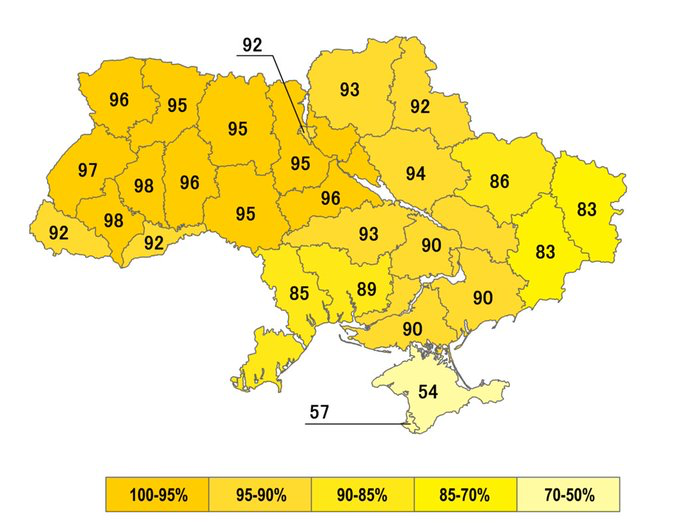
Below, by the way, is a map that's linked in to its original source showing the percentages of the vote in current Ukraine that voted for independence from Russia in 1991.


As shown, even Crimea had over 50% of its population wanting out of Russia.

It's also worth remebering that the newly free Ukraine was a nuclear state.  It gave those weapons up following a Western promise to guaranty its freedom.

October 3, 2022

It appears that the Ukrainians may have broken through at Kherson.

While, once again, its too early to tell, this is beginning to have the apperance of being a generalized Russian collapse.

Last prior edition:

Wars and Rumors of War, 2022. The Russo Ukrainian War Edition, Part Six