Monday, November 29, 2010

Tuesday, November 29, 1910. Race to the Antarctic.

The British Antarctic Expedition, led by Robert Falcon Scott, departed from New Zealand on the Terra Nova while Roald Amundsen, on board the Fram was also en route to the Antarctic and the Japanese Antarctic Expedition, led by Nobu Shirase, departed Tokyo on the ship Kainan Maru.

Last edition:

Wednesday, November 23, 1910. Provisional President of Mexico.

Tuesday, November 23, 2010

Wednesday, November 23, 1910. Provisional President of Mexico.

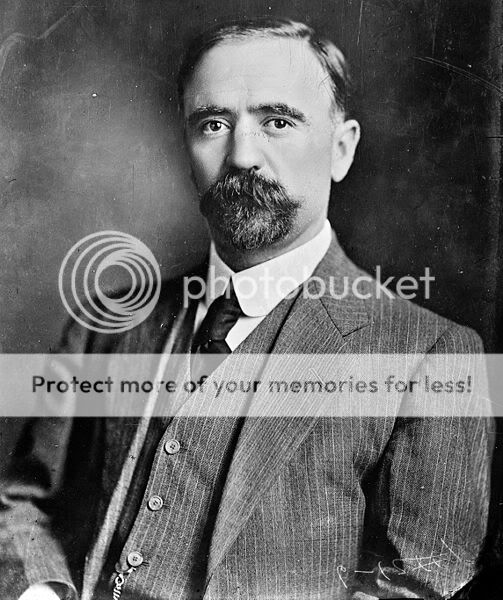
Undeterred by an unimpressive start to his attempt to overthrow the Mexican government three days prior, Francisco Madero proclaimed himself, with some justification, as "President of the provisional government of Mexico".

President Taft returned to the United States after visiting Panama and Cuba.

Visitor II, a yacht owned by Commodore W. Harry Brown, became the first vessel to travel the Panama Canal, which was completed as far as the Gatún lock.

The Army and Navy Academy, a prep school, opened in Carlsbad California.  I've never heard of it, but it's still in operation, and has beachfront property.

It's interesting how many of these there were at one time, or for that matter, still are.

Last edition:

Saturday, November 20, 2010

Sunday, November 20, 1910. Madero crosses. . . and then returns.

Modero in San Antonio.

Francisco I. Madero crossed into Mexico from Texas somewhere between Laredo and Eagle Pass at 6:00 p.m. with ten men and 100 rifles in order to start an armed insurrection against the sitting Mexican government.  

Upon crossing, he found only ten additional men, and then returned to Texas to regroup.  

It was, nonetheless, the beginning of the Mexican Revolution and it is celebrated today as Revolution Day in Mexico.

We have said elsewhere:

1910  Francisco Madero declares a revolution in Mexico.  Madero's revolution was a success in that Diaz fled the country in 1911. He died in France in 1915, but Madero died well before him, as he was assassinated by those loyal to Gen. Huerta, who had no sympathy with Madero's views.


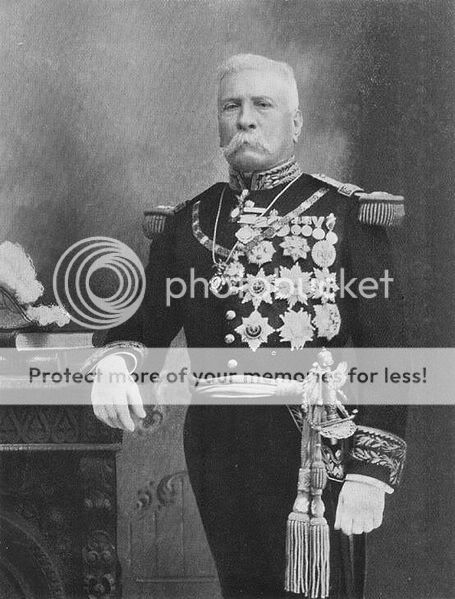
Diaz's long life was one that featured many interesting turns. He joined the Mexican army in the first instance in order to fight against the United States in the Mexican War. He lead guerrillas against Santa Ana upon his return to Mexico. He fought the French with Juarez but was an opponent, sometimes a revolutionary, against Juarez thereafter. He came to rule Mexico in 1877 by popular election, and ironically stepped down after one term having run on that platform. He ran again in 1884 and remained in power until the revolution. While he ultimately was toppled in a revolution, his authoritarian rule of Mexico was the first real period of peace in Mexico since the revolution against Spain, and the country generally prospered. Had he stepped down, as he had indicated he was willing to do, he would be well remembered today.


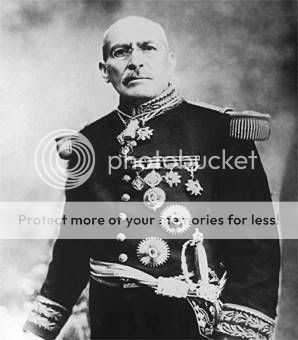
Heurta would die in El Paso Texas, in exile, in 1916, where he was under house arrest after having been detected negotiating with the Germans for arms in violation of the Neutrality Act.


Of note here, the involvement in the US in the Mexican Revolution proved to be almost inevitable. The border region was chosen by participants in both sides as a place of refuge, to include both the humble and the conspiratory. Madero, Villa, and Huerta all chose the US as a place of refuge, and a place to base themselves in the hope to return to Mexico and achieve power. Tensions on the US border started with the revolution being declared in 1910, and as early as the first day of the revolution Mexican authorities were assuring the US not to have worries. Tensions would last long after World War One, and the cross border action that started before the war would continue on briefly after the war.

The Wyoming National Guard, like that of every other state, would see border service in this period, first being mustered to serve on the border in 1915.  National Guard service involved nearly constant active duty from March 1915 through World War One.

Leo Tolstoy, age 82, died.


A great novelist, he was also an oddball in more than one way.

Last edition:

Thursday, November 18, 2010

Friday, November 18, 1910. Riots. Suffrage Black Friday

Riots in Puebla Mexico resulted in the death of more than 100 people, including Aquiles Serdán, a politician and a supporter of Madero, who was killed defending his home in hopes of a general local insurrection.

A huge British Suffrage march turned violent, resulting in what was termed Black Friday. 

Last edition:

Thursday, November 17, 1910. First annual conference of Wyoming clergy.

Tuesday, November 16, 2010

Wednesday, November 16, 1910. No canal grabbing.

President Taft was in Panama City inspecting the Panama Canal, where he assured Panamanians that the US wasn't going to grab the canal "so long as Panama performed her part under the treaty."

And there's this


"Samuel F. Perkins on Broad St., Philadelphia, Nov. 10th, 1910 - just going up First special permit ever granted in any American city, for man carrying kites."

Last edition:

Monday, November 14, 1910. First Ship Launch.

Sunday, November 14, 2010

Monday, November 14, 1910. First Ship Launch.


Eugene B. Ely took off in an airplane from the USS Birmingham in the first shipboard takeoff.

He landed in Hampton Roads.

He'd follow that up by being the first person to land an airplane on a ship on January 18, 1911.

Not too surprisingly, he died in an aviation accident on October 19, 1911. He received a posthumous Distinguished Flying Cross on February 16, 1933.

Last edition:

Tuesday, November 8, 1910. The Republican Party loses the House.

Monday, November 8, 2010

Tuesday, November 8, 1910. The Republican Party loses the House.

The Republican Party lost control of the House of Representatives.  The 62nd Congress would have 230 Democrats, 162 Republicans, one Progressive Republican, now an extinct species, and the first Socialist ever elected to Congress, incoming U.S. Representative Victor L. Berger of Milwaukee.

Overall, politics were swinging leftward, with the Democrats, which had been the conservative party, beginning their slow migration to the left.

Last edition:

Monday, November 7, 1910. Dawn of commercial aviation.

Sunday, November 7, 2010

Monday, November 7, 1910. Dawn of commercial aviation.

The first commercial airplane flight took place when Wright Company pilot Philip Parmalee transported two bolts of silk (worth $1,000) from Dayton, Ohio, to Columbus, for delivery to the Morehouse-Martens Department Store in Columbus.

Predictably, Parmalee died two years later in an airplane crash.

Philip Parmalee

Oddly enough, showing the dangers of an earlier age, his mother had been killed when he was a child by a runaway horse.

The HMCS Rainbow arrived at Esquimault, British Columbia, to begin her service patrolling the Pacific coast.  She was the Royal Canadian Navy's second ship.

Last edition:

Thursday, November 3, 1910. La Matanza

Wednesday, November 3, 2010

Thursday, November 3, 1910. La Matanza

Twenty-year-old ranch hand Antonio Rodriguez was lynched by being burned alive by a mob in Rocksprings Texas after having been accused of murdering a "white woman".  His murder in Texas sparked a reaction in Mexico, which was on the verge of revolution as it was, leading to boycotts on U.S. businesses and partially leading to the Plan of San Diego.

President Taft denied that the US was considering annexting Panama.

Interesting, isn't it?  The U.S. was in its high colonial era, having just beaten Span in the Spanish American War, and yet it didn't annext Cuba and it wasn't threatening to annex Panama, where it had constructed the canal.  Oh for the days when Republican Presidents weren't threatening to annex everything in site.

Of course, McKinley, Roosevelt and Taft weren't demented narcissists.

Former Democratic Mayor of New York City, the city's second Roman Catholic mayor, died at age 55.

Last edition:

Tuesday, November 1, 1910. The Pale of Settlement.

Monday, November 1, 2010

Tuesday, November 1, 1910. The Pale of Settlement.

Czar Nicholas II expanded the Pale of Settlement, that area within the Russian Empire in which Jews could reside.

The Pale of Settlement in 1884.

Last edition:

Wednesday, October 26, 1910