Saturday, May 20, 2017

Masterpiece

By a curious confusion, many modern critics have passed from the proposition that a masterpiece may be unpopular to the other proposition that unless it is unpopular it cannot be a masterpiece.

GK Chesterton

Poster Saturday: Lamp Day


Thursday, May 18, 2017

Congress Passes the Selective Service Act of 1917 and the Wyoming Guard gets the word

On this day, in 1917, Congress passed, finally, a much debated selective service act, ushering in a new era of "the draft".

The bill passed was massive and covered a plethora of topics.

At the same time, the mobilized and mobilizing Wyoming National Guard got the news that it would be taken into Federal service in July.


The odd thing about this is that the National Guard in Wyoming, and pretty much everywhere else, had been called out just as soon as war was declared.  But the government did not Federalize it right away.  Another example of how things were quite a bit different in World War One as compared to World War Two.

Monday, May 15, 2017

Bike to Work Week in Bike Month

Bike Month Dates and Events


I'd forgotten that May was Bike Month.

I did recall that there's always a Bike To Work Week.  Unfortunately, it's always in May, which means that it comes here in a month that's still slugging it out with winter.  Indeed, snow is predicted for later this week. . . just after I took the side panels off of the Jeep, of course.


I often do bike to work, but rarely in May.  The weather just doesn't accommodate it here.  So this week, I won't be biking to work, and will even miss bike to work day, May 19.  Of course, my schedule isn't allowing for it this week either.

Which is part of the problem in the task of restoring the bicycle to its former status that once rivaled the automobile.


Related Threads:

Riding Bicycles: 

Our big thread on this topic.

Bicycle Delivery Boy, aged 13, Oklahoma City.

A photograph.

The bicycle messenger

Another photograph.

Western Union Messenger No. 38. March 14, 1917

Yep, a photograph.

Mid Week at Work: Delivering the mail in Washington D.C., 1919.

Another photograph yet again.

On Riding A Bicycle

Commentary on riding a bike.

The high tech alternative to horses. . . . the bicycle

A look at the topic from a different prospective.

Bandits

Net Security calmly whacking the beast of hackery. . . or something like that.

From the New York Times:
SAN FRANCISCO — Hackers are discovering that it is far more profitable to hold your data hostage than it is to steal it.
A decade-old internet scourge called ransomware went mainstream on Friday when cybercriminals seized control of computers around the world, from the delivery giant FedEx in the United States to Britain’s public health system, universities in China and even Russia’s powerful Interior Ministry.
Oh great.

It would seem that things like this are getting more and more common, and will become an increasingly severe problem.  All we can do, it seems, is to be vigilant and hope that technology to counter such things stays apace, which it only does barely.  Today, and probably all week along, all sorts of companies and individuals will be paying ransom to recover their computers, basically.

Who are they, and where do they come from?  They aren't easily identifiable, like Pancho Villa or Baby Face Nelson.  They're more like vikings of old, or the endless groups of roaming bands that once rode out of the east. 

An example, I guess, of how the more things change, the more they stay the same, or close to it.

I've been missing a lot of the news, and commenting on it even less. . . .

as I've been super busy.

It's funny how when things are like that, you can put big events up on a shelf that you'd likely normally pay quite a bit of attention to.

For example, I'm not shocked and dismayed that ESPN has cancelled Garbage Time and has yet to assign a new role to Katie Nolan, as a news clip revealed  yesterday. . .

. . . so nobody is too worked up about that here? Well, okay.

More seriously, Donald Trump fired FBI director James Comey.  That's big news, but I haven't had time to really pay much attention to it.  I do note that the New York Times is already after Trump about it, but I'm pretty much ignoring my NYT feed these now days. Ignoring gives some credence that the NYT is at war with Trump so much that they'd criticize his breakfast choices if they knew them, which doesn't mean that the Comey story isn't a big one.  Still, I find myself strangely disinterested in it as I haven't been able to catch up with it.

Likewise the passage of a new health care bill in the House.  That's big news, but I haven't had time to really pay much attention to it.

I wonder, quite frankly, for busy folks in 1917 if that's how all the grim war news was.  Just more news"  We look back and figure everyone must have been wrapped up in it every day, but not necessarily.  Super busy people, and there were super busy people, might have been just as distracted then as now.

Which doesn't mean I'm completely unaware.  No, I'm picking up the paper every day and reading it.  But I'm so busy on some other projects I just don't focus a great deal on it. Some of that is bad, and quite frankly, perhaps some good.

Blog Mirror: Decent Films: Our Lady of Fatima at the Movies

Our Lady of Fatima at the Movies

SDG Original source: Catholic Digest

May is the Month of Mary, and May 13 is the memorial day of Our Lady of Fátima. On this day in 1981, Pope John Paul II was shot in St. Peter’s Square, and he ascribed his survival to the intercession of the Blessed Virgin, linking the attempt on his life with the “Third Secret” of Fátima. . .

Sunday, May 14, 2017

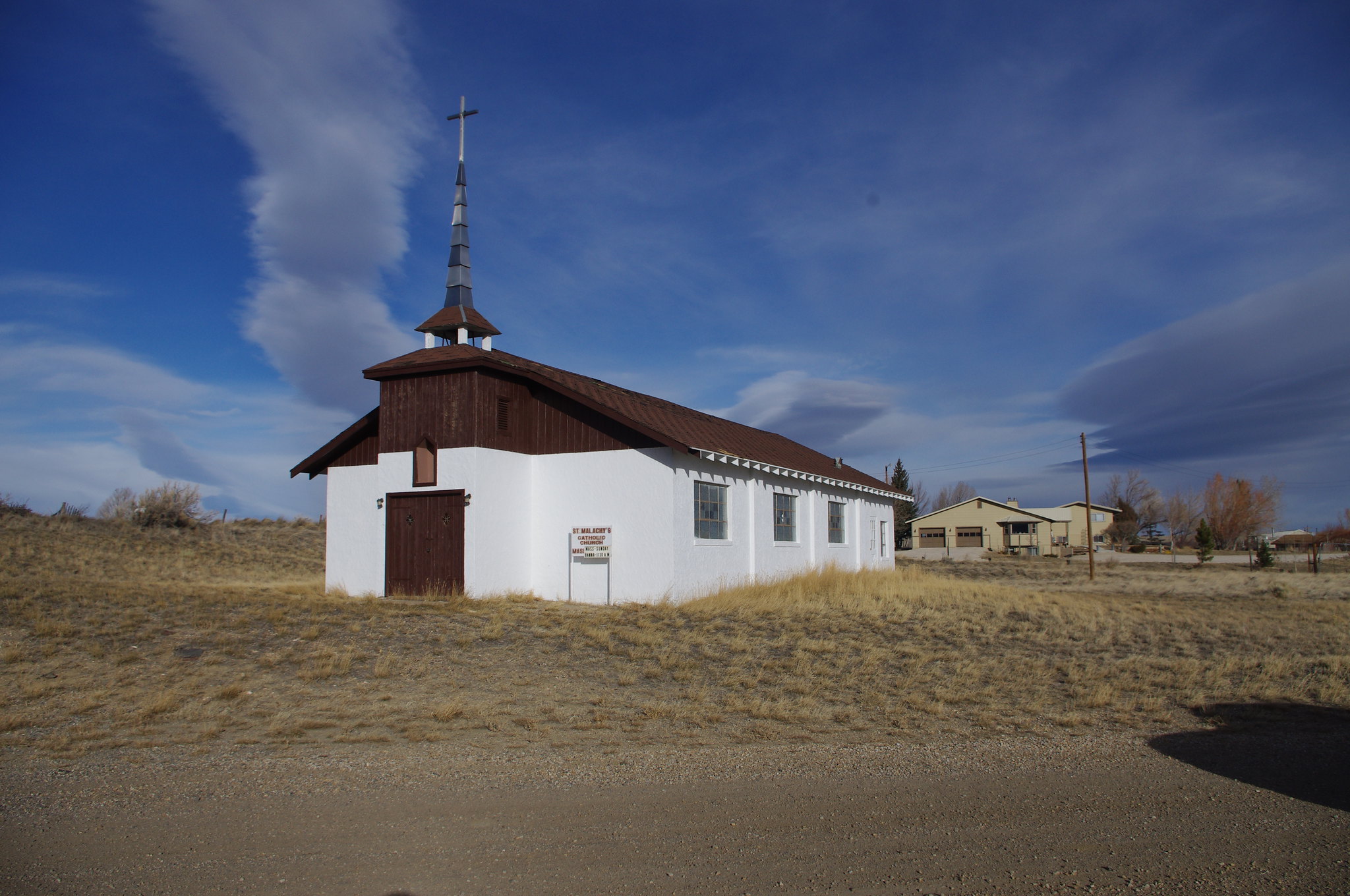
Sunday Morning Scene: Churches of the West: St. Malachy Catholic Mission Church, Medicine Bow, Wyoming

Churches of the West: St. Malachy Catholic Mission Church, Medicine Bow, Wyoming


Original caption:  "This is St. Malachy's Catholic Mission Church in Medicine Bow, Wyoming. The Church is served by the parish in Saratoga Wyoming."

I'll note that I'm not too certain that this church is currently being used.  Indeed, I think it is not.  Medicine Bow's fortunes have declined in recent years.

Best Posts of the Week of May 7, 2017


A Mid Week At Work Query: How did you end up doing what you do? Is it what you expected?

Dog Pile

Female Railroad workers, Baltimore & Ohio Railroad, May 14, 1917.


American Federation of Labor Conference, May 14, 1917.


Friday, May 12, 2017

Scenes of Arizona, May 12, 1917

Globe Arizona, Copyright deposit May 12, 1917.

Miami Arizona, Copyright deposit May 12, 1917.

Thursday, May 11, 2017

Lex Anteinternet: Riding Bicycles

Shoot, yesterday I missed this:

Bike to School Day

Join the Celebration on May 10!

Thousands of students, families, community partners, and elected officials around the country will celebrate the benefits of biking and walking to school during National Bike to School Day.
I only became aware of it due to this:
Source: catalog.archives.gov
I don't recall anything like that happening myself, but then in 1974 I was only eleven years old. Given local distances, this sort of thing almost certainly did not occur here, however.

So in belated honor of the day, I'm linking in an old post on bikes as transportation:
Lex Anteinternet: Riding Bicycles:

 Catholic Priest riding a bicycle in South Dakota, 1944.
As well as our prior commentary on biking in general:

On Riding A Bicycle

Most summers I ride my bicycle to work quite a bit.  I do that as it forces me to get a bit of exercise, it saves on the use of diesel fuel, and because I just like doing it. This year, however, I got around to that for the first time today.  I didn't get a chance earlier as it seems the City of Casper and the State of Wyoming has determined to rip up every street I might conceivable wish to ride on this summer, simultaneously.  On my way here today, for example, I went through two construction zones.
I have to say, yesterday, May 10, was a pretty nice day here, but it didn't start out very warm and early on the weather looked a bit threatening.  It cleared up, however.  Still, for here, this time of year can be a bit dicey for riding a bike to school.  Having said that, I walked to school my entire school career, all of it. Seems like that's a rarity now.

Blog Mirror: Everyday Lives In War: Join us! Shape the future of the First World War Network


Join us! Shape the future of the First World War Network

Elsewhere on May 11, 1917. . . .


Kurdish girls, carrying water.

U. S. Rifle Model of 1917 accepted

As we noted yesterday, we've quit daily "on this day in 1917" entries, although we have one here, unusually, for the second day in a row.  The reason for that is that we are trying to track a few things of interest or relevance to the overall theme of our blog, and changes in material items is one of them.  We have done quite a few of those over time.

While we posted a lot of items from March 2016 up until March 2017 that were on a daily basis, a few of the posts we did were on material changes, mostly in connection with the Punitive Expedition. We had intended to try to address the story of firearms that were used as part of that event, but we never really got around to it (and never had time to research it, frankly, particularly in regards to Mexican combatants, which would have been quite a project), other than to include a reference to it in a post that covered a lot of other items.  Now, of course, we've moved into World War One.  There's no earthly way that we're going to be able to cover every firearm used in the Great War, and indeed the outfit that the film below is from is doing that anyhow.  But we're making an exception today specifically because we covered this, a little, in the Punitive Expedition thread.  the reason is that here we find things really beginning to materially change in regards to the U.S. Army as it found itself just out of the "Border War" and into a World War.  Logic would hold that the Army should have at least had a good handle on small arms supplies going into the war.  Not so.

On this day, in 1917, it started to address that: (See:  The Story of Eddystone, page 22)

It's story:


Take a look, of course, at the story of the Pattern 14 and the Pattern 13, which are just in front of this.

It's tempting to categorize the M1917 as a "forgotten" rifle, although that might be going to far.  It's fair to say, however, that its story isn't accurately remembered by most.  The rifle equipped half of all U.S soldiers during World War One and was the rifle by far the most likely to be carried by a conscripted soldier.  While there was mass production of the M1903 Springfield, a great rifle in its own right, the fact of the matter was that the two government arsenals that were producing that rifle simply could not manufacture sufficient numbers  in which to equip the massive Army the United States determined to raise during the Great War.  Existing stocks of M1903s had already been assigned out to the Regular Army and the National Guard at the time the war commenced and ongoing production was really only sufficient to supply the needs of the Regular Army, the Federalized National Guard (which of course became part of the regular establishment during the war), the Navy and the Marine Corps (both of which had adopted the M1903 to replace the Navy Lee following the Spanish American War).  Therefore the large conscript Army raised by the US during the war relied, in large part, upon the M1917.

Indeed, the M1917 is likely to be the rifle carried by Sgt. Alvin York at the time of his famous deeds, as that was the rifle that equipped the 82nd Division, which he was in.

Sometimes oddly condemned by folks not terribly familiar with it, the rifle (watch the video) was an excellent rifle and had features that were somewhat more advanced than those on the slightly older M1903.  The sights in particular were very good and probably the very best on any rifle used by any army during the Great War.  Heat treatment problems made the actions brittle on some rifles made by Eddystone, a Remington facility, but this is also true of very early M1903 actions made by government arsenals.

The rifle was sufficiently good that it nearly went on to replace the M1903 following World War One, but it obviously did not.  It was retained in a more significant role than sometimes imagined, however, and not simply stored, as some will claim.  For some odd reason, it became the rifle that equipped chemical mortar units in the Army all the way into World War Two.  It also was issued to field artillerymen early in World War Two, who carried them at least as late as Operation Torch.  Stocks of the rifle were issued as well to Free French troops who used them in North Africa and on into Europe, and they saw action in Chinese hands during the war as well.  Finally, M1917s equipped various State Guard unis throughout World War Two, likely putting the rifle back in the hands of many men who had carried them twenty years prior.  In the category of men who had not carried them previously, they also equipped JrROTC units during these years.

An entirely civilian production item, not too surprisingly the rifle went on to have a sporting expression.  Thousands were converted by sportsmen and gunsmiths into sporting rifles. Beyond that, Remington kept the rifle in production as the Model 30, starting off at first using actions it was left with when the government abruptly cancelled orders following World War One.  Remington even took a run at making a sniper variant for the government but production ceased with the onset of World War Two and terminated forever following the war.

This wasn't, we should note, the only rifle that supplemented supplies of M1903s during World War One.  Obsolete models of rifles were brought back out and issued, and Mosin Nagants rejected by Imperial Russian inspectors would see use in the Polar Bear expedition.