Friday, March 17, 2023

Letter to the soldiers of Coroticus


Letter to the soldiers of Coroticus

I declare that I, Patrick, – an unlearned sinner indeed – have been established a bishop in Ireland. I hold quite certainly that what I am, I have accepted from God. I live as an alien among non-Roman peoples, an exile on account of the love of God – he is my witness that this is so. It is not that I would choose to let anything so blunt and harsh come from my mouth, but I am driven by the zeal for God. And the truth of Christ stimulates me, for love of neighbours and children: for these, I have given up my homeland and my parents, and my very life to death, if I am worthy of that. I live for my God, to teach these peoples, even if I am despised by some.

With my own hand I have written and put together these words to be given and handed on and sent to the soldiers of Coroticus. I cannot say that they are my fellow-citizens, nor fellow-citizens of the saints of Rome, but fellow-citizens of demons, because of their evil works. By their hostile ways they live in death, allies of the apostate Scots and Picts. They are blood-stained: blood-stained with the blood of innocent Christians, whose numbers I have given birth to in God and confirmed in Christ.

The newly baptised and anointed were dressed in white robes; the anointing was still to be seen clearly on their foreheads when they were cruelly slain and sacrificed by the sword of the ones I referred to above. On the day after that, I sent a letter by a holy priest (whom I had taught from infancy), with clerics, to ask that they return to us some of the booty or of the baptised prisoners they had captured. They scoffed at them.

So I don't know which is the cause of the greatest grief for me: whether those who were slain, or those who were captured, or those whom the devil so deeply ensnared. They will face the eternal pains of Gehenna equally with the devil; because whoever commits sin is rightly called a slave and a son of the devil.

For this reason, let every God-fearing person know that those people are alien to me and to Christ my God, for whom I am an ambassador: father-slayers, brother-slayers, they are savage wolves devouring the people of God as they would bread for food. It is just as it is said: ‘The wicked have routed your law, O Lord’ – the very law which in recent times he so graciously planted in Ireland and, with God's help, has taken root.

I am not forcing myself in where I have no right to act. I have a part with those whom God called and destined to preach the gospel, even in persecutions which are no small matter, to the very ends of the earth. This is despite the malice of the Enemy through the tyranny of Coroticus, who respects neither God, nor his priests whom God chose and granted the divine and sublime power that whatever they would bind upon earth would be bound also in the heavens.

Therefore I ask most of all that all the holy and humble of heart should not fawn on such people, nor even share food or drink with them, nor accept their alms, until such time as they make satisfaction to God in severe penance and shedding of tears, and until they set free the men-servants of God and the baptised women servants of Christ, for whom he died and was crucified.

The Most High does not accept the gifts of evildoers. The one who offers a sacrifice taken from what belongs to the poor is like one who sacrifices a child in the very sight of the child's father. Riches, says Scripture, which a person gathers unjustly, will be vomited out of that person's stomach. The angel of death will drag such a one away, to be crushed by the anger of dragons. Such a one will the tongue of a serpent slay, and the fire which cannot be extinguished will consume. And Scripture also says: ‘Woe to those who fill themselves with what does not belong to them’. And: ‘What does it profit a person to gain the whole world and yet suffer the loss of his or her soul?’

It would take a long time to discuss or refer one by one, and to gather from the whole law all that is stated about such greed. Avarice is a deadly crime. Do not covet your neighbour's goods. Do not kill. The murderer can have no part with Christ. Whoever hates a brother is guilty of homicide. Also: Whoever does not love a brother remains in death. How much more guilty is the one who stained his hands in the blood of the children of God, who God only lately acquired in the most distant parts of the earth through the encouragement of one as unimportant as I am!

Surely it was not without God, or simply out of human motives, that I came to Ireland! Who was it who drove me to it? I am so bound by the Spirit that I no longer see my own kindred. Is it just from myself that comes the holy mercy in how I act towards that people who at one time took me captive and slaughtered the men and women servants in my father's home? In my human nature I was born free, in that I was born of a decurion father. But I sold out my noble state for the sake of others – and I am not ashamed of that, nor do I repent of it. Now, in Christ, I am a slave of a foreign people, for the sake of the indescribable glory of eternal life which is in Christ Jesus our Lord.

If my own people do not recognise me, still no prophet is honoured in his own country. Could it be that we are not of the one sheepfold, nor that we have the one God as our Father? As Scripture says: ‘Whoever is not with me is against me’; and ‘whoever does not gather with me, scatters’. But it is not right that one destroys while another builds. I do not seek what is mine: it is not my own grace, but God who put this concern in my heart, that I would be one of the hunters or fishers whom God at one time foretold would be here in the final days.

They watch me with malice. What am I to do, Lord? I am greatly despised. See – your sheep around me are mangled and preyed upon, and this by the thieves I mentioned before, at the bidding of the evil-minded Coroticus. He is far from the love of God, who betrays Christians into the hands of Scots and Picts. Greedy wolves have devoured the flock of the Lord, which was flourishing in Ireland under the very best of care – I just can't count the number of sons of Scots and daughters of kings who are now monks and virgins of Christ. So the injuries done to good people will not please you – even in the very depths it will not please.

Who among the holy people would not be horrified to take pleasure or to enjoy a banquet with such people? They have filled their homes with what they stole from dead Christians; they live on what they plundered. These wretched people don't realise that they offer deadly poison as food to their friends and children. It is just like Eve, who did not understand that it was really death that she offered her man. This is how it is with those who do evil: they work for death as an everlasting punishment.

The Christians of Roman Gaul have the custom of sending holy and chosen men to the Franks and to other pagan peoples with so many thousands in money to buy back the baptised who have been taken prisoner. You, on the other hand, kill them, and sell them to foreign peoples who have no knowledge of God. You hand over the members of Christ as it were to a brothel. What hope have you in God? Who approves of what you do, or who ever speaks words of praise? God will be the judge, for it is written: ‘Not only the doers of evil, but also those who go along with it, are to be condemned’.

I do not know what to say, or how I can say any more, about the children of God who are dead, whom the sword has touched so cruelly. All I can do is what is written: ‘Weep with those who weep’; and again: ‘If one member suffers pain, let all the members suffer the pain with it’.[Nota] This is why the church mourns and weeps for its sons and daughters whom the sword has not yet slain, but who were taken away and exported to far distant lands, where grave sin openly flourishes without shame, where freeborn people have been sold off, Christians reduced to slavery: slaves particularly of the lowest and worst of the apostate Picts.

That is why I will cry aloud with sadness and grief: O my fairest and most loving brothers and sisters whom I begot without number in Christ, what am I to do for you? I am not worthy to come to the aid either of God or of human beings. The evil of evil people has prevailed over us.We have been made as if we were complete outsiders. Can it be they do not believe that we have received one and the same Baptism, or that we have one and the same God as father. For them, it is a disgrace that we are from Ireland. Remember what Scripture says: ‘Do you not have the one God? Then why have you each abandoned your neighbour?’

That is why I grieve for you; I grieve for you who are so very dear to me. And yet I rejoice within myself: I have not worked for nothing; my wanderings have not been in vain. This unspeakably horrifying crime has been carried out. But, thanks to God, you who are baptised believers have moved on from this world to paradise. I see you clearly: you have begun your journey to where there is no night, nor sorrow, nor death, any more. Rather, you leap for joy, like calves set free from chains, and you tread down the wicked, and they will be like ashes under your feet.

And so, you will reign with apostles and prophets and martyrs. You will take possession of an eternal kingdom, as he (Christ) testifies in these words: ‘They will come from the east and from the west, and they will recline at the table with Abraham and Isaac and Jacob in the kingdom of the heavens. Left outside are dogs and sorcerers and murderers; with the lying perjurers, their lot is in the pool of eternal fire’. It is not without cause that the apostle says: ‘If it is the case that a just person can be saved only with difficulty, where will the sinner and the irreverent transgressor of the law find himself?’

So where will Coroticus and his villainous rebels against Christ find themselves – those who divide out defenceless baptised women as prizes, all for the sake of a miserable temporal kingdom, which will pass away in a moment of time. Just as cloud of smoke is blown away by the wind, that is how deceitful sinners will perish from the face of the Lord. The just, however, will banquet in great constancy with Christ. They will judge nations, and will rule over evil kings for all ages. Amen.

I bear witness before God and his angels that it will be as he made it known to one of my inexperience. These are not my own words which I have put before you in Latin; they are the words of God, and of the apostles and prophets, who have never lied. ‘Anyone who believes will be saved; anyone who does not believe will be condemned’ – God has spoken.

I ask insistently whatever servant of God is courageous enough to be a bearer of these messages, that it in no way be withdrawn or hidden from any person. Quite the opposite – let it be read before all the people, especially in the presence of Coroticus himself. If this takes place, God may inspire them to come back to their right senses before God. However late it may be, may they repent of acting so wrongly, the murder of the brethren of the Lord, and set free the baptised women prisoners whom they previously seized. So may they deserve to live for God, and be made whole here and in eternity. Peace to the Father and the Son and the Holy Spirit. Amen.

Patrick, Bishop of Ireland.

Left, Right, and Changing Lanes. The Evolution of the American Political Parties. Part 2, the Democratic Party.


The "People's President", and the first President of the Democratic Party.  Populist Andrew Jackson.

The History of the Democratic Party

It would seem we should turn to the Democrats next, but having taken up populism, we will deal with it now.

Or no, we won't.

Oh, yes we will, as the Democrats were the country's original populist party.

Populism has had a long history in American politics, and often been influential, but it's rarely been strong enough in modern times to actually control the country.  Typically, in fact, one of the major parties will take the most popular and palatable of populist ideas, adopt them, and leave independent populist movements to die.  This wasn't always so, however.

Populism first really began to strongly rise in the United States in the 1820s.  Prior to that time there had been populists, but if you look at the early history of the country, politics tended to be controlled by elites.  Populism brought the era of temporary and loose political parties in the US to an end, however, in 1828 with the formation of the Democratic Party.

The Democrats were formed as a populist party to boost the election of populist war hero, Andrew Jackson.  Jackson was the "People's President", and had a platform of opposition to institutions, opposition to the Second Bank of the United States, and hostility and opposition to the United States Supreme Court.  He'd have a home, quite frankly, in the modern Republican Party.

The Democrats remained the country's populist party for up until the late 19th Century. During that entire time they were opposed to the American System as they were opposed to a government role in the economy. They were also strongly regional in character, as they opposed a strong central government.  They were vested in racism in the South due to an ill-defined cultural conservatism of a certain unthinking sort that was supported by their member's economic self interests.  They got the country into the Civil War, and they were the prime movers in the Mexican War.

They were, quite frankly, hardly recognizable in contemporary terms.

Starting in the 1890s, the Democrats found themselves besieged from within and without by a strong left wing populist insurgency, something a right wing populist party found surprising.  The populist grew in strength, from the left, to such an existent that the People's Party, a left wing Populist Party began to seriously challenge it, and frankly also began to challenge the liberal party, the Republican Party.  While members of the Populist Party crossed back and forth into the Democratic Party, and were often members of both parties simultaneously, it was the Republicans who effectively reacted first, heading leftwards with stronger liberalism in the form of Progressivism.  For a time, in fact, it looked like the GOP might effectively gut Populism.

Instead, the Taft Roosevelt split gave the Democrats an opening, and the adopted elements of Progressivism and Populism in order to propel a Southern Democrat via Princeton, Woodrow Wilson, into the White House.

That event was a foundational shift for the Democrats.  

Prior to it occurring, the party had built its base in the North, to the extent it had one, largely on patronage through immigrant communities.  This political move had nothing to do with the real politics of the party, and was a pure, if effective, power strategy.  Republicans played it too, but much less effectively, being quite frankly a more moralizing party and one that had a stronger business base in the North.  In the North, the Democrats operated through patronage.  If you were Irish and wanted a job, the police department probably had one, or the fire department, but you had to be a Democrat to get it.  The system was corrupt by modern standards, but very widely tolerated at the time.

Going into the Wilson administration, therefore, the Party dominated the South due to populism, although the party in the South was controlled by landed elites which excluded, ironically enough, all of the poorer whites that it could.  It pretty much completely excluded blacks, who were almost all Republicans, if they could vote, which was rarely.  In the North, the Democrats had bodies of immigrants and their immediate descendants, largely Catholic, who shared next to nothing in common with the Southern party.  In the West, where it had inroads, it was with farmers who appreciated the party's anti bank and cheap lending policies.  Wilson won, however, as he opposed entry into World War One, which the Roosevelt wing of the GOP favored, and his campaign had co-opted the more popular Progressive Republican policies.

The Wilson Administration was selectively liberal on things, as long as it didn't involve helping blacks, but the move fundamentally altered the Democratic Party.  During the eight years of the Wilson Administration, the Republican Party fought a civil war on the left and then collapsed when Theodore Roosevelt died in 1919.  Progressives in that time frame started moving out of the Republican Party, with quite a few joining the newly Progressive Democrats in the North.  The Republicans regained control of the White House after Wilson, but with a new, Conservative, outlook.  Democrats remained Progressive in the North.  When the Great Depression hit, they retook the White House with the most Liberal administration in American history.

The direction that Wilson had put the party on became increasingly fixed during FDR's Administration.  The second Roosevelt not only picked up progressive policies first proposed by his cousin, but went far beyond them with an administration that had an Imperial Presidency of a previously unimagined extent.  Roosevelt not only brought liberals into the party in the main, but also radicals on its periphery, turning a blind eye to socialist and even communists at lower levels.  He also took up almost ignoring the party in the South, which didn't appreciate the liberalism for the most part, but which did appreciate assistance to farmers in the still largely agricultural and agrarian South.  The direction was noted, causing the Southern reaction expressed in I'll Take My Stand, and there was opposition from Southern Democrats, but it did not cause the party to officially split, largely due to racial reasons.  The Southern Democrats, conservative and populist for the most party, had nowhere else to go.  That encouraged the growing nationwide Democratic Party to ignore them.

The death of Franklin Roosevelt caused the liberal tide to retreat a bit, but Harry Truman, a Missourian, surprisingly didn't go back as far as he could have.  Not anywhere near as liberal as Franklin Roosevelt, he nonetheless took domestic steps that Roosevelt never did.  Truman desegregated the military and then started to dismantle Southern segregation, something that could not have been anticipated and which the South was not prepared for.

Starting in the 50s, the Southern Democratic Party put more and more distance between itself and the main party, which did the same.  The post-war Democratic Party remained a center left party, but as with the GOP, it moved generally towards the center during the early Cold War except on matters of civil rights, in which it now joined with the Republican Party in championing.    Southern Democrats began threatening to bolt, and occasionally did, although they did not bolt to the GOP where they were not welcome.

They were not welcome there, that is, until Ronald Reagan's "Southern Strategy" brought them in.

Before that, however, the events of the 60s brought an end to the post-war Democratic Party.

The seeds for dissolution had been long planted, as shown above.  During the New Deal, the Democratic Party's leadership in the north was decidedly left of center, while the leadership in the South was solidly populist in base and conservative in leadership.  When Truman took the party into the left center in the main with its policy, reaching down into the South with desegregation, elements of the party began to bolt, but most it remained.  But in the 60s, with rising liberalism in the young, the stress was too high.

The post-war Democrats had supported foreign intervention in the name of anti communism, and had taken the US into the Korean War, a host of Caribbean and Central American interventions, and then into Vietnam.  But as the populace grew weary of the war and the young began to oppose it, it was the northern Democratic Party in which the fight broke out, with it breaking out in full in the 1968 Democratic Convention. There, ethnic conservative "hard hat" Democrats, backed by the Chicago police, battled left wing protesters.  Unable to see a way forward, Johnson pulled out of the Presidential race, and ceded the Democratic race to McGovern, who came from the left. The party never went back.

Post 1968 the party really became something else.  It jettisoned the Democratic South, although it took years for the process to be completed, and really was only after the Republicans courted them.  It retained an ethnic component, but it increasingly ignored it during the 70s.  Essentially, it became the party of the WASPish elite, essentially becoming the difficult, embarrassing cousin to the Country Club Republicans.  It's stayed there ever since.

That process too took years to complete, but as it did, entire sections of the post 1932 Democratic coalition evaporated away, with some of it still evaporating.  The Democratic Party remains the largest party in the US by far, but it's in deep trouble even if it doesn't recognize it fully.  Catholic Democrats, once a large component of the party in the North, left the party for the GOP or to become independents when their consciences couldn't tolerate left wing positions on abortion and gender issues.  This included large ethnic components, some of which had weakened simply due to time, such as the Irish Democrats", but the process is being experienced now with Hispanic Democrats, and even with African Americans.  In the rural West the party simply died.

So, over time, what has it meant to be a Democrat?  Well, the following:

  • From 1828 until the 1912, a very long period of time, it was a populist part, but one that essentially went from being purely populist to being populist in stance, but controlled in the South by economic elites who not only controlled the party, but were often opposed to the interest of rank and file Southerners.  It was populist economically consistently.
  • From 1912 until 1932, it was a left wing progressive party in the main, but with a Southern populist wing that was conservative/populist.
  • From 1932 to 1945 it was an even more left wing progressive party which continued to retain a Southern conservative/populist wing.
  • From 1945 until 1963, it was a center/left party that retained a disgruntled Southern conservative/populist wing.
  • From 1963 until 1968 it was an emerging left wing party, that went fully left wing in 1968 and which remains there.
Last prior edition:


Saturday, March 17, 1973. Treason and Sad Reunions.

Khemer Air Force pilot Cpt. So Patra, son-in-law of former King Norodom Sihanouk, bombed the presidential palace in Phnom Penh, killing 36 people.  He then flew his T-28 to Hainan Island, a Chinese possession.

Vietnamese, not Cambodian, T-28.

Arrests followed.

A large release of the few remaining US POWs in Vietnam began, including the release of Lt. Col. Robert L. Stirm of the U.S. Air Force.

A remarkable photograph, it depicts Stirm's 15-year-old daughter greeting her father with the rest of the family behind them.

Stirm had already received a Dear John letter from his wife, Loretta, informing him of her intent to divorce him.  They did divorce.  She died in 2010 from cancer.

His children all had the Pulitzer Prize winning photographs hanging in their homes.  He couldn't bear to.

Wednesday, March 17, 1943. St. Patrick's Day Speech, Japanese Murder of Missionaries.

Plures efficimur, quotiens metimur a vobis: semen est sanguis Christianorum.

Tertullian.


The Japanese destroyer Akikaze Maru took 39 mostly German Catholic missionaries, from the island of Kairiru.  Eighteen of those were nuns, six were priests, and one was a Bishop.  Included was a Chinese woman and her two children.

The ship then proceeded to Manus Island and picked up an additional 20 individuals, again mostly German, most of whom were Protestant in that case.  Outside of the Germans picked up there, there was one Hungarian missionary and some Chinese civilians, six of whom were women.  

The commander of the ship, Lt. Commander Tsurukichi Sabe took steps to care for the prisoners and assumed they'd be offloaded at New Britain, but at Kavieng, where he next put in, he received orders to murder all of them, which took place on March 18th.

On the 18th, the ship's crew killed them over a three-hour period, dumping their bodies in the sea.  Most were shot, but some children were simply thrown in the sea.

The ship would be sunk by a submarine when it intercepted torpedoes fired at the Jun'yō, an aircraft carrier, on November 3, 1944, going down with all hands including, of course, all those still living who had participated in the murder.

Why did this happen? All we can really say is that it wasn't atypical for the Japanese. The Germans and other Europeans were just that, Europeans. The Chinese were Japanese enemies.  Killing them all was a pretty Japanese approach to things.

In spite of cooperating with Germany in the export of Jewish residents of Yugoslavia, the Bulgarian parliament balked on plans to do the same in Bulgaria and refused to allow Bulgarian Jews to be taken out of the country to their deaths, thus saving them.  It might be noted that the actions taken by the Bulgarian Army in Macedonia and Thrace were not parliamentary directives, so here too, in spit of being an Axis ally, the parliament was not like so many German allies and willing to follow the Germans into murder.


Irish Prime Minister Eamon de Valera delivered his The Ireland We Dreamed Of speech on the radio, in which he stated:

The ideal Ireland that we would have, the Ireland that we dreamed of, would be the home of a people who valued material wealth only as a basis for right living, of a people who, satisfied with frugal comfort, devoted their leisure to the things of the spirit – a land whose countryside would be bright with cosy homesteads, whose fields and villages would be joyous with the sounds of industry, with the romping of sturdy children, the contest of athletic youths and the laughter of happy maidens, whose firesides would be forums for the wisdom of serene old age. 

The home, in short, of a people living the life that God desires that men should live. 

With the tidings that make such an Ireland possible, St. Patrick came to our ancestors fifteen hundred years ago promising happiness here no less than happiness hereafter. It was the pursuit of such an Ireland that later made our country worthy to be called the island of saints and scholars. It was the idea of such an Ireland – happy, vigorous, spiritual – that fired the imagination of our poets; that made successive generations of patriotic men give their lives to win religious and political liberty; and that will urge men in our own and future generations to die, if need be, so that these liberties may be preserved. 

One hundred years ago, the Young Irelanders, by holding up the vision of such an Ireland before the people, inspired and moved them spiritually as our people had hardly been moved since the Golden Age of Irish civilisation. 

Fifty years later, the founders of the Gaelic League similarly inspired and moved the people of their day. 

So, later, did the leaders of the Irish Volunteers.

We of this time, if we have the will and active enthusiasm, have the opportunity to inspire and move our generation in like manner. We can do so by keeping this thought of a noble future for our country constantly before our eyes, ever seeking in action to bring that future into being, and ever remembering that it is for our nation as a whole that future must be sought.

The Washington Bears won the World Professional Basketball tournament, prevailing over the Oshkosh All Stars.  The Bears were an all black team.

Saturday, March 17, 1923. St. Patrick's Day

Threats of the IRA notwithstanding, Irish boxer Mike McTigue fought and defeated world champion Light Heavyweight Louis Mbarick, the Battling Siki.


A bomb was in fact detonated, wounding two children, but the fight carried on anyhow.

McTigue was Irish by birth but had immigrated to the United States at age 21.  After a long boxing career he retired to successfully run a saloon, although in later years he declined into ill health and poverty.  He died at age 73 in 1966, a fairly old age for somebody with this early career.

Dobrolet, the predecessor to the world's most dangerous airline Aeroflot, was formed by the Soviet merger of private airlines.

U.S. Attorney General Harry M. Daugherty announced that Warren G. Harding was going to run for reelection, unless ill health precluded it.  An announcement through the Attroney General would be regarded as odd now, and was regarded as odd then.

Harding in fact was plagued with health problems, not to mention personal problems, that would take his life later that year.

The local paper ran a tribute to the Irish, something that probably didn't hurt circulation given the large Irish community that then existed.

A Modern Plague


MindGeek, the parent company behind several of the world's biggest porn sites, was just acquired by a private equity firm called Ethical Capital Partners. We'll let you guys draw your own conclusions from this one.

Thursday, March 16, 2023

March 16, 1943. Stalin asks for the Western Allies to open a "second" front, disregarding that the war in the East was the Second Front, and the Western Allies were fighting on three fronts.


Former ally of Adolph Hitler, and a man whose overreach in dealing with his Nazi Allies had resulted in his country entering the war, Joseph Stalin, wrote Franklin Roosevelt.

The letter from the Marxist mass murderer read:

MOST SECRET AND PERSONAL MESSAGE

FROM PREMIER J. V. STALIN TO PRESIDENT ROOSEVELT

Now that I have Mr Churchill's reply to my message of February 16, I consider it my duty to answer yours of February 22, which likewise was a reply to mine of February 16.

I learned from Mr Churchill's message that Anglo-American operations in North Africa, far from being accelerated, are being postponed till the end of April; indeed, even this date is given in rather vague terms. In other words, at the height of the fighting against the Hitler troops—in February and March— the Anglo-American offensive in North Africa, far from having been stepped up, has been called off altogether, and the time fixed for it has been set back. Meanwhile Germany has succeeded in moving from the West 36 divisions, including six armoured, to be used against the Soviet troops. The difficulties that this has created for the Soviet Army and the extent to which it has eased the German position on the Soviet-German front will be readily appreciated.

Mr Churchill has also informed me that the Anglo-American operation against Sicily is planned for June. For all its importance that operation can by no means replace a second front in France. But I fully welcome, of course, your intention to expedite the carrying out of the operation.

At the same time I consider it my duty to state that the early opening of a second front in France is the most important thing. You will recall that you and Mr Churchill thought it possible to open a second front as early as 1942 or this spring at the latest. The grounds for doing so were weighty enough. Hence it should be obvious why I stressed in my message of February 16 the need for striking in the West not later than this spring or early summer.

The Soviet troops have fought strenuously all winter and are continuing to do so, while Hitler is taking important measures to rehabilitate and reinforce his Army for the spring and summer operations against the U.S.S.R.; it is therefore particularly essential for us that the blow from the West be no longer delayed, that it be delivered this spring or in early summer.

I appreciate the considerable difficulties caused by a shortage of transport facilities, of which you advised me in your message. Nevertheless, I think I must give a most emphatic warning, in the interest of our common cause, of the grave danger with which further delay in opening a second front in France is fraught. That is why the vagueness of both your reply and Mr Churchill's as to the opening of a second front in France causes me concern, which I cannot help expressing.

March 16, 1943

The letter was either shortsighted or full of hypocritical crap, although perhaps he was blind to its hypocrisy.

In fact, the Western Allies had opened a third front with Operation Torch, or rather continued it as the British were fighting in North Africa prior to Stalin's blundering getting the Soviet Union into the war on the Allied side.  This would count the Battle of the Atlantic, a titanic naval battle which apparently Stalin didn't regard as a front, as a front, but which in fact very much was.

This would of course discount the entire Pacific campaign, which was for the Western Allies already a "second" front, but which was keeping the Japanese off of the Soviet's back, or at least arguably so.

The Soviet peoples were suffering enormously, to be sure, a condition they had been in since Stalin's bloody bedfellows had subjected them to the purification of the "worker's state", assuming we do not backdate that to 1914 when Imperial Russia entered World War One, but mass bloodletting in the USSR was a thing long before World War Two. That it got much worse during World War Two cannot be discounted, to be sure, although part of the Soviet suffering was due to Stalin killing competent Soviet officers prior to the Second World War and terrorizing his own population.

What can you say? Keeping up the fable that Stalin needed a "second front", rather than acknowledging he had one, and then some, was in everyone's best interest.

On one of those fronts, on the Atlantic, the largest wolfpack attack of the war occurred as 22 Allied merchant ships were sunk.

"Second" front indeed.

This TBF had a close call on the Atlantic while landing on the USS Charger, an escort carrier.


Anthony Eden visited the Roosevelt's.

Friday, March 16, 1923. The Covered Wagon, Irish fun suckers, Weird airplanes.

The Covered Wagon appeared in theaters.


Odd to think of, but there were people living who had crossed the West, as very young people, at the time.

The IRA threatened to bomb the La Scala Opera House in Dublin on St. Patrick's Day if a boxing match between Mike McTigue and Battling Siki went forwards as scheduled.

What a bunch of fun suckers.

This exceedingly weird aircraft was photographed:


Lex Anteinternet: Monday, March 15, 1943 A Wyoming Federal Reservat...hmmm. . .

Lex Anteinternet: Monday, March 15, 1943 A Wyoming Federal Reservat...Today In Wyoming's History: March 151943  Franklin Roosevelt used executive authority to proclaim 221,000 acres as the Jackson Hole National Monument, the predecessor to today's Grand Teton National Park.  Governor Hunt threatened to use the Highway Patrol to prevent Federal authority on its grounds.  Congress, for its part, refused to appropriate money for the monument. 
His principled stance on McCarthyism aside, it's just this sort of thing that makes it so you can't really be too sorry that the Legislature didn't honor Hunt this session.

Uniparty?

The final weeks of the 67th Legislature brought to light the tension within the Republican Caucus. It is clear to any follower of the Legislature that Republicans are divided by two different world views: for purposes of this column, these sects will be referred to as the “conservatives” and the “uniparty.” 

From a Cowboy State Daily editorial by Rep. Rachel Rodriguez-Williams

Uniparty?

Rep. Rachel Rodriguez-Williams, a highly conservative legislator from Park County, has chosen to refer to the factions in the GOP by these newly minted terms.

I'd question her perception in coining them.

Rep. Rachel Rodriguez-Williams is highly conservative.  I don't know what her overall views are, but on social issues, there's no doubt of that.  Frankly, I'm also highly conservative on social issues.  

Most of the establishment GOP in Wyoming is pretty darned conservative, but traditionally not all that conservative on social issues, which may surprise a lot of people and which was probably a definite surprise to Freedom Caucus freshmen.  Somebody like Jeanette Ward, fresh off the Interstate from Illinois who made sounds about Illinois being "fascists" and how she was glad to be in a maskless state was probably pretty surprised to find that anti mask legislation bit the dust, and by now she's probably surprised to learn that while she was fleeting The Prairie State for the Equality State to avoid having her children mask up, we were making children mask up too.

Well, Texas is still open for those wishing to so relocate. . . 

Anyhow, "Uniparty" would mean, by linguistic derivation "One Party".  Why is the more traditional conservative to moderate conservative wing of the GOP, which has been the dominate party here since the 1970s, the "Uniparty"?

Indeed, arguably, that term would better apply to the insurgent populists who have taken over the GOP organization here and who hold the position that a person dare not question Trump in any fashion, lest ye be tossed from the warm hearth of the Republican fire and tossed out into the cold domain of the wolves in sheep's clothing, the Democrats?

Her overall editorial isn't bad, but this demonstrates something I posted on just yesterday.  The GOP here traditionally hasn't been populist.  They're the new arrivals.

Uniparty, I learned, is a new Trumpist word, whic his the height of irony, as the GOP since his mid term has taken pretty much the Ein Reich, Ein Volk, Ein Führer approach to things.  Trump is not to be questioned and we are to work towards the leader and apply the führerprinzip.  Use of term, therefore, suggests that the speaker is tapped into Trumpist populism.  A Political article notes:

“The Uniparty” is the latest populist buzzword to seize the imagination of the drain-the-swamp crowd, those who see grand conspiracies in the machinations of the “deep state” and globalist-corporate forces. It has a crisp clarity, instantly conveying the idea of an establishment cabal, Democrat and Republican alike, arrayed against their outsider hero, Donald Trump.

So, in using the term, Rodriquez-Williams essentially asserts that the populists, who aren't really clearly conservatives (more on that in an upcoming post. . . after first discussing the Democrats. . . who originally were a populist party), are the real conservatives, where as the other folks in the GOP are part of a joint Democratic/Republican establishment mob.

You know, the one where Mitch McConnell and Mitt Romney agree with Bernie Sanders and Nancy Pelosi as demonstrated by. . . . um, well, anyhow.

At least Rodriguez-Williams didn't resort to the grossly inaccurate name-calling that some in the populist camp do, and for all I know, she may not be a populist.  Consider, instead, the Cowboy State Daily editorial by Rep. John Bear:

Liberals, who had maintained control of legislative leadership during the interim, formulated committee bills taking advantage of the growing revenue surplus while failing to provide a long term solution which would require the government to to tighten  its own belt.

Liberals maintain control of Wyoming's legislative leadership?

Ummm. . . in order to take that seriously, I'd have to be willing to accept that Elvis is alive and running a flower shop in Portland, Jim Morrison actually didn't pass in Paris but changed his name and joined the U.S. Navy, following in the footsteps of his father, Amelia Earhart didn't disappear in the Pacific, but flew on to Chile in jet stream winds and became a barista, George Armstrong Custer didn't die in Montana but joined the Sioux and spent the rest of his days on the Reservation, and that Bigfoot works in the coop in Laramie.

Okay, the last one of those is true, but not the rest.

There are some liberals in the legislature, but they're few, and they're all Democrats.  

Of minor interest, Rodriquez-Williams is from California, which is a bit ironic as her article protests against Sommer's complaints about out of state ideas.  Bear is from Trenton, Missouri.

Which points out again, a lot of the Wyoming far right, came from far away.

Does it matter?  Certainly it doesn't legally.  A person is free to run and be elected, as long as they qualify for office, which doesn't require much.  Indeed, Jeanette Ward didn't even qualify to hold office until after she won the primary.

But here's the thing.  To a very large degree, a person's Weltanschauung is formed in their formative years, and the things you worry about or care about tend to be ingrained in you then.  Rodriquez-Williams is from California, although she came here as a highway patrolman and worked in that role for a while.  Chuck Gray is from California and was schooled in Pennsylvania and has very little connection with Wyoming.  Foster Freiss, the hard right's recent, darling here, was from Wisconsin and kept a second home in Arizona.  Bear is from Missouri.  Ward is from Illinois.  Bouchard is from Florida.

None of them went to high school with the sons and daughters of local welders or oilfield workers.  Probably none of them ever worked on a drilling rig, or served in the local National Guard to help pay for school.  None of them probably worked on a ranch or cut hay.  None of them grew up in a state where a raging blizzard meant your parents told you to put on your rubber overshoes and then shoved you out the door.

Populism is supposed to bring the wisdom of the people to politics.  But if you aren't part of the people, whose wisdom are you bringing?

Related threads:

Left, Right, and Changing Lanes. The Evolution of the American Political Parties. Part 1, the Republican Party.


Slavery in Renaissance Italy

Up until today, I was unaware that there was slavery in Renaissance Italy, Italy of course being a region at the time, not a nation state.

There was.

Somebody has come out with a theory that Leonardo da Vinci's mother, about whom nothing is really know, was a Circassian slave.  I don't know about that, and it's probably impossible to prove. The evidence for it is, frankly, in my view extraordinarily weak and completely circumstantial, but that there were slaves held in Italy at that point in time was a surprise to me.

Which probably means that there's more here to be surprised about. Where else in Renaissance Europe was slavery practiced?

Wednesday, March 15, 2023

Monday, March 15, 1943 A Wyoming Federal Reservation, Germans retake Kharkiv

Today In Wyoming's History: March 151943  Franklin Roosevelt used executive authority to proclaim 221,000 acres as the Jackson Hole National Monument, the predecessor to today's Grand Teton National Park.  Governor Hunt threatened to use the Highway Patrol to prevent Federal authority on its grounds.  Congress, for its part, refused to appropriate money for the monument. 

Demonstrating how Wyoming really hasn't changed much, the move was hugely unpopular in Wyoming, or at least was politically unpopular.  

The history of the reservation dated back to 1924 when John D. Rockefeller, Jr. purchased a collection of ranches and amassed 37, 117 acres in the valley. The area was always spectacularly beautiful, but ranching conditions were generally poor.  Rockefeller's intended purpose from the onset was to donate the land to the Federal Government, something which of course appealed to him but much less to locals who were scraping by in industries derived from the region's natural resources.  In 1929 Rockefeller's initial donation of land went forward on a reduced basis, with only the Grand Teton National Park coming into existence.  The donation was smaller as Wyoming's Congressional representation opposed the larger donation, leaving Rockefeller with 32,000 acres and an annual tax bill of $13,000.

In 1942 Rockefeller informed Secretary of the Interior Harold Ickes that if the project did not go forwad, he would sell the land.  This resulted in President Roosevelt's Federal reservation.

On March 19, Wyoming's Congressman Frank A. Barret introduced a bill to return the land to National Forest status.  In Congress, he based his argument on preserving the grazing permits in the former Federal domain that was part of the reservation.  Teton County Commissioner Clifford Hansen, who would later become Governor, and whose Mead family contributed a later Governor and other significant state politicians, also spoke against, although he was directly impacted, holding grazing permits in the area.

The bill passed both houses of Congress, but Roosevelt issued a pocket veto that contained a memorandum stating:
The effect of this bill would be to deprive the people of the United States of the benefits of an area of national significance from the standpoint of naturalistic, historic, scientific, and recreational values,
Campaigning by conservationist deterred any further legal effort to abolish the reservation, and its being opened to grazing in 1945 due to wartime conditions somewhat allayed local fears.  In 1950 the controversy was resolved through S. 3409 which merged the monument and neighboring national park, but also provided: no further extension or establishment of national parks or monuments in Wyoming may be undertaken except by express authorization of the Congress."  This did not prevent later wilderness designations, which have continued to be opposed in ways that can be argued to be short-sighted.


The Third Battle of Kharkiv resulted in a German victory.

By Bundesarchiv, Bild 183-J22454 / Zschäckel, Friedrich / CC-BY-SA 3.0, CC BY-SA 3.0 de, https://commons.wikimedia.org/w/index.php?curid=5434453

The heavily photographed German victory saw German troops reenter and take the city, including a spearhead featuring the SS.

By JonCatalán(Talk) - Own work (Original text: I created this work entirely by myself.), Public Domain, https://commons.wikimedia.org/w/index.php?curid=6646109

The Red Army lost 45,219 men as killed, or missing, in action and another 41,250 were wounded.  The Germans lost 4,500 killed or missing from the SS Panzer Corps, and 7,000 wounded.  The Soviets could afford to lose more, of course, but the battle demonstrated that even at this mid-point in the war, the Germans could afflict outsized casualties upon the Soviets and still make significant advances.

Bundesarchiv, Bild 101III-Zschaeckel-189-13 / Zschäckel, Friedrich / CC-BY-SA

The German victory set the stage for the Battle of Kursk, which exhaustion precluded them from advancing on at this time.

The 517th Parachute Infantry Regiment, which was sometimes attached to the 82nd Airborne and the 11th Airborne, but which was often an independent combat team, was formed.  The unit fought in Italy, southern France, and Belgium during the war, and was slated to be deployed against Japan when the war ended.

Today In Wyoming's History: March 151943  The French Line ship Wyoming sunk by the U-524.

The submarine USS Triton was sunk by the Japanese off of Kairiru,

Thursday, March 15, 1923. Life on the prairie, snow in Omaha, German offer.

Life on Montana's prairie detailed.

Omaha, Nebraska endured a significant snowstorm, receiving 13" of snow.  That doesn't seem like a lot, but its still recorded as one of Omaha's biggest snowstorms.

Germany offered France and Belgium 20 billion gold marks to go home.


Left, Right, and Changing Lanes. The Evolution of the American Political Parties. Part 1, the Republican Party.

Chuck Gray's recent fantastical editorial in the Tribune brought this to mind, along with letters to the editor every week accusing somebody of being a "RINO".

Parties evolve, but the parties themselves, and their members, don't seem to recognize this.  This causes endless ironies in finger pointing exercises.

To listen to the current GOP in the state, everyone who is not a Trumpist is a RINO, a secret liberal Democrat or maybe even a Communist bent on the destruction of the nation.  The populist right doesn't seem to realize here that 1) it's the new arrival in the state party; and 2) it's the new arrival in the GOP.  Trumpist/Populist could in some ways be accused of being DUYs. . . Democrats Until Yesterday.

A quick look at this, using the unfortunate blue/red color scheme adopted by the American press as an example of misbegotten American Exceptionalism.

The History of the GOP


The Republican Party, had it not adopted that name, and had the "Liberal" "Conservative" monikers been around in 1854 when neck beard (truly) Horace Greeley gave them that name, was originally a center left to radical left party, and could have called itself the Liberal Party.

The party was anti-slavery (liberal) and pro-American System in terms of economics (liberal).  That is, it took a radical view on human liberty, siding with natural law, and was in favor of state participation in the economy.

We'll skip the big early example of its policies, the prosecution of the Civil War in order to end the bondage of slavery, and go right to other examples.  The GOP used the Civil War as an excuse to advance the American System, with the Transcontinental Railroad and the Homestead Act being the big early examples.  It entered public life with the Morrill Land Grant College Act of 1862.  Free of Democratic blocking, it could charge ahead with its concepts of equality and government sponsorship of industry.  Following the war, it kept at it, with it being the party that sponsored civil rights and favored government interaction in the economy all the way up until the death of Theodore Roosevelt in January 1919.

During that period, it wasn't uniformly on the left.  It was center left in the majority, with the far left in the party struggling to rise.  The only time it really did rise was with the Presidency of Theodore Roosevelt from 1901 to 1909.  That brought Progressives to the forefront and they dominated the party.  The split with Taft however caused a rift in which the Progressives bolted, and the Democrats adopted a Progressive platform.

Former mainstream Republicans came back in the party and even Roosevelt himself did, but the ball had been passed. With Roosevelt's death in 1919, the chance to revive it died as well.  Dedicated Progressives became Democrats, where the movement was strong in the northern party, or joined more radical parties, with some becoming Socialist and some even joining Communist parties.  The flame having burnt out, the party became a Conservative Party with the rise of Harding, dedicated mostly at that time to maintaining an imagined pre Great War sort of nation.

That's what the party became in earnest with the collapse of the Hoover Presidency and the Great Depression.  The GOP was "conservative", but mostly in the sense of being against stuff.  It was against the New Deal, it was against foreign involvement.  It was against most of what Theodore Roosevelt had been for.  It retained that basic instinct, which is in part why it lost elections in the 1930s, until the fall of China in 1949 when it was shocked into realizing that being against foreign involvement meant supporting the rise of Communism.  At that point, it became anti Communist and supportive of foreign involvement.  That meant supporting big government.

From 1949 until the election of Ronald Reagan, the GOP was mildly conservative, but only barely so.  Discerning the difference between Republicans of the era and Democrats was not all that easy until around 1968 when modern Conservatism began to rise.

It was thinkers like William F. Buckley who began to give intellectual weight to the GOP in the 60s, with those individuals having a concrete philosophical concept of what being a Conservative meant.  Still, it was the "Country Club Republican" who dominated the GOP from the onset of the Depression until some point in the 1970s.  They were fiscally conservative, and in the 30s and 40s they were opponents of foreign entanglements.  That was pretty much the extent of their ideology.  Starting, as noted, in 1949, their anti Communism lead them to be in favor of taking on the Communist around the globe, although the Democrats were in favor of the same thing at the same time.  In spite of Buckley and his fellow travelers, it wasn't really until the late 60s that an ideology really developed.

The first time it really showed up was in 1968. That's the same year the Democratic Party nearly split in two over the Vietnam War at Chicago.  Republicans didn't split, they continued to support the war, and they were increasingly opposed to the rising liberalism in the Democratic Party, most particularly the rising social liberalism.  The extra judicial opinion of Roe v. Wade in 1973 increased the party's discovery of Buckleyite conservatism and the financial crisis of the early 70s, fueled by the spending of Country Club Republicans and Democrats, increased it. The result was Ronald Reagan.

Reagan was the first really ideological Republican President since Theodore Roosevelt, although his wing of the GOP was not completely dominant.  Country Club Republicans remained hugely influential in the party, and in essence they governed together as a more or less friendly coalition.  Reagan Republicans yielded to Country Club Republicans again with both Bush's, who were also heavily influenced by Neo Conservatives, who were largely former Democrats or in some cases actually former Trotskyites.

Reagan, however, also brought into the Republican Party Southern Democrats, who were populists.  Making a political calculation that this remaining body of conservative populists would abandon the Democrats as the Democrats had abandoned them brought the GOP into the South for the first time.  It also, however, brought populist into the GOP for the first time since the late 1890s.

Populists would be a noisy distraction in the Republican Party throughout the Reagan and Bush years, but it was really the coalition of Country Club Republicans, Buckleyites and Neo Conservatives who controlled it.  Starting with the second George Bush, it began to run into real problems as it could no longer gain the majority of the popular vote.  It also tended to only give lip service to the populists, which tends to be the case for populism's history.

Donald Trump, whatever his merits or demerits, tapped into the populists, knowing that Republican and Democratic Populists, and they remained in both parties, were angry and completely disaffected.  He brought them wholesale into the GOP, and they are his base.  And now, for the first time in the country's history, they're able to control large parts of a political party nationwide.

Given the history of populism, the GOP should be worried.

Before we do that, however, how can we sum up the history of the Republican Party, so we can tell who are the dreaded RINO's and who are not.  Well, thus:

  • From March 10, 1854, until January 6, 1919, the Republican Party was the nation's liberal party, an period of 65 years.
  • From 1919 until 1949, the Republican Party, the Republican Party was a conservative party, but one lacking an intellectual foundation, a period of 30 years.
  • From 1949 until 1980, the Republican Party was a moderate center right party, a period of 31 years.
  • From 1980 to 2016, the Republican Party was a Buckleyite conservative party, a period of 36 years.
  • From 2016 to the present, a period of seven years, the GOP has been in a civil war between Buckleyite conservatives and populists.

Mid Week at Work: WHEN TECHNOLOGY CHANGES THEN SO DOES EVERYTHING ELSE

 WHEN TECHNOLOGY CHANGES THEN SO DOES EVERYTHING ELSE

Tuesday, March 14, 2023

An uncomfortable question.

As a warning in advance, this is going to sound harsh.

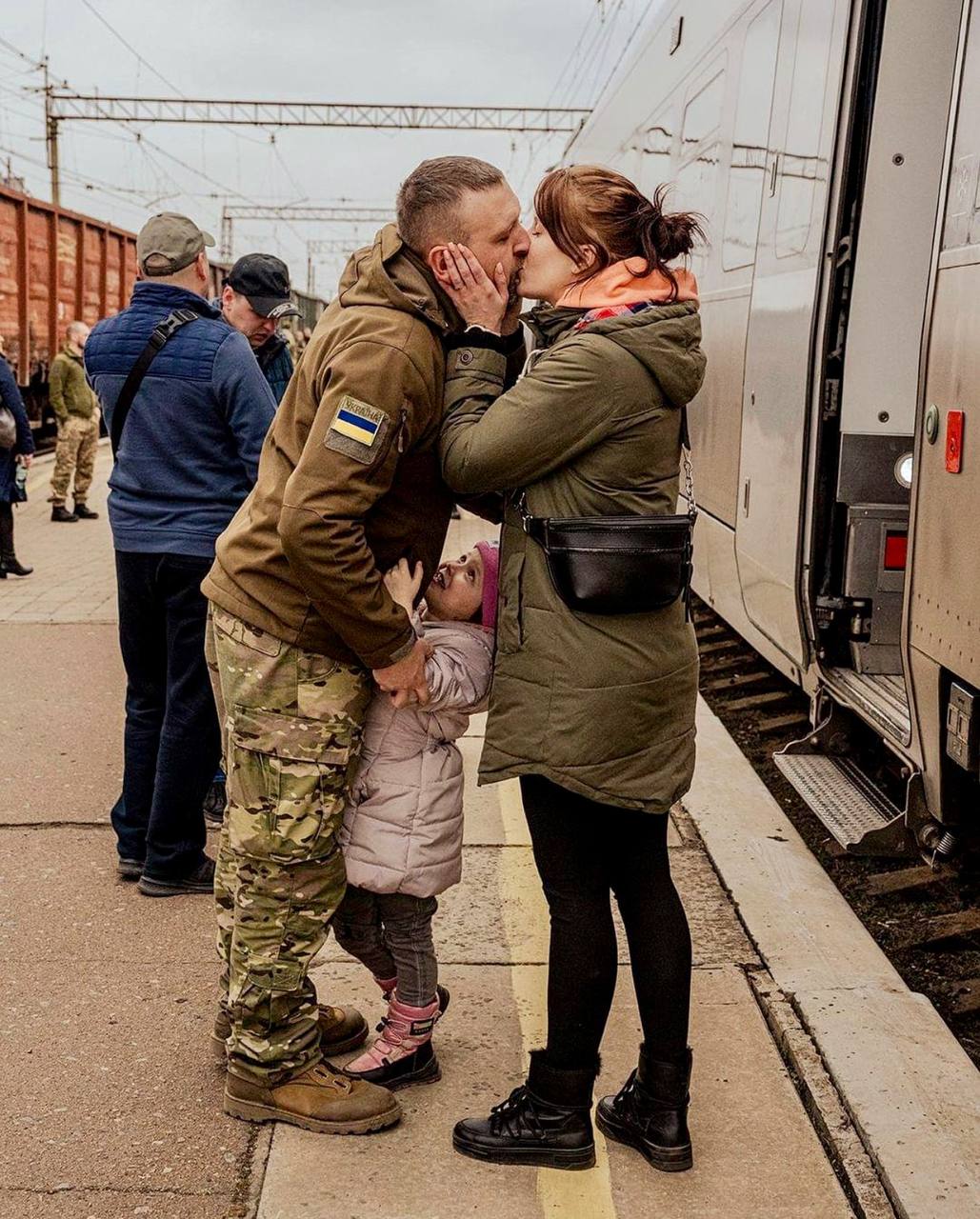
Here's a photo that I'm linking in from Twitter:


This is a scene that's repeated daily all over Ukraine.  A sad, and timeless one.  A father is leaving his wife and child to fight for his country.  

Early in the war this repeated constantly at the Polish border. Men took their families to Poland, and then they turned back to fight for Ukraine.

This last weekend, the Trib had an article about two Polish women and a child who were refugees in Wyoming.  I read it, because I read the Trib, but also as I wondered if it referenced an earlier story.  It didn't.

I don't blame the women for taking refuge here during the war. 

This is a snippet from the earlier article:

In Douglas, there’s a similarly normal picture: Floorhands and pithands working on an oil rig. One of the workers on this rig – his name is Andrii – has just started.

After a perilous first night getting stuck in a snowstorm 9 miles away from the rig, and then having to be rescued by the rig manager in the morning, Andrii is just grateful to have a job.

Five countries, six months of waiting for a work visa and over 500 job applications later, he is here, working 12-hour shifts.

Iryna and Andrii came over to America with Uniting for Ukraine, a government program started by President Joe Biden in an effort to help Ukrainians displaced by Russia’s invasion. They are not refugees; instead, their status under the program is considered “humanitarian parole.”

First of all, Iryna and Andrii are refugees, no matter what they are called. But here's the bigger question.

Why is Andrii working on an American oil rig rather than defending his country?  Photos show him as a young healthy man, and he's clearly healthy enough to work on oil rigs.

It's a legitimate question for which no answer is provided, and the question does not appear to have been posed.  It should have been.  Absent a really good answer, Andrii shouldn't be in the US working, he should be in his home country defending it.