Saturday, August 31, 2019

Labor Day, 1919

American troops near Marfa, Texas, are treated to a picnic in honor of Labor Day, September 1, 1919.

September 1 was Labor Day in 1919, then as now falling on the first Monday of September.  The unofficial end of American summer was a day off for most people, including I'd note most local newspapers, and it was celebrated in much the same fashion as it currently is.  Foot races and picnics were held in the mining town of Hanna, Wyoming.  Motorcycle races were held in Marion Indiana.  Massachusetts Governor Calvin Coolidge delivered a speech on labor in Plymouth.

In the case of American solders serving on the border, which was still quite tense, this meant, if they were stationed near Marfa, a lunch served by the American Red Cross.

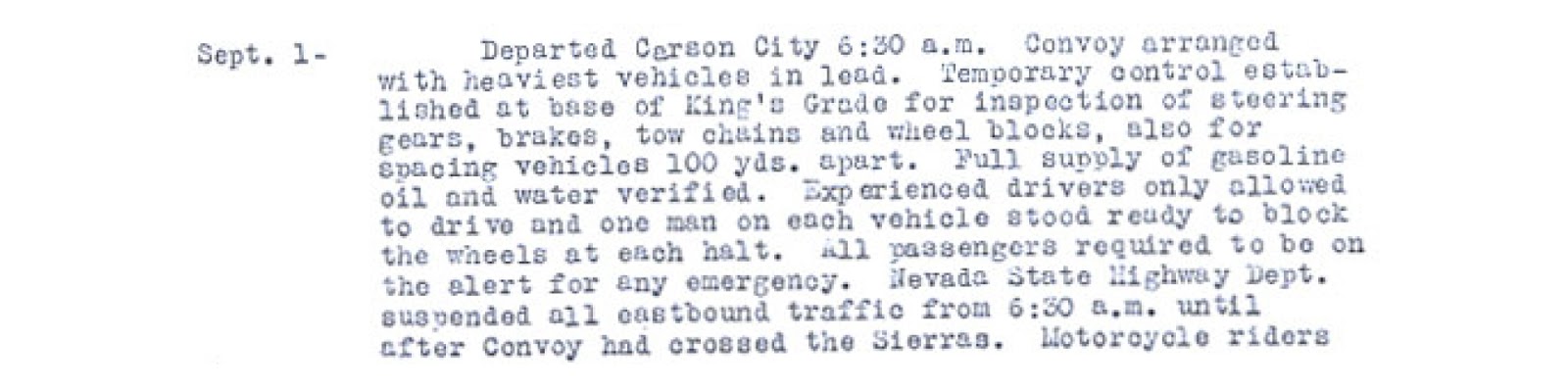
If they were assigned to the transcontinental Motor Transport Convoy, which was now running several days behind schedule, it wasn't a day off. They traveled from Carson City, Nevada, to Meyers, California
The road was treacherous and the Nevada Highway Department closed the road in the Sierras for the convoy.  Motorcycles were used to police the convoy speed and spacing, as well as looking for hot bearings.   The convoy went 34 miles in 13.5 hours and its arrival in Meyers was treated as a great success.  The Mayor of San Francisco traveled out to meet the convoy.

A party that claimed to represent labor was laboring away in chaos on this Labor Day weekend in Chicago.  The left wing turmoil going on in Chicago saw yet another Communist Party emerge out of the departed hardcore left wingers of the Socialist Party, when the non English speakers formed their own Communist Party of America.

This is really confusing as there already was a Communist Party of America, that had existed since May. This new one joined the old one rapidly. The English speaking Communist Labor Party would follow within months.

Of interest, the new foreign born Communist Party of America that formed on this day was double the size of the Socialist Party of America, with 60,000 members, and six times the size of the Communist Labor Party, which had 10,000 members.  This pretty shows that the leadership of the Socialist Party was more conservative and democratic than the rank and file, which had gone hardcore left. 

It also shows that the sentiments of the Socialist were highly influenced by immigrant members who were likely hardcore leftists when they arrived in the country, something that the Communist Party and its sympathizers on the radical left have not really liked to acknowledge.  The 1910s through the 1930s were the high water mark of radical Socialism in the US and its interesting to note that this was also the case for Anarchism, although it was waning by the 1930s.  In both instances the movements had significant immigrant representation within them and, moreover, representation from certain concentrated areas of Europe where the movements were also strong.  It's fairly clearly the case that in those instances they brought radical sentiments with them, rather than acquiring them in the US, although there were certainly native born radicals as well.

All of these movements were on the way out by the 1940s for a variety of reasons, including the fact that they'd been tested with disastrous results in Europe by that time and World War Two caused an economic boost in the country that buried any lingering sympathy for economic radicalism.  But in 1919, Communism was untested and on the rise, even if a language barrier caused it to oddly develop in the US, briefly, in a fractured fashion.  Even at that, however, it never really had very much appeal for most Americans, including foreign born ones, let alone most American workers.

Workers and the high cost of living were the topic of that day's Gasoline Alley, which was published in the local Chicago newspaper.  In a somewhat serious edition of the cartoon, the Reds made their own appearance that day.

It was a day off, of course, for most Americans and that meant not only picnics and races, but trips to the movies, which the movie industry used to introduce new films.


Her Purchase Price frankly had a the type of plot that movie goers of the era loved but which are creepy today.  In that film, Sir Derek Anstruther encounters European looking Egyptian slave Sheka while touring Egypt.  She learns that she's been raised a slave since taken by a bandit in her youth.  So he buys her, after falling in love with her.

Low and behold this disrupts Sir Anstruther's inheritance so the loyal Sheka sells herself to somebody else so that he's not dispossessed.  But Sir Derek pursues, and in the meantime her parentage is cleared up and all is well.

Hmmm. . . .


For folks who were bothered by the racial qualities of that one, let alone the moral questions raised by buying your bride in an Egyptian slave market, The Brat was also released on this day in 1919.  It featured a a chorus girl known only by that nickname who resists improper advances, resulting in her arrest.  The prosecutor's brother, however, is studying the underworld and therefore the judge lets her live in his household so that she can be the subject of study.  Well you can see how that one goes. . . 


Frankly, that was a bit disturbing as well.

Well, north of the border there was Back To God's Country, in which the daughter of a Canadian woodsman grows up in nature and has a rapport with animals.  She falls in love with a Canadian government official and marries him, after escaping the clutches of a bogus Mountie who attempts to rape her and who kills her father.  She then travels with her husband on a whaler but the captain turns out to be the rapist in disguise, so she has to escape by dog sled in the Arctic, with her husband.

Maybe it would have been better just to skip the movies on that Labor Day.


The Past as Hope for the Present and Future

Earlier this past week I posted this item on the Feast Day of St. Monica of Hippo.

Today is the Feast of Saint Monica of Hippo.


She was a Catholic Berber, married to a Roman Pagan, in North Africa. Devout throughout her life, she struggled with a dissolute difficult husband who none the less held her in respect.  Mother to three sons and a daughter, one of the sons was Augustine, who himself lived a life that caused her endless distress.

She followed him to Rome when he left for their, pursing a career in the law.  He converted to Christianity there, prior to her death at age 55. After her death, he would take holy orders, and rise to become St. Augustine of Hippo, one of the greatest Fathers of the Church.

That's the second item I've posted here on an event that occurred in the 380s.  This will be the third.  St. Monica died in 387.

The first item was this one:

Vae victis

Woe to the Vanquished

Brennus

Brennus statement, made as a Gallic conqueror, is true in more sense than one, not as a brazen command upon the defeated, but as an existential fact.

Of course, in keeping with the nature of fate, which we've had some quotes on recently, while Brennus sacked Roman and generally acted like a bady, his troops came down with the trots in the city and the Romans ended up tossing him and followers out rather effectively somewhat later.  That may say about as much on this topic as the quote itself.

Students of history may recall both, but recalling St. Monica is much more likely.  And what they may also recall is that her famous son wrote The City of God to make, in part, the point that earthly cities, and order, would rise and fall, but the City of God would not and was the Christians only true home.

A student of history would also know, of course, that Rome and the world overcame those horrible days when people like Brennus sacked a civilized city with rapine delight.  But in the 380s it probably didn't look like that was likely to most people.

Which, by extension, would suggest that the depths society falls into at any age likewise need not cause long term despair.  The City of God is as relevant as ever.

Back to the future.


I happened to see an article on fishing as the cradle of civilization in the current, on line, issue of the Saturday Evening Post. I don't normally read the post, and never have, and I'm admittedly one of those people who, when they look at it, are usually looking for the cover illustrations that the magazine featured prior to the mid 1960s, which are often fantastic.  This is not to say that it's a bad magazine by any means, but rather to say I'm not all that familiar with it in its current form.

The short article, and it was very short, that I read starts off with this statement:

Of the three ancient ways of obtaining food — hunting, plant foraging, and fishing — only the last remained important after the development of agriculture and livestock raising in Southwest Asia some 12,000 years ago.
I got to thinking about that, and while there's some truth to that statement, it's not completely accurate by any means whatsoever and to the extent it is, it's an accuracy that's much more recent than we might suppose. And frankly, it's a symptom of why modern people, frankly, hate their existence to the extent that they do. More on that last comment in a moment.

Fishing is fish hunting.*  Let's make no mistake about it, that's what it is.  I like fishing, aquatic hunting, but I like terrestrial hunting more. Still, fishing is probably my second favorite thing to do, right after hunting.

It's ingrained deep into our DNAs and people who claim they have a distaste for either activity are simply denying part of their human nature.  But humans are in huge denial about much of their nature today in every conceivable way.  The reaction to that is universally negative.  In spite of the improvement in nearly every aspect of our lives in some ways, people often hate the modern world in a really deep down and profound way.  The closer they remain to some early element of it, and frankly that includes small scale agriculture, i.e., gardening,  as well as hunting and fishing, generally the happier they are.  Even outdoor activities that seem to have nothing to do with these activities, if closely studied, really do.  Hiking, camping, etc., are all auxiliary to them and part of them, in a deep overall sense.

Anyhow, in reality when humans took up agriculture, as we've already explored here, it turns out that in reality they continued hunting as a primary activity for many, many years.  Indeed, for centuries.  And even in highly developed modern cultures hunting provided meat for the table in most of them up until extremely recently.  Indeed, even in the Western world, in those regions that are not heavily urban, it still does.  Urban people don't realize that, but it is the case.

Market hunting is gone, but only fairly recently, and indeed not even completely.  Even in the western world there'd some market hunting outside of North America.  If there is none in North America, that's due to regulations and laws that sought to preserve game for all, in  keeping with the egalitarian  nature of late 19th and 20th Century American culture, something that we're slowly losing, egalitarianism that is, in the 21st.  Anyhow, the introductory statement, the more you look at it, is wrong.

What is correct is that individual fishermen making their living from the sea does continue to exist in a form that's surprisingly recognizable over the eons.

Yet ancient fisher folk and their communities have almost entirely escaped scholarly study. Why? Such communities held their knowledge close to their chests and seldom gave birth to powerful monarchs or divine rulers. And they conveyed knowledge from one generation to the next by word of mouth, not writing.
This is an interesting question.  I don't fully know the answer to that question, but it's well worth looking at

That knowledge remains highly relevant today. Fishers are people who draw their living from a hard, uncontrollable world that is perfectly indifferent to their fortunes or suffering. Many of them still fish with hooks, lines, nets, and spears that are virtually unchanged since the Ice Age.
Again, that's correct, and it is interesting in the extreme.  

I'm not going to comment paragraph by paragraph on the article following that, but it makes a really good case for studying the culture of small scale, but professional, fishing.

Centuries ago, urban populations numbered in the thousands, but the demand for fish was insatiable. Today, the silent elephant in the fishing room is an exploding global population that considers ocean fish a staple. Deep-water trawls, diesel trawlers, electronic fish finders, and factory ships with deep freezes have turned the most ancient of our ways of obtaining food into an industrial behemoth. Even remote fisheries are being decimated.
Despite large-scale fish farming, humans face the specter of losing our most ancient practice of food gathering — and thus leaving behind an ocean that is almost fishless.
I"m going to pick up again here.  And in doing so, I'm going to swim against the tide (yes, I know that will be seen as a pun.

That the "oceans are in peril" is well known.  However, even though I'm not really an optimistic person anymore, my occupation doesn't allow for it and experience counsels me against it, I'm not pessimistic here.  In actuality, over my half century of life many fisheries have come roaring back, including ocean fisheries.  When I was a kid you didn't swim in the Great Lakes and nobody pulled fish from it.  On a trip to Ontario as a kid we crossed into New York to swim in Lake Ontario as it was so polluted on the Canadian side you didn't swim there.  And just recently it's been reported that sharks are present in numbers on the East Coast this year as seals are as well, and the seals are as the fish they feed on are back as well, back from the edge of extinction.

Not that there's not reason to be concerned, but here's actually a topic where I'm pretty optimistic.

As part of that, the statement about the "exploding global population" is one that's really jumped the shark (yes, another pun).  It's seemingly missed repeatedly by nearly everyone that we're now at or near peak human population.  Every demographer concedes that in this century, which we're now 20% of the way into, the human population will start to decline.

It already is declining in Europe.  It would be declining in the United States but for an odd American belief that it's always 1862 and the frontier is always open and expanding.  The United States, where such comments are always written, does have an expanding population, but only because the U.S. has massive immigration rates.

Now, this isn't an article on the topic of immigration, but simple math demonstrates that the U.S. population would be declining, as the U.S. birth rate is largely below replacement, but for immigration.  Proponents of large scale immigration, which is unique to the United States, have ironically begun to cite that as the reason that it must be kept up.  So, at the same time that its common to read about the "exploding global population" the same quarter argues that the collapsing Western world birth rate means that a high level of immigration must be maintained.**

This is largely based on some false demographic and economic concepts.  Immigration isn't a bad thing in and of itself by any means, and in some instances justice and morality demand that immigrants be allowed into countries that can absorb them.  But the concept that the economy depends upon it is incorrect as that ignores the wage depression aspects of it.  Further arguments about needing to have lots of (low paid) immigrant laborers to pay for the retirements of (formerly  much better paid) retirees is also based on a false premise.  In reality, in the age of work place automation, which is coming in at a blistering level, those arguments are a house of cards.

Population growth does damage the environment, to be sure.  But that growth is slowing or reversing in the entire northern hemisphere and it will be everywhere else, fairly soon.***Only, once again, in the US and Canada, in the opposite really true, and in at least the US there's been some massively impacted areas due to internal emigration, as well as immigration, the two not being the same.  This has to do, however, once again with the American belief that this sort of thing doesn't matter as the country is always somehow expanding.  But even in the US there are regions in which the trend has been in the other direction, while there are also those where the opposite is very true.  What's significant, however, is that for political reasons, rather than the economic ones we tend to cite, this has been the choice of the country, or at least of its leaders, and not simply something that occurred.

Irrespective of all of that, what is clear is that in advanced societies, setting aside whatever it may mean and the morality or immortality of what may be causing it, the population is going down, save for the United States, and Canada, where immigration alone is causing it to go up.****  This trend crosses cultures and regions, and is true of advanced nations in the East, such as Japan, as well as advanced nations of various cultures in the West.  It's known that it applies to all cultures everywhere. So, while right now there are serious articles about a demographic collapse in Japan (which isn't really the disaster its portrayed to be), in the foreseeable future there will be such articles about the more advanced nations of South America.

As this occurs demands on resources decline and we're seeing the "rewilding" of places, such as the "rewilding of Europe".

Which takes me to the next point.

Whether every aspect of all of this is good or bad can be left for discussion elsewhere or to another time if discussed here.  But with rewilding we should  hope for the rewilding of people.  That is, not turning people into absurd pseudo pagans or something, but getting them back out there. Back to the streams, back to the beach, and back to the fields.


_______________________________________________________________________________

*Ironically, this article includes an image of an ancient Egpytian couple in a marsh. They're not fishing, however, they're hunting, as the caption demonstates:

Featured image: Menna and Family Hunting in the Marshes (c. 1400–1352 B.C.); Metropolitan Museum of Art.
**As we've discussed elsewhere, there's an odd human tendency to believe that we live in the worst of all possible eras, which is far from true.  This inclination causes us to exaggerate the risks of many things and to believe that the news fo the past remains the news of the day.

I'm constantly hearing about how the whole world is at war.  It isn't.  Likewise, I'll hear how the current era is the most violent of all time.  That's the polar opposite of the truth.

I'm not going to get into the many environmental issues that are frequently in the news today in any form.  So I'm not going to argue one way or another about them. But I'll note that today there's a panicky article in our local newspaper about the absolute the need to eschew lead bullets in hunting.  The real message should be get out hunting. Sitting around in the house worrying about lead bullets is a lot more damaging that the lead could ever be.

***There are real moral issues to this. The means of achieving the slow down aren't being endorsed here.  I'm merely observing the actual trends.

****Once again, note the footnote above.

Friday, August 30, 2019

August 31, 1919. The Motor Transport Convoy gets a day of rest, no rest in Kiev, turmoil in Chicago

Railroad station, Carson City, 1940.  It likely didn't look much different in 1919.  The man is waiting for the mail, which was moved by train at the time.

On this day in 1919, the Sunday day of rest returned to the command.


It darned near had to. The command was behind, by several days, in its original anticipated schedule, but it had taken it 20 hours across the dust and muck of the Nevada desert to travel the stretch before Carson City, and this on a road that was theoretically a designated highway, although the designation at that time was just that, a designation.  Very little of the Lincoln Highway, as we've seen, was improved in any fashion whatsoever.  There had been problems with teh road the entire way, but after the column hit Nebraska the road became worse with each mile, with Utah's and Nevada's roads being particularly bad.

Speed, of course, in the era was relative. . . .


The command was provided "Union religious services".  I have no idea what that actually means.  General ecumenical perhaps?  Non protestant soldiers with Sunday obligations, which at this time would have largely been Catholics, but perhaps some Greek Orthodox, would have had to hike into town to see what was available for them.

And there was transportation to Hot Springs for bathing, which was no doubt welcome.

And some worked, including the operator of a tractor.

Emblem of the former Socialist Party of America

Meanwhile, in Chicago, a city the convoy  had passed through some weeks earlier, day two of the Socialist Party of America's Emergency National Convention saw the bolting left wing of the party.  The English speaking bolters, on this day, formed the Communist Labor Party in its own convention.

This was addressed a bit yesterday when it was related that the emergency was the rise of a radical, or rather more radical, left wing of the party that was hearing the siren song of Communism.  In this, the US Socialist Party was going through the same struggle that Socialist parties everywhere were.  Nearly all of them had started out as hardcore radical parties, but over the years as their fortunes had risen, their positions became less radical as they moved towards accepting democratic forms of government.  Ironically, World War One, during which it had been supposed that Socialist would take the position that all worker should be united in opposing the war in favor of the solidarity of labor, in fact saw the opposite development and the movement of mainstream Socialist towards accepting representative democracy.  At the same time, all the same parties saw movements within them that were extremely radical.  As this process occurred, these parties split.  In Russia, the split saw the rise of four different Socialist parties, with the Communist Party being the most radical.  Germany saw a succession of splinter parties that eventually saw two parties, the Social Democratic Party and the Communist Party emerge.

In the U.S. the Russian Revolution gave rise to the Communist Party of America in May, 1919.  The Socialist Party continued on but radical elements within it were attracted to Communism. The Emergency National Convention was called to address this, and to put an end to it.  By that point, however, the right wing Socialist were a minority in the party.  While they seized control of the convention, they could not keep the left wing from walking out, which it did and on this day, in their own convention, the English speaking radicals formed the Communist Labor Party.  Ironically, the Emergency Session had come about due to the left wing demanding that it occur in order to move the Socialist Party towards Communism.

The Communist Labor Party was not to be long lived as it merged with the Communist Party of America the following year, which then became the Communist Party of the USA.  The Socialist Party of the USA would continue on, with various swings and splinters, until 1972 when it changed its name to the Social Democrats, USA, reflecting the evolution of the party.  Ironically, the Social Democrats have not seemed to really benefit from the current flirtation in some circles in the US with social democracy.  The Communist Party USA still exists as well, with its high water mark really having come during the 1930s.

Elsewhere, the fights brought by Communism saw dramatic events take place in Ukraine where the Whites entered the city, taking it without a fight from the Reds during the Russian Civil War but ending up fighting, slightly, forces of the Ukrainian People's Republic that entered the town simultaneously.

Russian White victory parade on this date in 1919 in Kiev.

The entire event in some ways is emblematic of the confusing nature of the Russian Civil War.

The Ukrainian People's Republic was an Ukrainian effort to create an independent government for the region following the collapse of the Russian Empire and the withdraw of the Germans from the region.  During that period various forces contested for control of the new country with a directorate emerging that had the most support. At the same time, the country found itself facing a Soviet invasion in January 1919 and it also found itself at war with Poland to its west.  To compound matters, White Russian forces contested with the Red Army for control of the region, and Ukrainian Greens sought to bring anarchy to the country, fielding an army of their own.

Under these conditions the independence of Ukraine was unlikely to occur but the region did manage to survive surprisingly long.  On this day the re emergent Whites took Kiev but the Ukrainian government sought to as well, not appreciating the ability of the Whites to move as quickly as they did.  The Whites retained control of the city.  The Ukrainian People's Republic effectively came to an end in 1921 with its territory divided between the Soviet Union and Poland, although it would amazingly maintain a government in exile up until the country was able to form its own government again following the collapse of the Soviet Union.

Gardening Costs

Earlier this week I ran this item:  Lex Anteinternet: August 28, 1919. Austin to Eastgate, Nevada. 80 ...:

August 28, 1919. Austin to Eastgate, Nevada. 80 miles in 12.5 hours.


Gasoline Alley for August 28, 1919:


When I posted it, I cross posted it on Reddit where somebody asked, "are they making fun of him for gardening?"

I suppose they are, but the costs of gardening, and nearly all of the comments that are included in this Gasoline Alley cartoon, are ones I've heard myself.  It's interesting to see how the costs of gardening are summed up in just this fashion by those who don't, and apparently have been at least since most people ceased to live rural lives.

Of course, while the intangible costs of gardening are noted by those who don't garden, the intangible benefits of gardening, are not.

Having noted all of that, I didn't get a garden in this year.  The electrical service to my well had a disruption early last Spring and I still haven't gotten it repaired.  I need to.

August 30, 1919. Fallon to Carson City, through the night, Knoxville riots, Socialist emergency.

The Motor Transport Convoy had a long day, starting at 6:30 a.m on August 30 and ending at 2:30 a.m. on August 31.  During that 20 hours they went 66 miles.  Conditions were so bad that the soldiers had to push the vehicles through some stretches of road.
Keep in mind that this was a road that was otherwise open for civilian use. . . but without the aid of soldiers to push.

The convoy was met by Nevada's Governor, reflecting the fact that the city on the far western edge of the state is the state's capital.

The Red Summer continued on when Knoxville, Tennessee, erupted into violence.  A start of the riots was the arrest of Maurice Mays, a biracial politician, for the murder of a white woman even though there was no basis to believe that he was the killer.  This resulted in a lynch mob developing that ultimately rioted.  This in turn caused black residents to arm themselves for their own protection and to seal off part of the city.  Violence later developed.

Mays was later tried and in spite of a lack of evidence, convicted.  His conviction was overturned by the Tennessee Supreme Court and he was re-tried, found guilty again,and sentenced to death.  His suspected father, the former white mayor of Knoxville, with whom he had a friendly relationship, committed suicide a few years thereafter.

In Chicago the Socialist Party convened an Emergency Session.

The Socialist Party of America was a rising political party at the time, it's boat rising with the rising tide of radical political parties everywhere.  The emergency was the invitation by Lenin for certain Socialist elements to join the Communist International which was causing a rift in the party.  The party was dominated by its "right wing", which on this day achieved control of the convention on its opening day, bringing the rift with the "left wing" to an immediate head.

The Country Gentleman came out featuring an article on "counterfeit farms".  I wish the article was available so I could learn what they were writing about.

And the movies saw the first release of Dangerous Nan McGrew, which would be re-released in the 1930s in the form of a Betty Boop cartoon.


And the Gasoline Alley gang, which seemed to be on vacation, went golfing.


Thursday, August 29, 2019

MVPA Centennial Tour.

More on the MVPA Centennial tour:


Anticipated dates:


MVPA Lincoln Highway Convoy

The 2019 MVPA Lincoln Highway Convoy (TMC19)August 10 – September 14, 2019, York, PA to San Francisco, CA. Travel from the 44th annual MVPA Convention in York, PA to San Francisco, CA. To participate you must register by 1 May 2019. This is the second MVPA convoy to commemorate the Lincoln Highway, built by the US Army in 1909! Contact MVPA-HQ to request information, schedules and routes; (800) 365-5798, (816) 833-MVPA, hq@mvpa.org.
It'll make better time than the original, and I believe its in Nebraska right now.

Should anyone who stops in here happen across this convoy commemorating the 1919 Motor Transport Convoy, let us know and post what you know.


August 29, 1919. Eastgate to Fallon with the Motor Transport Convoy, dark beers in Belgium.

Motor Transport Co. 554 en route to Santa Cruz, August 29, 1919 to escort the Pacific fleet to San Francisco.  Motor Transport Co. 554 was making this trip in California at the same time that the transcontinental Motor Transport Convoy was struggling to get to California.

The Motor Transport Convoy trucked from Eastgate to Fallon, Nevada, in desert conditions, making 66 miles in 9.25 hours.


In Belgium, a Socialist effort at banning the public consumption of alcoholic spirits was passed which ironically spurred the development of heavy Belgium beers and ales by religious communities, giving us Belgian beers as we know them today.


Wednesday, August 28, 2019

What's going on with coal?

I haven't been doing a blow by blow on Wyoming coal for awhile.  It's just too depressing.  But a lot has been gong on.

That probably was emphasized by the two coal related stories in the Tribune this morning.

One headline proclaimed that the sale of the Blackjewell Eagle Butte and Belle Ayr mines is "dead". The sale had been approved by a bankruptcy court, but details have held up the sale and, according to the article, it is in danger of "floundering".  If it flounders, 500 laid off miners will not be returning to their jobs there, at least any time soon.

Secondly, Navajo Transitional Energy Company took out a full page ad about their purchase of three mines in Wyoming and Montana.  This is elaborated on in their recent press release, which in part states:
FARMINGTON, N.M. – Navajo Transitional Energy Company (NTEC) announces a significant acquisition and expansion of operations outside the Navajo Nation paving the way for others to follow in its conscientious energy development footsteps. 
NTEC has purchased substantially all the assets of Cloud Peak Energy, a public company that has recently filed for bankruptcy. The primary assets are three coal mines located in the Powder River Basin of Wyoming and Montana: Antelope, Spring Creek, and Cordero Rojo mines. The properties include surface and mineral rights to approximately 90,000 acres of land.  
One of the really interesting things about this is that the company is a native owned Navajo company that even as it expands notes that its focus is to provide jobs to the Navajo people. With its purchase of Cloud Peak's assets its taking a big step in coal, even as it also is indicating that its working on future energy resources.

The Navajo themselves are a very large Southwestern tribe with over 300,000 enrolled members, making it the second largest recognized Indian Tribe in the United States.  Their history is unique in some ways, one being that they, along with the Apache, are an Athabaskan speaking people whose ancestors migrated from the Canadian far north.  Native companies are not unique, but one of this size is unusual and its clearly in an expansion mode.


Robert J. Samuelson: The elderly aren’t so poor after all

The elderly aren’t so poor after all

Robert J. Samuelson: The great deficit gamble

The great deficit gamble

The Aerodrome: Canadair CL-415 Superscoopers at Pathfinder Reserv...

The Aerodrome: Canadair CL-415 Superscoopers at Pathfinder Reserv...: CL-415 Superscoopers at Pathfinder Reservoir. They're fighting a nearby fire.
I first noticed this fire traveling to Laramie on Sunday.  I hadn't heard of it by that time, but it was really rolling along.

Since then access to parts of Pathfinder Reservoir have been closed so that seaplane fire bombers can have unrestricted access to Alcova and Pathfinder Reservoirs.

August 28, 1919. Austin to Eastgate, Nevada. 80 miles in 12.5 hours.

Mechanical failures continued to take a toll, but the Motor Transport Convoy picked up some speed on this day in 1919.
On the same day, the Germans put down a Polish rebellion in Silesia.

Gasoline Alley for August 28, 1919:


Tuesday, August 27, 2019

Jenny on the job: Has her fun after work


This wartime Jenny on the Job poster could be taken more than one way, ie., don't forgot to have fun after work, or don''t play around at work.  I'm pretty sure, based on other posters, the former is meant.

This is a U.S. Public Health Service poster and there was wartime concern that workers engaged in long hours would forget to have any downtime at all.  That was known to contribute to poor health.

An irony of this is that workers of the 1940s likely tended to be a lot more social, and have more fun as a rule, after work, than they do now.  As the author of Bowling Alone has gone into, Americans have retreated over the years into their own homes and lives and, save when they're young, and not even as much with the young as in former times, they don't get out nearly as much as they once did.  This has resulted in a lot of former institutions disappearing over the years, such as fraternal organizations.

Not all of those old habits are really missed.  For example, the once common gathering of some blue collar men at the bar, where they spent the whole evening, is something that's gone by the wayside and that's probably for the better.  And of course a lot of people do have a lot of out of the office activities they engage in.   The U.S. Public Health Service wanted to make sure that workers of the 40s were getting out there then.

Today is the Feast of Saint Monica of Hippo.


She was a Catholic Berber, married to a Roman Pagan, in North Africa. Devout throughout her life, she struggled with a dissolute difficult husband who none the less held her in respect.  Mother to three sons and a daughter, one of the sons was Augustine, who himself lived a life that caused her endless distress.

She followed him to Rome when he left for their, pursing a career in the law.  He converted to Christianity there, prior to her death at age 55. After her death, he would take holy orders, and rise to become St. Augustine of Hippo, one of the greatest Fathers of the Church.

Monday, August 26, 2019

August 27, 1919. End of the trail for the Trailmobile.

On this day in 1919, the Trailmobile kitchen had an accident that there was no recovering from.

The Red Summer resumed as white rioters attacked the black community in Laurens County, Georgia.  The attacks seemed to be related to white fears about rioting that had happened earlier in the summer in the neighboring county.  The event lasted two days and featured a lynching of a man presumed to be a leader in the black community on the first day.

Louis Botha, a Boer commander of the Boer War and the first Prime Minister of South Africa.  Botha had been a leader of the Boer community during the war and shepherded it into the peace with the British.  By some measures, his actions may be regarded as having converted the Boer defeat into a type of victory as South Africa obtained dominion status in 1910 and the Boers effectively governed the new state, with Both as its P.M.

Botha as a Boer commander.

Much of Botha's post Boer War effectiveness was due to his ability to unite Boer aspirations with the larger British Empire, something that was not only difficult but not always popular. During World War One Botha acted to commit troops to the British Empire cause which was enormously unpopular among the Boers and resulted in the Boer Rebellion.  None the less, he generally persisted and can be credited with effectively snatching a type of victory out of the jaws of defeat.

He effectively died of the Spanish Flu, which he'd survived, but which had weakened his heart.  Like many Spanish Flu victims, he died of the collateral effects of the disease.

The Soviets nationalized its film industry on this day in 1919.

Gasoline Alley for August 27, 1919.

August 26, 1919. Pinto House to Willow Springs on the Motor Transport Convoy.

As the 1919 transcontinental Motor Transport Convoy was being received in Willow Springs, Nevada, the crew of an Italian warship was being received in Boston Commons.

On this day in 1919, the Motor Transport Convoy traveled from Pinto House to Willow Spring, making 44 miles in 8.25 hours.

Mention is made of the Mack "chain drive".  During this period, and for quite some time thereafter, some vehicles used chain drives, like bicycles, rather than drive shafts, to convey the rotation of the engine to the axle.

By and large, however, the vehicles held up that day in spite of the conditions.

Sunday, August 25, 2019

On taking and not taking vacations.

No travel?  Maybe you should.

vacation (n.)


late 14c., "freedom from obligations, leisure, release" (from some activity or occupation), from Old French vacacion "vacancy, vacant position" (14c.) and directly from Latin vacationem (nominative vacatio) "leisure, freedom, exemption, a being free from duty, immunity earned by service," noun of state from past participle stem of vacare "be empty, free, or at leisure," from PIE *wak-, extended form of root *eue- "to leave, abandon, give out."  


Meanings "state of being unoccupied," "process of vacating" in English are early 15c. Meaning "formal suspension of activity, time in which there is an intermission of usual employment" (in reference to schools, courts, etc.) is recorded from mid-15c. As the U.S. equivalent of what in Britain is called a holiday, it is attested from 1878.

vacation (v.) 


1866, from vacation (n.). Related: Vacationed; vacationing.

From:  Online Etymology Dictionary. *

Recently I attended an excellent series of seminars put on by a legal organization of which I am part.  These were part of a convention, and were put on for the purpose of education in the special interests of the group, which in turn generates Continuing Legal Education credits.  In my state, as in many others, a lawyer is required to have 15 hours of Continuing Legal Education every year, including at least 1 hour in ethics.

Most of the topics directly pertain to our declared area of practice focus, but one was on a two part seminar on ethnics.  Half of that was on lawyer well being.

It'll surprise no one whatsoever if they do any research on the law that lawyer well being has reached a point of discussion such that it is regarded as a matter of crisis within the profession and even without.  Just last week a study was published on things to avoid if you didn't want to be unhappy, and one of the four things on the list was "being a lawyer".**  It may be that lawyers were once like the Finns were once. . . expected to work  hard, shut up, and die because of the triumph of the conditions of our lives over our own well being.***  But probably not.  Things have probably gotten worse for us over the years.

In my view, and of course I could well be wrong, the negative transformation started in the 1970s when the Baby Boomer generation entered the practice and slowly influenced it such that it became focused on economic return as its purpose rather than its professional nature, something that professional organizations such as the American Bar Association had struggled to build for years.  But that didn't cause that to occur alone.  The flood of additional lawyers that started coming into the field in the 1960s and lasted all the way into the 2000s put a emphasis on economics in a way that the prewar field lacked to the same degree.  The deregulation, moreover, of lawyers, which commenced with the elimination of some practice restrictions and advertising restrictions was brought about by the United States Supreme Court, to the entire fields detriment.  The modern evolution of admission to the bar has made things even worse with the Uniform Bar Exam, which has separated lawyers from the law of their own states and opened up the floodgates of lawyers from large cities practicing across state lines in spite of their routine lack of knowledge of the law in those states.

All that has created an atmosphere that isn't universally nifty, and I suspect that translates itself into a perception of blueness, if you will.

Well, anyhow, one of the topics that's been addressed by some as this has come about is whether or not people who enter the law are inclined by their pre law natures to get into a funk.  This seminar discussed a study that showed that, nope, they aren't.  That's good news for lawyers, really, as it means that they weren't drawn to the profession as it attracts melancholics or something.

Of course, it's also bad in that it means that something else is causing that blue mood in the profession, assuming that its really there.  It might not be.

There's been who have studied this and claim that all the data on it is really false as it relies on statistical self reporting, which is unreliable.  Indeed, it suffers from an odd sort of confirmation bias that really sets all such data way off.  It may be, indeed, that not only is the population of lawyers no different in psychological make up than anyone else, but that the entire concept that they're more prone to the funk isn't correct either.  I've seen at least one lawyer argue that in a state bar journal somewhere.

Having said that, what statistical data we can really actually draw suggest that there is something going on.  Lawyers definitely, according to statistics (again) are more likely to suffer from depression and a host of actual psychological ailments, such as alcohol and drug addiction.  If lawyers mental make up isn't any different from anyone else's, that suggest something about their line of work is. Frankly, that's fairly obvious.

Anyhow, the person who did the seminar reported that the number one thing that seemed to make lawyer well being better was. . . vacations.

Lawyers are like everyone else in this respect as well, although a lot of the ones I know are very good about taking vacations.  Americans as a whole, however are not, even though its one of our main industries.  Statistically Americans leave a lot of vacation days on the table every year.  They just don't think they can afford to take them.

And there is indeed something really wrong about that.

So, anyhow, the simple but apparently effective solution for lots of folks, and I dare say it would include Americans as a whole, who are depressed at record numbers, is. . . take your vacations.

Naniwa no bessō akebono no zu (Sunrise at the vacation cottage in Naniwa).

________________________________________________________________________________

*Etymology is the study of word origins.

It may be just me, but I love it.  It's fascinating.  Particularly for a language such as English, which is derived from so many others.

**The value of such studies is frankly questionable.  One of the other things it questioned was owning a house. Well, I've rented and I've owned and owning is definitely much, much better.

***This was the Finnish ethos up until probably the 1950s, and it reflected the harsh economic conditions of the time.  Finnish men, but not women, died accordingly at relatively young ages.

August 25, 1919. Ely to Pinto House, Nevada with the Motor Transport Convoy, London to Parish with Aircraft Transport & Travel, back to Texas with the 8th Cavalry, north to the Stampede in Alberta.

American cemetery at Belleau Wood, photograph taken on August 25, 1919.

On this day in 1919, a photographer was at work taking photographs of the recent American battle ground of Belleau Wood.

View of Chateau Thierry and the famous bridge where the Marine stopped the Hun hoards on their march on Paris, taken on August 25, 1919.

Things picked up a bit on this Monday, August 25, 1919, for the Motor Transport Convoy, although they now suffered a mechanical failure beyond their ability to address.

Other soldiers, much further south, had come back across the border.  The most significant US incursion into Mexico since the Punitive Expedition had come to an end.


As with the last, this incursion had featured the use of aircraft fairly extensively.  In this case, the press was reporting that aircraft had proven decisive by resulting in the deaths from a strafing run by U.S. planes.  The expedition had also started, of course, due to aircraft when U.S. airmen had been held hostage by Mexican bandits.

Also occurring on this day was another significant aircraft related event.  The predecessor to British Airways, Aircraft Transport & Travel Ltd., commenced the first regularly scheduled commercial channel hopping flight.  That early ride between London and Paris must have been a bit frightening to the passengers, but clearly pointed the direction of the future.


The flight was made in an Airco DH16, an plane that was converted from the wartime DH9.  It could hold four passengers.

North of the border, in Alberta, the 1919 Calgary Stampede commenced, but this year it was termed "The Victory Stampede".    The artwork of Charles Russell played a part in the big event that year.

If that seems surprising, Russell painted quite a few paintings with Alberta themes or for Alberta ranchers.  The ranch culture of Montana and Alberta were closely connected.

The first Calgary Stampede had been held in 1912. This was only the second. So it was not only first post war Stampede, but a real resumption and continuation of something that may not have become the big rodeo event that it did.

Maps and governments continued to change in Eastern Europe.  Today, the first Lithuanian Soviet Republic came to an end due to Polish occupation of the principal portions of its territory.  The USSR would reestablish it as a puppet state in 1939.

Harry Houdini was performing, but on film, in a movie featuring him that was released on this Monday.


Sunday Morning Scene: Churches of the West: St. Andrew's Episcopal Church, Atlantic City, Wyoming

Churches of the West: St. Andrew's Episcopal Church, Atlantic City, Wyom...:

St. Andrew's Episcopal Church, Atlantic City, Wyoming


This is St. Andrew's Episcopal Church in Atlantic City, Wyoming. The church was built in the then mining town in 1916.

Best posts of the week of August 18, 2019

Best posts of the week of  August 18, 2019

August 18, 1919. Echo to Ogden Utah. Traveling through the American Ethnic Map.


August 20, 1619. Slavery comes to British America


Rural Nurse, Virginia. 1919.


Greenland?


Southern Rockies Nature Blog: Whatever Happened to Pickup Campers?


August 24, 1919 "That this pass was successfully negotiated without accident considered remarkable". Ray Caldwell remarkably continues pitching after being hit by lightening. U.S. "Invasion" of Mexico continues


Poster Saturday: Jenny on the job; Eats man sized meals.