Today In Wyoming's History: December 12:
1916 Chugwater's business district destroyed by fire. Attribution. Wyoming State Historical Society.
Monday, December 12, 2016


Sunday, December 11, 2016
Sunday Morning Scene: Churches of the West: Trinity Episcopal Church, Tulsa Oklahoma
Churches of the West: Trinity Episcopal Church, Tulsa Oklahoma:


This is Trinity Episcopal Church in Tulsa, Oklahoma. It's a downtown church of classic Gothic styling, but otherwise I don't know any of the details on it.
Cold Work: December 11, 1916

LOC Title: VIEW OF REINFORCEMENT WORK AT THE REAR OF THE POWER HOUSE, DECEMBER 11, 1916. SEVERAL WORKING CYLINDERS CAN BE SEEN IN PLACE, AS CAN SEVERAL OF THE FORMS WHICH WERE PREPARED FOR POURING CONCRETE TO EXTEND THE TAIL RACE WALLS OVER ALREADY INSTALLED REINFORCEMENT BUTTRESSES. (779) - Michigan Lake Superior Power Company, Portage Street, Sault Ste. Marie, Chippewa County, MI
Saturday, December 10, 2016
And then the shoe dropped.
Yesterday I published this item:
Lex Anteinternet: Whining, crying, panic in the editorial room of th...: Following the flood of analysis following the recent election of Donald Trump I stopped doing my after action reports. There's just to...
Which included this item:
Gritting my teeth and waiting for the shoe to drop. All this might lead some to think I'm a Trump supporter. For regular Democrats, they probably have concluded I am, and for the Greewhich village crowd that seemingly runs the party they're probably hiding under their cafe tables with their tofu sandwiches and free trade coffee by now, crying. But actually, I'm not. As noted way back during the election, I voted for a third party candidate, and an obscure one at
that.
Which means even though, unlike the NYT I accept the election, and unlike the Democratic Party, I actually know it occurred, I'm not a Trumpite now or before. And I'm gritting my teeth on the upcoming Secretary of the Interior nomination. . .
Well, I didn't have to wait long.

Secretary of the Interior nominee Cathy McMorris Rodgers.
Yesterday it was announced that Trump will announce U.S. Representative Cathy McMorris Rodgers as his Secretary of the Interior.
Well, I'm not shouting for joy, that's for sure. But it could have, maybe, been worse.
We'll have to see about her. She signed on to the bad idea bills leaking out of Utah and Alaska to transfer public lands to the state, as did of course all of Wyoming's folks in D.C., thereby betraying the will of the people who elected them. Rodgers' district includes Seattle so my guess is that her constituency wasn't universally thrilled either. But what she really seems to be is an industry advocate, with most of that having been for nuclear and hydroelectric.
It's really clear that Trump's focus is on industry and big industry at that. I'm really skeptical that the concept of "cutting red tape" and all of that does anything for American industry in 2016. The ship sailed on that long ago and the idea that American industry, to include the extractive industries, is really hamstrung by regulation is questionable. But what this may do, maybe, is to take the steam out of the Utah Delusion that all that has to happen for money to rain down out of the sky is to get regulation out of the way, because it looks like it will be getting out of the way. If the gutters of Main Streets in Salt Lake, Juneau and Cheyenne aren't flowing with cash we'll soon know better.
This might, therefore, be like the Reagan Administration in these regards. The Sagebrush Rebellion was on fire at the time Reagan became President but his Secretary of the Interior, James Watt was undoubtedly the most pro industry individual to ever occupy that position and most of the fire accordingly died down.
As a total aside, around 1993 or 1994 I was present on the highway just outside of Dubois Wyoming when I was a witness to a motor vehicle accident Mr. Watt was in. The road conditions were awful at the time.
Sunday State Leader for December 10, 1916: Osborne resigns as Assistant Secretary of State, Carranza will sign protocol, Funston explains ban of rivals.

December 10, 1916, was a peculiar newspaper day as the Cheyenne State Leader published three editions, only one of which was regular news. The others were holiday features.
In this one, the straight news one, we are told that Carranza will sign the protocol with the US. But will he really?
We also learn that Assistant Secretary of State Osborne resigned that position in order to return to Wyoming.
The news also featured a story on why U.S. Commander in the Southwest, Frederick Funston, banned religious revivals in his region of authority.
And girls from Chicago were looking for husbands.
Field Marshall Prince Ōyama Iwao, Lord Keeper of the Privy Seal and founder of the Imperial Japanese Army died at 74.

Field Marshall Prince Ōyama Iwao, Lord Keeper of the Privy Seal and founder of the Imperial Japanese Army died at 74.
He was a major figure in the Meji Restoration and went on to study the military art outside of Japan. He commanded Japanese land forces during most of the Russo Japanese War. He was occupying the noted cabinet position at the time of his death.
Friday, December 9, 2016
Whining, crying, panic in the editorial room of the New York Times, and waiting for that shoe to drop
Following the flood of analysis following the recent election of Donald Trump I stopped doing my after action reports. There's just too much writing on the topic and I'm sure everyone is sick of it. Still, some things do and will call out for commentary and I can't help myself. So, a collection of things will be posted here.
The Delusional Whining. Not a day goes by, it seems, where one of the large newspaper organizations doesn't seemingly confirm what Republicans claimed about them, they're relationship to the Democratic Party equates with Pravda's relationship with the Communist Party. It's absurd.
The New York Times and similar organs are just screaming with "Trump Not A Democrat? Will he appoint the ghost of William Jennings Bryan to the Supreme Court?" Get real.
The absolutely babyish reaction to a President who isn't a Democrat and who isn't an establishment Republican has just been fantastically juvenile. And it probably is serving to cement the views of somebody who seemed to relish taking them on.
The irony, I suppose, is that the NYT and print media has been in a decline of disastrous proportions for a long time, so for the most part, its message is not only not getting through, it's symptomatic of a big city Democratic Party that things everyone in the world lives in a big city and is a Democrat.
Nope, nothing wrong here. The item in the last paragraph is very nicely demonstrated by the Democratic reaction to the election, now that it has time to absorb it.
It isn't absorbing it.
The Democrats failed to gain either house in Congress.
They lost the Presidency.
They now control only 18, yes that's right, 18, of the State Legislatures.
18.
And they now hold 17 of the 50 Governorships.
Yes, 17.
The Democrats have been sort of smugly sitting back for years thinking "demographics is history", which assumes a linear demographic trend (very much in doubt) while the actual trend was a decline into extinction.
A party normally experiencing this would really clean house. The Democrats are doing the polar opposite.
And in the Senate, they're going with Chuck Schumer as a spokesman constantly. You know, the New York Democrat who sounds just as abrasive to people who don't live in New York as all the other New York politicians (yes, including Trump). Good idea that. After running one ersatz New Yorker, Clinton, against an expat New Yorker, Sanders, and getting beat by a Manhattanite, sticking with annoying Schumer is the obvious choice.
Couldn't they even perhaps have considered Amy Schumer? She's at least as left wing and isn't annoying.
Nancy Pelosi is actually retaining her position in the House. Schumer hasn't been sent packing. Amazing. By comparison the GOP cycled over last year in the House. . . and its in control. Problem with losing the House and Senate again? Apparently not. "We'll just keep on keeping on with the leader whose been so freaking successful so far. Go Team!"
This has caused one on line journal to state:
What does a professional sports team do after 6 straight losing seasons? Among other things, it usually fires the coach and looks for new blood, new leadership, and new strategies.But not if you’re the minority House and Senate democratic leadership... Or the Politburo of the Soviet Communist Party shortly before the collapse of communism.Instead, the failed, and increasingly geriatric leadership holds onto its fading power with increasing tenacity.The highest ranking elected Democrats are now... drum roll... Senate Minority Leader Chuck Schumer (who has served in Congress for 35 years since 1981) and House Minority Leader Nancy Pelosi (who has served in Congress for 30 years since 1986.
Some conservative cyber screed? No, that was the very liberal Huffington Post.
The Washington Post recently ran a headline that stated:
The next generation of Democratic leaders is, um, nonexistent
Well, as they say, you don't want to abandon a gasping drowning horse as it sinks under the waives in the middle of a stream. . . oh wait, it's a river. . .
Well there's more hope at the Democratic National Committee, right?
Actually there is. And if they were smart about this one, they'd choose the guy who made sort of a pitch sub silentio for it the other day . . .Barack Obama.
President Obama didn't come out swinging for the fences for it, but he did sort of express some interest, for those paying attention, and he'd be a really good choice. A widely liked politician (he'd have beat Trump if he could have run for a third term), who isn't 150 years old. But he won't get it
There are some other good choices however.
One of them isn't Keith Ellison, however.
I know very little about Ellison personally but he's the wrong choice. In interviews he sounds like he's straight out of the party circa 1973. Another one of those guys.
He is younger, young even in Democratic political terms, as he's only 53 (hey! now suddenly I'm young too, go Keith!). But he's the wrong choice.
Why? Well his 1973 rhetoric for one thing, and the principal thing. It's not 1973 anymore.
And then there's the fact that he's drawing flak for having represented the Nation of Islam as a lawyer years ago. Ellison is a convert to Islam from Catholicism, which is quite rare and a bit odd, but he's never been a member of the Nation of Islam which isn't conventionally Islamic. Nonetheless he's drawing some flak from some Jewish groups. And oddly, he's now getting flak from Louis Farrakhan, head of the Nation of Islam, whom he's denounced for years, who is calling him a coward. This is the sort of stuff the DNC doesn't need. Close attention to religious affiliation hasn't been a factor, supposedly, since 1963 but I'd question if that's fully true now (I doubt it) and picking somebody whose drawing these odd problems so early on may not be a really good idea. Chances are some Democrats will feel that it has a "look. . .see how diverse we are" feel to it but it isn't likely to come across the way that they think, particularly when the GOP looks at least as diverse anymore. The Democrats look 1973 diverse. . the GOP looks 2016 diverse. Diversity isn't necessarily liberal.
Speaking of 1963, I see where television is going to run something on Jackie Kennedy, with Jackie played by Natalie Portman. I'll not watch it, but apparently it touches on Jack's personal behavior only barely, or so I read. When we're talking about guys with unsuitable behavior for the Presidency, how come JFK keeps getting a pass? Seriously.
Anyway, if you want to send a message that the election meant nothing, picking the same old crew in Congress and a guy who sounds like he's from 1973 as the DNC chairman would be a really good approach to that. "Let's run the same winning team with the same winning message we have since 1973, team, because demographics his history. . . hey. . . why isn't there anyone in the stands?"
The Post Clue Era. Amongst those on the liberal left who are recreating, Weimar Republic style ("we didn't loose the war with the Allies, we were stabbed in the back. . . let's try it again") the recent election is the press itself about the press.
Recently, for anyone paying attention, there's been a news story about there being fake news on Facebook.
Gee, really. What a shock.
This isn't news.
Everyone with a critical eye knows this. This as been known from approximately 30 seconds after Facebook came into being.
This does allow, however, comfort to the liberal downtrodden, as in "Oh, they don't disagree with me, they were befuddled by fake news. . . I need not change".
No doubt some votes were changed by fake news, but I'll bet not much. Most of the fake news I saw, and it was from the left and the right, was obviously pitched to the already committed. And its still going on. News like that just goes to those whose minds are made up already.
And speaking of made up minds. . .
The Post Clue Era. Amongst those on the liberal left who are recreating, Weimar Republic style ("we didn't loose the war with the Allies, we were stabbed in the back. . . let's try it again") the recent election is the press itself about the press.
Recently, for anyone paying attention, there's been a news story about there being fake news on Facebook.
Gee, really. What a shock.
This isn't news.
Everyone with a critical eye knows this. This as been known from approximately 30 seconds after Facebook came into being.
This does allow, however, comfort to the liberal downtrodden, as in "Oh, they don't disagree with me, they were befuddled by fake news. . . I need not change".
No doubt some votes were changed by fake news, but I'll bet not much. Most of the fake news I saw, and it was from the left and the right, was obviously pitched to the already committed. And its still going on. News like that just goes to those whose minds are made up already.
And speaking of made up minds. . .
Picking up the loaded gun. Speaking of not getting the point, one lesson the Democrats really should have taken from this election was to knock off the talk about gun control.
President Obama wisely basically didn't talk about gun control.
That's because he is smart.
This didn't keep the NRA from picking on him anyhow, which I was convinced was a poor strategy. Perhaps Clinton did as well, as she went gun control in the primaries and stuck with it, in an oatmeal fashion, in the general election. Well, the NRA put in an all out effort and it can take big time credit for the results, whether you like them or not, this past season.
Which is likely to mean a big roll back on what gun control there is.
Indeed, the NRA must push on this. It would have anyhow, but as a practical matter, it must. The NRA was consistent on Obama being the worst thing ever, second only to Hillary Clinton, for years. Having assisted in getting in a Republican President when many, including me, thought that was a mistake, and there being a GOP House and Senate, it it rest on its laurels its doomed. In truth, Obama did nothing much on gun control until the very end of his presidency, at which time there was no point in him not trying to do something, as he was never going to get any NRA love anyway. But, for the NRA, you cannot decry a person for eight years as hideously awful and then allow his successor to pretty much do nothing, which is pretty much what Obama was doing. So the NRA has to argue for roll back on gun control and national right to carry. It has to.
One of the reasons that the Democrats should stay away from this entire topic as they don't know what they are talking about. Voters who vote on gun issues do know what they are talking about. Democrats, when they speak about gun control, come across as ignorant or liars.
They probably don't know that. But when they speak about guns, if they do at all, as opposed to gun control, they generally demonstrate a profound ignorance on the topic. And when they speak of gun control they tend to speak about stuff like "common sense gun safety" which means, to anyone listening, "I don't know anything about guns, but I'm going to assume that you will agree to me that we can make all guns Nerf Guns and that this makes sense". When they do that, they come across like somebody who is trying to lie.
Most of this is, again, because the Democratic Party is heavily urban and it thinks of all guns being snubnosed revolvers from the movie Shaft, that early 70s things again, or it thinks of every gun being a true, selective fire, assault rifle (which are exceedingly rare and heavily regulated in civilian hands). Most firearms users, and the numbers are growing, don't see firearm that way at all.
Indeed, the NRA must push on this. It would have anyhow, but as a practical matter, it must. The NRA was consistent on Obama being the worst thing ever, second only to Hillary Clinton, for years. Having assisted in getting in a Republican President when many, including me, thought that was a mistake, and there being a GOP House and Senate, it it rest on its laurels its doomed. In truth, Obama did nothing much on gun control until the very end of his presidency, at which time there was no point in him not trying to do something, as he was never going to get any NRA love anyway. But, for the NRA, you cannot decry a person for eight years as hideously awful and then allow his successor to pretty much do nothing, which is pretty much what Obama was doing. So the NRA has to argue for roll back on gun control and national right to carry. It has to.
One of the reasons that the Democrats should stay away from this entire topic as they don't know what they are talking about. Voters who vote on gun issues do know what they are talking about. Democrats, when they speak about gun control, come across as ignorant or liars.
They probably don't know that. But when they speak about guns, if they do at all, as opposed to gun control, they generally demonstrate a profound ignorance on the topic. And when they speak of gun control they tend to speak about stuff like "common sense gun safety" which means, to anyone listening, "I don't know anything about guns, but I'm going to assume that you will agree to me that we can make all guns Nerf Guns and that this makes sense". When they do that, they come across like somebody who is trying to lie.
Most of this is, again, because the Democratic Party is heavily urban and it thinks of all guns being snubnosed revolvers from the movie Shaft, that early 70s things again, or it thinks of every gun being a true, selective fire, assault rifle (which are exceedingly rare and heavily regulated in civilian hands). Most firearms users, and the numbers are growing, don't see firearm that way at all.
Anyhow, if the Democrats had brains, they'd not try to talk about "common sense" gun control or "gun safety" or any of that baloney. They'd be a lot better off taking some other approach, if they really want to discuss this at all. If they must discuss it, frankly, they'd be a lot better off just stating the truth, which his "I don't ever get outside of Greenwich Village and I think the only legitimate activity of a decent person is reading Vanity Fair".
No matter, I'm sure they won't listen. Indeed the NYT (remember that journal, its noted above?) just published an article about lawyers and law firms volunteering their time on gun control.
Yawn.
That's not going to do diddly except make lawyers look even more like left wing weenies than they already do. Indeed, just recently I heard a young person disparage the entire profession of the law in a way that was graphic, but suggested that all lawyers were a bunch of wimps in the most dramatic fashion. Some people don't credit the opinions of the young, but I do. People's opinions on professions and activities change over time. A lot of older lawyers even now imagine that they're Al Pacino in With Justice For All, just as an older generation yet thought all lawyers were Atticus Finch. Apparently we're now looking more like Zippy the Pinhead however and the smiling firm portraits in the article do sort of come across like "look at us. . . we're afraid to go outdoors!"
Gritting my teeth and waiting for the shoe to drop. All this might lead some to think I'm a Trump supporter. For regular Democrats, they probably have concluded I am, and for the Greewhich village crowd that seemingly runs the party they're probably hiding under their cafe tables with their tofu sandwiches and free trade coffee by now, crying. But actually, I'm not. As noted way back during the election, I voted for a third party candidate, and an obscure one at that.
Which means even though, unlike the NYT I accept the election, and unlike the Democratic Party, I actually know it occurred, I'm not a Trumpite now or before. And I'm gritting my teeth on the upcoming Secretary of the Interior nomination.
So far, I've seen Trump's picks for various posts as mixed. People crying in their free range, free trade, buttermilk about picking various generals about things haven't impressed me. I haven't thought those picks bad. I'm okay with his pick for Secretary of Defense. That position used to be called the Secretary of War, and a former Marine Corps general who probably isn't impressed by the attempt to ignore physics and nature in the military is plenty okay by me. Likewise I'm okay with Kelly for Homeland Security, although I wonder why we need a Department of Defense and a Department of Homeland Security (I know, let's have a. . .um. . War Department!)
And I'm not going to freak out, or even get particularly excited, or even interested, with Nikki Haley at the UN.
I'm also okay with Jeff Sessions for Attorney General. I know he's taken flak, but Trump would have had to pick the Barrista at the 9th and Centre Metro Station in Greenwich Village to please his opponents on this one, so why bother?
Betsy DeVos at the Department of Education bothers me a bit, but I'll wait to see how that plays out. It wouldn't surprise me if some corrective actions are needed there, but that isn't a department I pay much attention to.
And picking Ben Carson to anything strikes me as a really poor idea. I guess we'll see.
Scott Puritt at the EPA, strikes me as a poor choice. No surprise, but a poor choice. I'm worried about what that will mean.
And I'm really worried about the Interior.
So far, for potential Interior picks, the only one I liked was Matt Mead and he's taken his name out. And yes that does mean I don't want Cynthia Loomis, who is another Wyoming politician who turned her backs on the views of her constituents on public lands. Boo.
Frankly, the pick I may be most comfortable with is Donald Trump, Jr. I know that wold be a shocker, but he actually is the most measured of the potential candidates. And he might be campaigning for it.
Now, I'm sure that people will say Trump can't pick his son, but why not? That great American skirt chaser, um President, John F. Kennedy, made Bobby Kennedy the Attorney General and hardly anyone things that was improper. Appointing Bobby that is, not the skirt chasing.
Well, apparently the skirt chasing was okay as well. The copy of People magazine wondered in here in the wife's grocery bag with an article on what Jackie "knew" reports that she grew up in a family where her father did that, and Jack's father did that, and '"that's what men did.'
Yes, that's bulls**t. But even now?
Anyhow, we're staying tuned.
Friday Farming: New York Times, December 7, 1916: High Cost of Living Laid to Farm Methods
A big item in the news in 1916 was the price of everything, which was going up. That included food, and hence the article:
Also less obvious would be that while those improved methods would enormously boost productivity, that same productivity would mean the massive reduction of farmers and farm families.
Improvement?
Well, say what they might, and American food did become amazingly cheap, but the big price problem of 1916 was World War One. Indeed, loss of farming acreage in Europe combined with loss of farmers would combine to create a rather desperate food situation world wide which also saw an expansion of farming acreage in the US during the war, much of it in wheat, and much of it farmed by people who had never farmed before.

High Cost of Living Laid to Farm MethodsIt was correct, as the article pointed out, that new and improved farming methods, amongst other things, would raise yields enormously in the future. What probably wasn't equally obvious is that farm families would have their best year economically in 1919, the last year that agricultural families had economic parity with urban families.
Also less obvious would be that while those improved methods would enormously boost productivity, that same productivity would mean the massive reduction of farmers and farm families.
Improvement?
Well, say what they might, and American food did become amazingly cheap, but the big price problem of 1916 was World War One. Indeed, loss of farming acreage in Europe combined with loss of farmers would combine to create a rather desperate food situation world wide which also saw an expansion of farming acreage in the US during the war, much of it in wheat, and much of it farmed by people who had never farmed before.
Wheat speculators, basically.
Indeed, their were wheat boosters, it seemed like such a sure market.
It wasn't. It collapsed after the war with a farming depression that proceeded the Great Depression.
Thursday, December 8, 2016
Wednesday, December 7, 2016
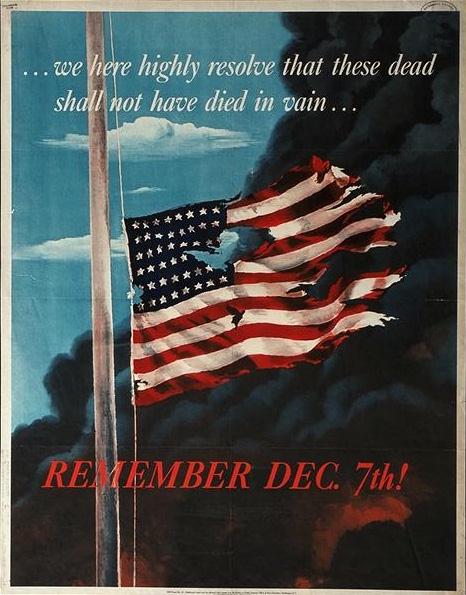
The Cheyenne Leader for December 7, 1916: Wyoming Guard coming home before Christmas?

The proverbial soldier "home before Christmas" story was running in the Leader. Would it be true?
And given the rest of the news, how long would that be true for, if it was true?
Farmer Al Falfa's Blind Pig released, December 7, 1916
1916 saw the release of an entire series of Farmer Al Falfa cartoons. This film was the eleventh to be released this year (there's some dispute on the date, some sources claim the release date was December 1).
The series continued all the way through 1956, making it a very successful cartoon.
This particular cartoon is not on line, and it might largely be lost, like many films of this period.

The series continued all the way through 1956, making it a very successful cartoon.
This particular cartoon is not on line, and it might largely be lost, like many films of this period.

Farmer Al Falfa in Tentless Circus, a cartoon released earlier in 1916.
Farm based cartoons would make up an entire genre of cartoons for a very long time and show the curious nature of the United States in regards to its rural population. If we look at the 1920 census, the closest to the year in question, the US was 51.2% urban. That's really remarkable actually as it meant that the US was already a heavily urban society at the time. It might be more telling, however, to look at the 1900 census. That would reveal that, at that time, the US was 39.6% urban and 60.4% rural. In other words, the US had gone from having a population that was clearly majority rural in 1900 to one which was slightly majority urban by 1920.
Like a lot of things about this era, almost all of which are now unappreciated, this meant that the society was undergoing massive changes. We like to think of our current society experiencing that, and indeed it is, but arguably the period of 1900 to 1950 saw much more rapid changes of all types, a lot of which would have been extremely distressing to anyone experiencing them. Indeed, carrying on the US would be 56.1% urban by 1930, meaning that in a thirty year period the US had effectively gone from heavily rural to heavily urban, with the percentage effectively reversing themselves in that time period. Indeed, while not the point of this entry, this would really call into question the claims by folks like James Kunstler that the Great Depression was not as bad as it seems because everyone came from a farm family and had a farm to go back to. The nation had more farm families, to be sure, during the Great Depression than now, but the nation had been rocketing into an urban transfer during that period for a lot of reasons, a lot of which were technological in nature.
None of which is what this entry is about.
Rather, what we'd note is that Farmer Al Falfa is an early example of a rustic depiction of farm life for movie goers. Cartoons were shown before movies at the time and would be for a long time. Depictions of farmers as hicks, but somewhat sympathetic hicks, were common in cartoons throughout the this period and on into the 1950s. That's interesting in that it was a cartoon depiction of the American duality of thought in regards to farmers. On the one hand, as people moved from the farms into the cities, they wanted to view their new lives as more sophisticated in every way over rural life, even if that meant running down rural residents. On the other hand, rural life remained familiar enough to the viewing audience that really rural characters were familiar to them and the depictions, even if condescending, had to be at least somewhat sympathetic. Depictions like this would last for a long time, even if they began to change a bit by the 1940s when urbanites began to show more interest in rural life. Even at that time, however, the depictions could run side by side, as with the introduction of Ma and Pa Kettle in The Egg and I.
Big Metal Bird: Episode 3 – Inflight Dining
I almost always skip the meals on airplanes, but anyhow, there's a lot, no doubt, that goes into it.
Tuesday, December 6, 2016
Cheyenne State Leader for December 6, 1916: Wyoming Guardsmen in New Mexico had turkey for Thanksgiving

Yes, there was other news than the turkey in New Mexico, but the Leader was following the Guard in New Mexico, which no doubt a lot of Wyomingites were very interested in.
Today In Wyoming's History: December 6, 1916: Wyoming v. Colorado argued in front of the Supreme Court.
Today In Wyoming's History: December 6:
1916 Wyoming v. Colorado, dealing with apportionment of water from the Laramie River, argued in front of the United States Supreme Court. It would be re argued twice and decided in 1922.
As this was an original action in front of the Supreme Court, i.e., a trial, it was presented over three days, concluding on the 8th.
The opinion would be issued after rehearing, in 1922.
1916 Wyoming v. Colorado, dealing with apportionment of water from the Laramie River, argued in front of the United States Supreme Court. It would be re argued twice and decided in 1922.
As this was an original action in front of the Supreme Court, i.e., a trial, it was presented over three days, concluding on the 8th.
The opinion would be issued after rehearing, in 1922.
Monday, December 5, 2016
Woodrow Wilson delivered his State of the Union Address for 1916.

Woodrow Wilson addressing Congress (but not necessarily on this occasion).
GENTLEMEN OF THE CONGRESS:
In fulfilling at this time the duty laid upon me by the Constitution of
communicating to you from time to time information of the state of the
Union and recommending to your consideration such legislative measures as
may be judged necessary and expedient, I shall continue the practice, which
I hope has been acceptable to you, of leaving to the reports of the several
heads of the executive departments the elaboration of the detailed needs of
the public service and confine myself to those matters of more general
public policy with which it seems necessary and feasible to deal at the
present session of the Congress.
I realize the limitations of time under which you will necessarily act at
this session and shall make my suggestions as few as possible; but there
were some things left undone at the last session which there will now be
time to complete and which it seems necessary in the interest of the public
to do at once.
In the first place, it seems to me imperatively necessary that the earliest
possible consideration and action should be accorded the remaining measures
of the program of settlement and regulation which I had occasion to
recommend to you at the close of your last session in view of the public
dangers disclosed by the unaccommodated difficulties which then existed,
and which still unhappily continue to exist, between the railroads of the
country and their locomotive engineers, conductors and trainmen.
I then recommended:
First, immediate provision for the enlargement and administrative
reorganization of the Interstate Commerce Commission along the lines
embodied in the bill recently passed by the House of Representatives and
now awaiting action by the Senate; in order that the Commission may be
enabled to deal with the many great and various duties now devolving upon
it with a promptness and thoroughness which are, with its present
constitution and means of action, practically impossible.
Second, the establishment of an eight-hour day as the legal basis alike of
work and wages in the employment of all railway employes who are actually
engaged in the work of operating trains in interstate transportation.
Third, the authorization of the appointment by the President of a small
body of men to observe actual results in experience of the adoption of the
eight-hour day in railway transportation alike for the men and for the
railroads.
Fourth, explicit approval by the Congress of the consideration by the
Interstate Commerce Commission of an increase of freight rates to meet such
additional expenditures by the railroads as may have been rendered
necessary by the adoption of the eight-hour day and which have not been
offset by administrative readjustments and economies, should the facts
disclosed justify the increase.
Fifth, an amendment of the existing Federal statute which provides for the
mediation, conciliation and arbitration of such controversies as the
present by adding to it a provision that, in case the methods of
accommodation now provided for should fail, a full public investigation of
the merits of every such dispute shall be instituted and completed before a
strike or lockout may lawfully be attempted.
And, sixth, the lodgment in the hands of the Executive of the power, in
case of military necessity, to take control of such portions and such
rolling stock of the railways of the country as may be required for
military use and to operate them for military purposes, with authority to
draft into the military service of the United States such train crews and
administrative officials as the circumstances require for their safe and
efficient use.
The second and third of these recommendations the Congress immediately
acted on: it established the eight-hour day as the legal basis of work and
wages in train service and it authorized the appointment of a commission to
observe and report upon the practical results, deeming these the measures
most immediately needed; but it postponed action upon the other suggestions
until an opportunity should be offered for a more deliberate consideration
of them.
The fourth recommendation I do not deem it necessary to renew. The power of
the Interstate Commerce Commission to grant an increase of rates on the
ground referred to is indisputably clear and a recommendation by the
Congress with regard to such a matter might seem to draw in question the
scope of the commission's authority or its inclination to do justice when
there is no reason to doubt either.
The other suggestions-the increase in the Interstate Commerce Commission's
membership and in its facilities for performing its manifold duties; the
provision for full public investigation and assessment of industrial
disputes, and the grant to the Executive of the power to control and
operate the railways when necessary in time of war or other like public
necessity-I now very earnestly renew.
The necessity for such legislation is manifest and pressing. Those who have
entrusted us with the responsibility and duty of serving and safeguarding
them in such matters would find it hard, I believe, to excuse a failure to
act upon these grave matters or any unnecessary postponement of action upon
them.
Not only does the Interstate Commerce Commission now find it practically
impossible, with its present membership and organization, to perform its
great functions promptly and thoroughly, but it is not unlikely that it may
presently be found advisable to add to its duties still others equally
heavy and exacting. It must first be perfected as an administrative
instrument.
The country cannot and should not consent to remain any longer exposed to
profound industrial disturbances for lack of additional means of
arbitration and conciliation which the Congress can easily and promptly
supply.
And all will agree that there must be no doubt as to the power of the
Executive to make immediate and uninterrupted use of the railroads for the
concentration of the military forces of the nation wherever they are needed
and whenever they are needed.
This is a program of regulation, prevention and administrative efficiency
which argues its own case in the mere statement of it. With regard to one
of its items, the increase in the efficiency of the Interstate Commerce
Commission, the House of Representatives has already acted; its action
needs only the concurrence of the Senate.
I would hesitate to recommend, and I dare say the Congress would hesitate
to act upon the suggestion should I make it, that any man in any I
occupation should be obliged by law to continue in an employment which he
desired to leave.
To pass a law which forbade or prevented the individual workman to leave
his work before receiving the approval of society in doing so would be to
adopt a new principle into our jurisprudence, which I take it for granted
we are not prepared to introduce.
But the proposal that the operation of the railways of the country shall
not be stopped or interrupted by the concerted action of organized bodies
of men until a public investigation shall have been instituted, which shall
make the whole question at issue plain for the judgment of the opinion of
the nation, is not to propose any such principle.
It is based upon the very different principle that the concerted action of
powerful bodies of men shall not be permitted to stop the industrial
processes of the nation, at any rate before the nation shall have had an
opportunity to acquaint itself with the merits of the case as between
employe and employer, time to form its opinion upon an impartial statement
of the merits, and opportunity to consider all practicable means of
conciliation or arbitration.
I can see nothing in that proposition but the justifiable safeguarding by
society of the necessary processes of its very life. There is nothing
arbitrary or unjust in it unless it be arbitrarily and unjustly done. It
can and should be done with a full and scrupulous regard for the interests
and liberties of all concerned as well as for the permanent interests of
society itself.
Three matters of capital importance await the action of the Senate which
have already been acted upon by the House of Representatives; the bill
which seeks to extend greater freedom of combination to those engaged in
promoting the foreign commerce of the country than is now thought by some
to be legal under the terms of the laws against monopoly; the bill amending
the present organic law of Porto Rico; and the bill proposing a more
thorough and systematic regulation of the expenditure of money in
elections, commonly called the Corrupt Practices Act.
I need not labor my advice that these measures be enacted into law. Their
urgency lies in the manifest circumstances which render their adoption at
this time not only opportune but necessary. Even delay would seriously
jeopard the interests of the country and of the Government.
Immediate passage of the bill to regulate the expenditure of money in
elections may seem to be less necessary than the immediate enactment of the
other measures to which I refer, because at least two years will elapse
before another election in which Federal offices are to be filled; but it
would greatly relieve the public mind if this important matter were dealt
with while the circumstances and the dangers to the public morals of the
present method of obtaining and spending campaign funds stand clear under
recent observation, and the methods of expenditure can be frankly studied
in the light of present experience; and a delay would have the further very
serious disadvantage of postponing action until another election was at
hand and some special object connected with it might be thought to be in
the mind of those who urged it. Action can be taken now with facts for
guidance and without suspicion of partisan purpose.
I shall not argue at length the desirability of giving a freer hand in the
matter of combined and concerted effort to those who shall undertake the
essential enterprise of building up our export trade. That enterprise will
presently, will immediately assume, has indeed already assumed a magnitude
unprecedented in our experience. We have not the necessary
instrumentalities for its prosecution; it is deemed to be doubtful whether
they could be created upon an adequate scale under our present laws.
We should clear away all legal obstacles and create a basis of undoubted
law for it which will give freedom without permitting unregulated license.
The thing must be done now, because the opportunity is here and may escape
us if we hesitate or delay.
The argument for the proposed amendments of the organic law of Porto Rico
is brief and conclusive. The present laws governing the island and
regulating the rights and privileges of its people are not just. We have
created expectations of extended privilege which we have not satisfied.
There is uneasiness among the people of the island and even a suspicious
doubt with regard to our intentions concerning them which the adoption of
the pending measure would happily remove. We do not doubt what we wish to
do in any essential particular. We ought to do it at once.
At the last session of the Congress a bill was passed by the Senate which
provides for the promotion of vocational and industrial education, which is
of vital importance to the whole country because it concerns a matter, too
long neglected, upon which the thorough industrial preparation of the
country for the critical years of economic development immediately ahead of
us in very large measure depends.
May I not urge its early and favorable consideration by the House of
Representatives and its early enactment into law? It contains plans which
affect all interests and all parts of the country, and I am sure that there
is no legislation now pending before the Congress whose passage the country
awaits with more thoughtful approval or greater impatience to see a great
and admirable thing set in the way of being done.
There are other matters already advanced to the stage of conference between
the two houses of which it is not necessary that I should speak. Some
practicable basis of agreement concerning them will no doubt be found an
action taken upon them.
Inasmuch as this is, gentlemen, probably the last occasion I shall have to
address the Sixty-fourth Congress, I hope that you will permit me to say
with what genuine pleasure and satisfaction I have co-operated with you in
the many measures of constructive policy with which you have enriched the
legislative annals of the country. It has been a privilege to labor in such
company. I take the liberty of congratulating you upon the completion of a
record of rare serviceableness and distinction.
Monday at the Bar; Courthouses of the West: Sublette County Courthouse, Pinedale Wyoming
Courthouses of the West: Sublette County Courthouse, Pinedale Wyoming:


This is the Sublette County Courthouse in Pinedale, Wyoming. The courthouse is the seat, for Sublette County, of the two courts of Wyoming's 9th Judicial District.
I'm unsure of the vintage of this courthouse, but I'm guess it dates to at least the 1950s, although I could be in error. The court is in a Federalist style.

The USS West Virgina Ordered.
The USS West Virginia was ordered for construction.

The USS West Virginia, San Francisco, 1934.
She would be launched on November 19, 1921.
Laura Stockton Starcher elected mayor of Umatilla, Oregon.
The suffragist era came to Umatilla, Oregon with a vengeance when Laura Stockton Starcher was elected mayor, defeating her incumbent husband, though write in votes and, additionally, women further took the majority of the town council seats.
Their administration proved to be a progressive one.
Jarbridge Stage Robbery.
While the last train robbery was yet to come (and would come in Wyoming) the last stage robbery found itself occurring on this date in 1916.
On this day a two horse mail wagon was robbed, and the driver killed, so that the stage could be robbed, resulting in a very brief $4,000 gain to the thieves. The advance of technology intersected with the antiquated nature of the crime as one of the perpetrators was convicted on the bases of his palm prints, the first person in the United States to meet their fate by that means.

On this day a two horse mail wagon was robbed, and the driver killed, so that the stage could be robbed, resulting in a very brief $4,000 gain to the thieves. The advance of technology intersected with the antiquated nature of the crime as one of the perpetrators was convicted on the bases of his palm prints, the first person in the United States to meet their fate by that means.
Ben Kuhl, whose palm prints would convict him.
The location of the robbery, Jarbridge Nevada, was remote in the extreme and was nearly in Idaho. Snowy weather aided the criminals in their endeavor. The luck of the criminals, three in number, soon ran out however and they were rapidly apprehended. One turned state's evidence, and Kuhl received the death sentence which as later commuted to a live sentence. He was released in 1945.
Subscribe to:
Comments (Atom)