Every year there's an event called the National Prayer Breakfast. I'll confess I don't really know much about it, other than it happens in D.C., and the President usually goes to it. Typically, most Presidents have been careful not to say anything controversial, but President Obama has been the exception. This year he made just such a statement when he said:
Lest we get on our high horse and think this is unique to some other
place, remember that during the Crusades and the Inquisition, people
committed terrible deeds in the name of Christ. In our home country,
slavery and Jim Crow all too often was justified in the name of Christ.
…So this is not unique to one group or one religion. There is a tendency
in us, a sinful tendency that can pervert and distort our faith.
Now, this statement is one of those ones that's guaranteed to spark controversy, and I suspect that the President didn't quite mean this the way it sounds, but how does it measure up historically? And beyond that, how does what it implies measure up? So let's look at what the statement seems to say, and what it seems to imply. It seems to say and imply:
1. Some people are accusing Islam of being violent (and that's a correct thing to state, i.e., some people are saying that).
2. Christianity has had its own examples of people doing terrible things in the name of Christianity; and three of those things are: a) misdeeds in the Crusades; b) misdeeds during the Inquisition; and c) slavery and American segregation era racism.
So how do those claims, none of which is unique to the President, stack up? And how does the counter claim, which was essentially being addressed, that Islam is violent measure up?
Let's start with one of the most misconstrued periods of history of all time included in the list above, the Crusades. Were bad deeds done in the name of Christianity during the Crusades. Not so much.
The Crusades in and of themselves are very much misunderstood and this is principally due to the Reformation. Prior to the Reformation western Europeans did not have a negative view of the Crusades, and even during the early part of the Reformation some figures, such as Martin Luther, were pleading for Christian intervention in defense of Catholic lands, such as Austria, against invading Islamic armies. It was only later, when various Protestant groups developed a revisionist history that the suggestion that the Crusades were improper came about, and this was due to a desire to point fingers at their rivals and to distinguish themselves. Like most big revisionist histories, the revision wasn't too accurate.
The "Crusades", which weren't called that until centuries later, came about as defensive wars designed to stop Islamic invasion of Christian lands, with much of those Christian lands occupied by Eastern, not Western, Christians. The Byzantines found that they were unable to stop invading Islamic armies, which had become newly aggressive after Islamic leaders, ironically non Arabs, first acted to subjugate Islamic Arab kingdoms in the Middle East. Those Islamic kingdoms sometimes had Christian majority populations, and the two groups had managed to settle into co-existence, but under this effort to subjugate those kingdoms, that policy ended and local Christians were persecuted or even given no choice but to convert to Islam. At the same time, Islamic forces began to expand into the region and threaten Anatolia. The Byzantines asked for help, with Rome urged be provided. Also, the same impulses acted to provide for armed escorts for pilgrims to the Holy Land, as they were subject to attack by marauding Islamic bands.
The initial efforts were successful. Over time, the advancing Islamic armies were rolled back, areas that were occupied by them were once again under Christian rule, and in some places, over time, invading Islamic armies were completely and permanently defeated, such as in Sicily. Less permanently, but significantly, Christian kingdoms, sometimes presented as invading kingdoms now, were created in various areas of the Mediterranean Middle East which very often had majority Christian populations newly freed from Islamic rule. As we all know, the effort was not long term successful as the Ottoman Turks did manage to subjugate and defeat the Ottoman Empire, Islamic armies ultimately retook what they'd lost in the Middle East, and they even invaded up into Europe.
So what were the terrible deeds?
Well, unless you consider the wars themselves terrible, not much. The wars were fought under the conventional rules of the day, which weren't quite as nice as the modern ones, but they also saw a great deal less bloodshed than imagined as well. Victorious armies of this, and earlier, periods grossly exaggerated their victories and usually claimed that vast numbers of enemy combatants, and even enemy civilians, were killed, but in reality, by one calculation, the number of people killed by the Crusading armies is actually less than those killed in pitched, but modern, battles today. That is, all the dead doesn't really add up to the same for one fairly typical battle today. Indeed, overall combat casualties were pretty low for the entire series of events. And the claims about civilian towns people, including women and children, appear to be largely just made up.
The Crusaders did misbehave when they went through Constantinople, which cannot be denied, but nobody has every claimed that was done in the name of Christianity, quite the contrary. In that, you have an example of Christians misbehaving, but not in Christ's name.
So, the Crusades, a defensive war in the first place, turns out not to be an example of what the President claims. The error would be understandable, save for the fact that he's so well educated.
Before we go on, let's look at the counter example, Islamic violence, which is what brings this topic up anyhow? Is the same true of Islam, i.e., that its violence is conventional and misunderstood, in a historical context?
Well, here too, people who cite strongly to the "religion of peace" claim have history to contend with, but then so do those who would claim that all Islam is necessarily violent.
Very early Islam, that is Islam during Mohammed's life, spread at first through what was apparently his charismatic personality but then, during his life, took to violence. From the outside, it seems that early on, when the more peaceful aspects of the Koran were written in these regards, it was a distinctly minority religion, and probably a Gnostic heresy. It may have been quite a bit different than what it is today. As Mohammad gained adherents, he turned to the violent spread of the new religion, and the later more violent portions of the Koran were written. It seems fairly clear that the version of the Koran we have today doesn't actually match the earliest one, with the very earliest one held in a library in war torn Yemen, were nobody is allowed to view it, but the evolution was probably there. What this probably reflects, therefore, is that early on Mohammad wanted to try to make sure his faith wasn't unduly persecuted by the orthodox Christian faith, or the remaining Jewish faith, and so he urged peace and co existance. Later on, when he was spreading the faith through the sword into mostly pagan areas of the Arabian peninsula, he was willing to take on Christians and Jews as well, and so the text grew considerably more dark. So, Islam does in fact have a violent early history, in real contrast to Christianity which was hugely oppressed and non violent in its early centuries, and also in contrast to the Christian actions in the crusades.
Early Islam, in fact, spread mostly by the sword, being ultimately stopped in western Europe at Tours, and then rolled back, in the east at Vienna. But that doesn't mean that all Moslems are violent, nor does it mean that Islam has been trying to spread by the sword every day of every year. Indeed, right now the criteria for launching a violent action under Islam are relatively strict and basically can't really be done, as the authorities who would be allowed to decree it just simply don't exist. So a good argument can be made that while Islam certainly has a violent past, those who act violently for it today may be heretical or at least out of the safe confines of their faith.
Okay, back to the other points, what about the Inquisition?
The term "Inquisition" usually means the Spanish Inquisition. There are other Inquisitions, and for the most part they are inquiries of some sort or another. The Spanish one is cited most typically, as it too gained currency as a "bad act" during the Reformation. There's rich irony even in that, at least in the English speaking world, as any of the contestants in England were not shy about using force and Protestant authorities would go on to be very oppressive against not only Catholics, but other Protestants.
The problem overall is that its taken out of context pretty badly and also grossly exaggerated.
In order to understand it in the first place, a person has to be aware that the existing legal structure everywhere at that time viewed the Crown as the ultimate legal authority, and also, everywhere, viewed heresy as threat to the Crown. It wasn't until the Reformation for the most part that European monarchies would have a concept of religious tolerance, although even then they typically did not. Henry VIII, for example, was happy to have his backer Thomas Cromwell be seen to be executed as a heretic. Nations that went from being Catholic nations to Protestant ones quite often took the exact same position, except that they adopted a different church as the state church. So, in context, the concept of heresy as a state offense was very strong for a very long time. This had to do not just with the Faith, however, but also very much with the concept of government. In an era when monarchies could generally not act contrary to the faith, and when they all claimed to rule consistent with it, heretical acts were regarded as treasonous. If a person could separate form the Faith, then they could also separate from the Crown.
This lead to various monarchies trying accused heretics. In the case of the Spanish Inquisition, the Church became concerned that the judicial authorities were too ready to find people guilty, not to lax in doing so, and that the judicial authorities were also not competent to try such offenses. Given that, they Inquisition came about to look into such offenses. This resulted in the accused being less likely, not more, to be found guilty. Indeed, there were protests at the time against the Inquisition on that score, i.e., being too ready to find the accused innocent.
The trials of such things were not always pretty to be sure, and here perhaps the President has a point. But that's because all trials of serious matters were subject to shocking conduct by modern standards. The concept of some sort of coercion was the norm, and it wasn't until centuries later that this was regarded as an improper judicial technique. Even now, apparently, we haven't really come fully around to rejecting that concept in our own minds, as our own country has recently used what we must rationally concede to be torture to gain information from terrorists. That doesn't excuse it, but it does place it in context.
So, again with the Spanish Inquisition. . . not so much. It was an effort to reduce improper convictions, not to spur convictions, and its actions were consistent with those universally accepted then, but not now, in trials. Interestingly, it resulted in many fewer deaths than British witch trials that would soon follow did, although those are generally regarded as attributable to Christian beliefs by their perpetrators. The ultimate irony may be that pointing the finger at the Spanish Inquisition came up in the context of the Reformation, at which time the English Crown was always at a close state of war with Spain, but during which England itself was in a period of engaging in massive religious repression during which it wasn't shy about using violence. Indeed, should the President have cared to make it, the actions of various British monarchs and political figures would have been a much better example of what he was trying to cite to than the Spanish Inquisition.
Well then, what about slavery and racism?
Here, I think, the President has a better point. Nobody is claiming that Christianity sanctions slavery or racism, but people did make those claims. Slavery in the South was sometimes excused on that basis, in no small part because the South was an overwhelmingly Christian region with a lot of serious Christians who had to reconcile their actions somehow. Slavery is mentioned in the New Testament quite a bit, and so the rationalization was that because it isn't outright condemned, it must be sanctioned. Well, actually it isn't, and the Greek word of the period in which the New Testament was written makes no distinction between a "slave" and a "servant", because in that period there really wasn't one. That reflects the economic realities of the 1st Century, but it has nothing to do with the 18th and 19th Century in terms of human bondage, and it doesn't license it. Southern Christians, however, argued the opposite.
Be that as it may ,that was a position taken by individuals, rather than by any one church. So, for example, the very large Episcopal church in the South didn't declare acceptance of slavery tto be doctrinal by any means. Indeed, and again ironically, here too we have to bring in the United Kingdom as for much of this period the UK, which was home to at least two of the widespread Protestant faiths in the South, was the European standard bearer for the anti slavery effort. The English may have gotten race based slavery rolling in North America to some extent, but they also really took it on later on, and often due to religious impulses.
Raced based slavery might, however, make it a better example here, as it might actually fit the President's example of some Christians misusing their faith to do a bad thing. Although it was a rationalization, not doctrinal, but I think that was his point. I.e., some people did do that, just as some Moslems now excuse violent actions the same way.
I don't really know how Christianity could be used to justify racism, but again, some have bizarrely tried that as well, so perhaps that too is a better example. In the recent violent actions in France, for example, one of the attackers was living with his girlfriend, and their violent actions killed a Moslem policeman. No way that Islam sanctions any of that, so a person engaging in that sort of activity has had to do some huge rationalization to get there. I think in these instances you have the example of somebody believing so strongly that their actions are justified, that they then go to the conclusion that they can do anything they want. No religion sanctions that, but some people behave that way.
So, on this one, I think I'd grade the President with a 50, a scale which would leave him with an F. Back to the books. Of course, these historical failings are commonly believed ones, and so maybe I'd reluctantly given him a C.


![[Benito Juárez, head-and-shoulders portrait, facing front]](https://cdn.loc.gov/service/pnp/cph/3a10000/3a10000/3a10500/3a10509r.jpg)


![[Mexican revolution against the Diaz government]](https://cdn.loc.gov/service/pnp/cph/3b20000/3b25000/3b25000/3b25093r.jpg)

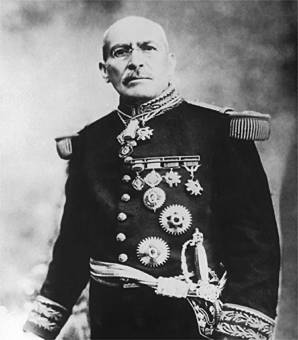

![Gen. Carransa [i.e., Carranza]](https://cdn.loc.gov/service/pnp/ggbain/14600/14619r.jpg)
![[U.S. Naval occupation of Vera Cruz, Mexico: Tower at Vera Cruz damaged by shells from U.S.S. CHESTER - Mexican War]](https://cdn.loc.gov/service/pnp/cph/3b30000/3b35000/3b35100/3b35155r.jpg)

![[U.S. Naval occupation of Vera Cruz, Mexico: Searching Mexican for weapons at Vera Cruz]](https://cdn.loc.gov/service/pnp/cph/3b30000/3b35000/3b35100/3b35154r.jpg)


![[U.S. Army in Mexico, 1914: soldier on horseback]](https://cdn.loc.gov/service/pnp/cph/3b10000/3b18000/3b18400/3b18469r.jpg)
![[U.S. Army in Mexico, 1914: Mexican refugees(?) cooking in camp]](https://cdn.loc.gov/service/pnp/cph/3b10000/3b18000/3b18400/3b18468r.jpg)


